
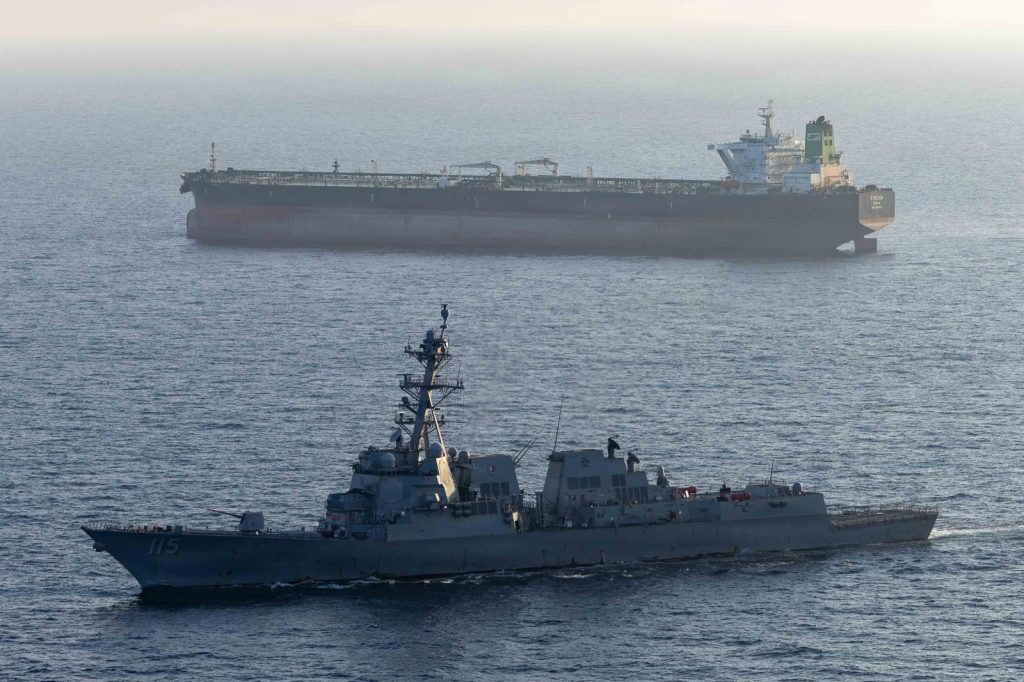
WASHINGTON, July 13 — A new American toll on cargo vessels traveling through the Strait of Hormuz is set to take effect, raising the specter of higher global oil prices and renewed confrontation with Iran. The move, announced by former President Donald Trump in March 2025, will impose a 20% toll on all ships transiting the narrow waterway between Oman and Iran, a passage that connects the Persian Gulf to the Gulf of Oman and the Arabian Sea.
The toll, effective May 1, 2025, targets a critical chokepoint for global energy supplies. According to the U.S. Energy Information Administration, approximately 20% of the world’s oil passes through the Strait of Hormuz.
Analysts at the International Energy Agency estimate the new charge could add $2.50 per barrel to global oil prices, a cost that would likely ripple through shipping expenses for crude and liquefied natural gas from major exporters including Saudi Arabia, Iraq, Kuwait, and the United Arab Emirates.
A return to maximum pressure
Alongside the toll, Trump stated that the United States will restart a naval blockade of Iran, a tactic previously employed from 2018 to 2021 under his administration’s maximum pressure campaign. The blockade is designed to prevent Iranian oil exports and enforce existing sanctions. The U.S. Department of Defense has not yet commented on the operational details of the blockade, leaving questions about how it will be implemented and enforced.
The announcement comes amid heightened tensions in the region. Iran seized the oil tanker “Advantage Sweet” in April 2023, an incident that underscored the ongoing volatility around the strait.
Iran’s Foreign Ministry condemned the toll and blockade on March 19, 2025, calling the measures “an act of economic warfare” and threatening retaliation.
What this means for global markets
For the world’s energy markets, the toll represents a direct cost increase on a vital transit route. The Strait of Hormuz is not just a passage for oil; it is also a key route for liquefied natural gas shipments from Gulf states. Shipping companies and traders are now facing higher operating expenses, costs that are likely to be passed on to consumers.
The blockade adds another layer of uncertainty. While the previous maximum pressure campaign from 2018 to 2021 succeeded in reducing Iranian oil exports, it also led to periodic confrontations in the Gulf.
Critics of the approach argue that it risks escalating into a broader military conflict, while supporters maintain that it is necessary to curb Iran’s regional influence and nuclear ambitions.
Looking ahead
As the May 1 effective date approaches, the focus will be on how the U.S. Navy implements the blockade and how Iran responds. The threat of retaliation from Tehran remains a wild card, with potential consequences for shipping safety and global energy supplies. For now, the world watches a narrow stretch of water that carries a fifth of its oil, waiting to see if the new pressure campaign will hold or spark a wider crisis.




