
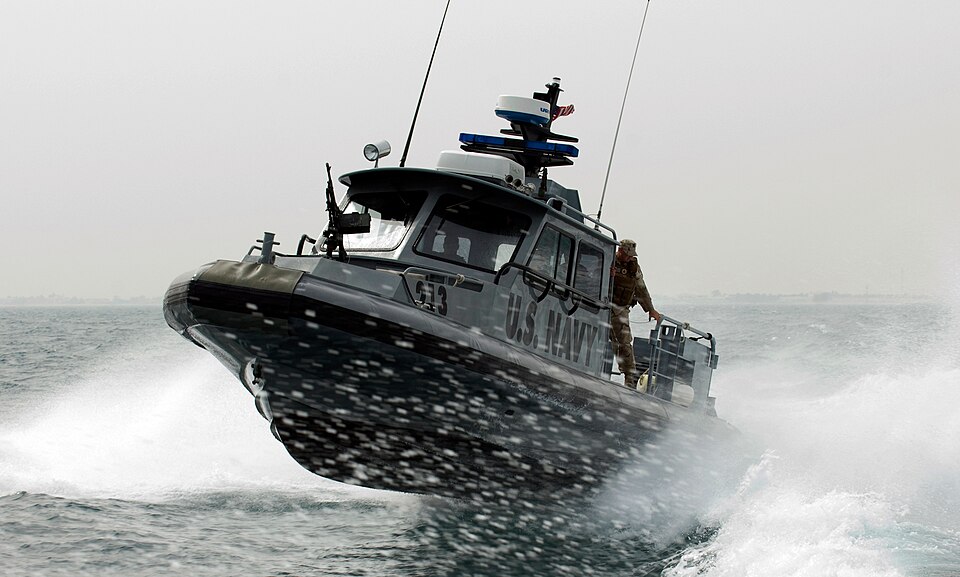
DUBAI, July 11 — For communities across Asia that depend on the steady flow of energy from the Persian Gulf, the waters of the Strait of Hormuz have never felt more precarious. The narrow waterway, a chokepoint for about 20% of global oil transit, has a long history as a flashpoint for confrontation between the United States and Iran. The latest chapter in this enduring strategic standoff carries lessons from a day, decades ago, when the simmering tensions boiled over into open combat: Operation Praying Mantis.
The roots of today’s instability stretch back to the Iran-Iraq War, which raged from 1980 to 1988. During those years, both sides targeted oil tankers and commercial shipping in the Gulf, threatening the economic lifeline of the entire region.
In response, the United States launched Operation Earnest Will in 1987, a mission to reflag and escort Kuwaiti oil tankers through the perilous strait under the protection of the U.S. Navy. It was a direct commitment to keeping the sea lanes open, and it set the stage for a direct military clash. On April 18, 1988, that clash came.
The trigger was a mine. An Iranian mine had damaged the USS Samuel B.
Roberts, a guided-missile frigate, while it was patrolling in the Gulf. The explosion pierced the hull and broke the keel of the ship, which nearly sank but was saved by its crew with no loss of life. In response, U.S. forces launched Operation Praying Mantis, a retaliatory strike that destroyed, damaged, or sank two Iranian oil platforms, two frigates, a fast-attack craft, several armed boats, and two fighter jets.
Two U.S. Marine aviators died when their helicopter crashed into the Persian Gulf. It was a decisive show of force that demonstrated Washington’s willingness to escalate to protect its interests and the freedom of navigation in the strait.
Decades of Tension, From Seizures to Exercises
The confrontation did not end in 1988. The underlying strategic rivalry between the United States and Iran has continued to define the security environment of the Strait of Hormuz. In 2019, that rivalry flared again when Iranian forces seized several foreign tankers in the strait.
One of the most high-profile incidents was the seizure of the British-flagged tanker Stena Impero in July 2019. The move, which Iran justified with claims of maritime violations, sent shockwaves through the global shipping industry and raised insurance costs for vessels transiting the region.
For families across Asia, whose economies rely on affordable energy, the incident was a stark reminder of how a single miscalculation in the strait could disrupt supply chains and drive up prices. More recently, in 2020, the United States conducted military exercises in the region. These maneuvers were a clear signal of continued American commitment to the security of the waterway, even as diplomatic relations with Iran remained frozen.
The exercises also served as a deterrent, a way of reminding Tehran that any attempt to close or severely disrupt the strait would be met with a military response.
What It Means for People Across the Region
For the millions of people in the Philippines, India, Japan, South Korea, and other Asian nations, the stability of the Strait of Hormuz is not an abstract geopolitical concept. It is a matter of energy security. The strait handles about 20% of all global oil transit, meaning that a significant portion of the crude oil that powers factories, fuels vehicles, and generates electricity in Asia passes through these narrow waters.
Any sustained disruption—whether from mines, naval skirmishes, or tanker seizures—can send oil prices spiking, hitting household budgets and slowing economic growth. The history of Operation Praying Mantis is a powerful reminder of the potential for miscalculation.
What began with a mine strike on a single warship escalated into a full-scale naval battle within hours. In today’s environment, where Iran has demonstrated a willingness to seize tankers and the U.S. maintains a robust naval presence, the same dynamic could unfold again. A similar incident—a collision, a mine, a misunderstood signal—could rapidly spiral into a conflict that affects communities from Manila to Tokyo.
Looking Ahead
As of July 2026, the Strait of Hormuz remains a corridor of both opportunity and risk. The U.S. administration under President Donald Trump, with Vice President JD Vance and Secretary of State Marco Rubio, has maintained a posture of maximum pressure on Iran, which includes a strong military deterrent in the Gulf. The Iranian government, for its part, continues to view the strait as a strategic lever—a place where it can project power and disrupt the global economy if it feels cornered.
For the families and businesses across Asia that depend on the free flow of oil, the key question is whether the lessons of 1988 have been learned by all sides. The memory of Operation Praying Mantis should serve as a cautionary tale: once the first shot is fired, the course of events can be difficult to control.
The world will be watching the strait closely, hoping that the next chapter in its long history is one of restraint, not escalation.




