
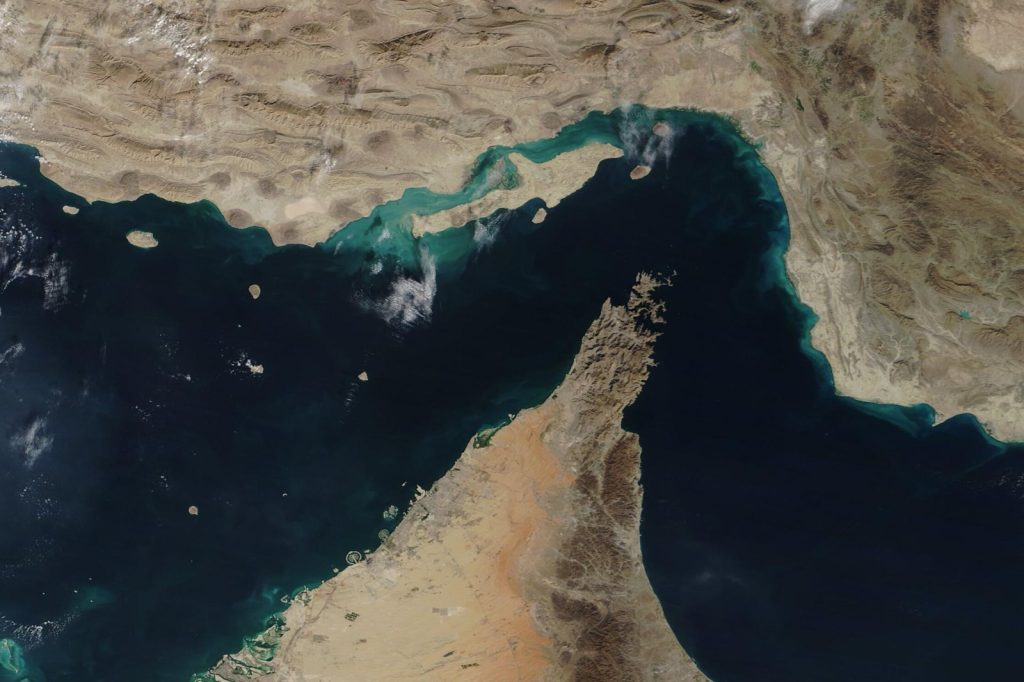
The Strait of Hormuz, a narrow waterway less than two dozen miles wide at its narrowest point, remains the central geographic flashpoint in a U.S.-Iran confrontation that has persisted for more than four decades. The channel connects the Persian Gulf to the Gulf of Oman and the Arabian Sea and serves as a vital maritime chokepoint for oil exports from Gulf states.
Its shipping lanes span only a few miles, making the strait acutely vulnerable to disruption. The strategic significance of the waterway dates to the early 20th century, when Western powers secured access to the region’s petroleum reserves. Tensions over the strait emerged as a defining feature of U.S.-Iran relations after the 1979 Iranian Revolution and the hostage crisis at the U.S. Embassy in Tehran severed diplomatic ties, which have remained frozen since 1980.
Iran’s post-revolutionary leadership cast the United States as a hostile power, while Washington viewed the Islamic Republic as a revolutionary threat. Disputes over sanctions, nuclear programs, and regional influence have repeatedly turned the strait into a venue for direct confrontation.
A Pattern of Confrontation
Historical records indicate that Iran has repeatedly threatened to block the strait in response to U.S. sanctions. During the Iran-Iraq War of 1987-1988, the U.S. Navy conducted its first escort operations for Kuwaiti tankers in the waterway after Iran targeted neutral shipping in the Persian Gulf.
The pattern of hostilities resumed in 2019, when Iran attacked oil tankers and shot down an American drone operating near the strait. In January 2020, a significant escalation occurred when the United States killed Qasem Soleimani, commander of Iran’s Islamic Revolutionary Guard Corps’ Quds Force, in a drone strike ordered by the Trump administration. That strike marked a notable escalation in the targeted killing of senior Iranian military figures.
Since Soleimani’s death, the regime has invested heavily in expanding its ballistic missile and drone capabilities. According to sources familiar with the matter, Iran has deployed these systems in proxy operations across the Middle East.
Iran’s naval forces have continued harassing operations against commercial shipping, while the U.S. Navy has maintained escort and patrol missions in response.
Military Posture and Strategic Calculus
The United States maintains a military presence across the Persian Gulf region, with bases in Bahrain, Qatar, and the United Arab Emirates. These installations serve as staging grounds for naval patrols, air operations, and rapid response forces.
The Pentagon has kept forces in the region at heightened readiness levels, particularly for potential contingencies involving the Strait of Hormuz. The Trump administration maintained a policy of maximum pressure through sanctions, though Iran has not altered its strategic posture. A key question for analysts is whether Iran’s expanded missile and drone capabilities will shift the military calculus in any future confrontation.
The U.S. military has invested in counter-drone systems and missile defense, but the sheer volume of Iran’s arsenal presents a persistent challenge. The Strait of Hormuz remains the most likely venue for any direct clash, and the Pentagon has not signaled any change in its deployment posture.
The enduring standoff, rooted in the rupture of 1979, continues to define one of the world’s most strategically important waterways and the broader struggle for influence in the Middle East.
{“@context”: “https://schema.org”, “@type”: “NewsArticle”, “headline”: “Strait of Hormuz remains volatile flashpoint in U.S.-Iran tensions”, “description”: “WASHINGTON, July 7 — The Strait of Hormuz, a narrow waterway less than two dozen miles wide at its narrowest point, remains the central geographic…”, “datePublished”: “2026-07-07T09:30:00+00:00”, “author”: {“@type”: “Person”, “name”: “Sebastian Smith”}, “publisher”: {“@type”: “Organization”, “name”: “InfoPulse Today”, “url”: “https://newsfeed.infopulsetoday.com/”}}




