
Brussels, March 17, 2022 — cybernewschronicle.com — Twenty-five years ago this May, a document was signed in Paris. It declared that NATO and Russia were no longer adversaries. That document, the 1997 NATO-Russia Founding Act, now sits in a climate-controlled vault beneath NATO headquarters.
It is a dead letter. Russia’s full-scale invasion of Ukraine, now in its fourth week, has finished what earlier aggressions began.
The 2008 invasion of Georgia. The 2014 annexation of Crimea. Each step eroded the pact.
The current war has shattered it completely. NATO’s 30 defense chiefs met in Brussels on 16 March 2022 and ordered their commanders to draw up plans for a greatly expanded forward presence along the alliance’s eastern frontier.
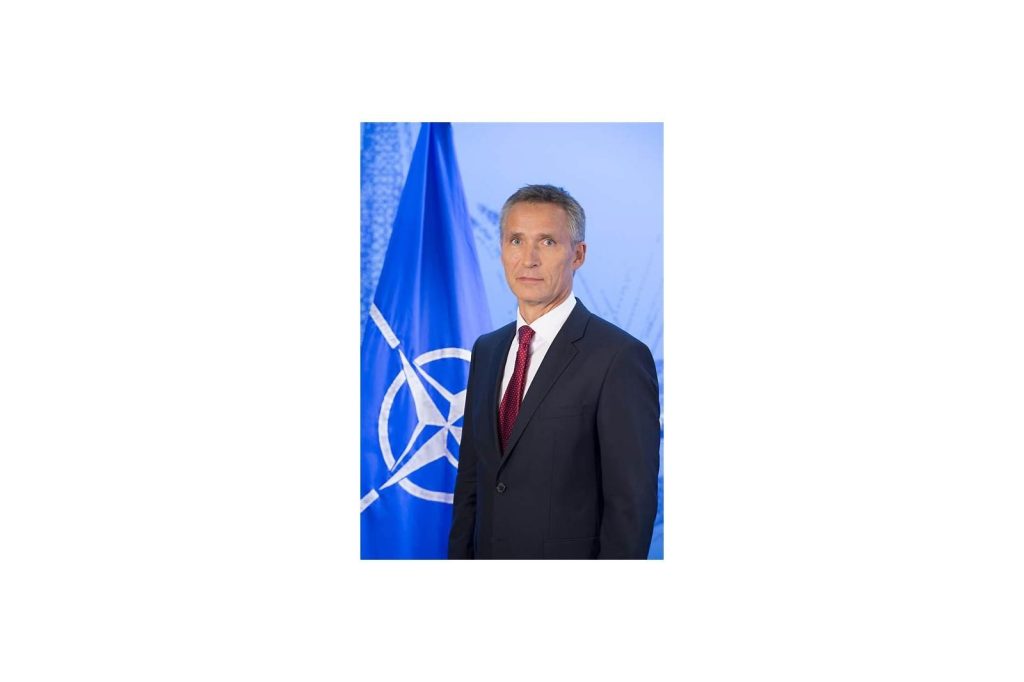
The shift is not subtle. It is a clean break from three decades of partnership policy. “We’re in a totally different security environment,” NATO Secretary-General Jens Stoltenberg told reporters.
“At that stage, we actually foresaw Russia as a strategic partner. Since then, Russia has invaded Georgia, illegally annexed Crimea and now also invaded Ukraine.” The Founding Act committed both sides to restrain force levels in Europe and build transparency. That commitment is gone.
In its place, NATO is planning a permanent, robust military posture from the Baltic Sea to the Black Sea. U.S. Defense Secretary Lloyd Austin and his allied counterparts spent Wednesday examining maps stretching from Estonia to Romania.
Their instruction to NATO’s supreme commander: present options within weeks. Those options must cover land, air, sea, cyber and space. They must be robust enough to deter any Russian move against a member state for the next decade.
That is a long horizon for a military plan. It signals that NATO expects the threat to persist regardless of how the war in Ukraine ends.
Stoltenberg listed what the new eastern shield will require. “Substantially more forces in the eastern part of the Alliance, at higher readiness, with more pre-positioned equipment and supplies.” Additional allied airpower and integrated air-and-missile defense. Carrier strike groups, submarines and “significant numbers of combat ships on a regular basis.” This is not a temporary reinforcement.
It is a structural reorientation of NATO’s military footprint. For decades, the alliance kept a relatively light presence in the east, partly out of deference to the Founding Act. That restraint is gone.
The new posture is designed to make any Russian attack on a NATO member prohibitively costly from the first hour. The speed of the planning matters.
Defense chiefs did not ask for studies or long-term reviews. They ordered options within weeks. The war in Ukraine is moving fast.
NATO is trying to move faster. What this means for the alliance’s internal politics is still unfolding.
Eastern members like Poland and the Baltic states have long argued for a heavier NATO presence. They were often told that permanent large-scale deployments would violate the spirit of the Founding Act. That argument no longer carries weight.
The practical challenges are enormous. Building up bases, stockpiling equipment, rotating forces, integrating air defenses across a front that stretches thousands of kilometers. None of it is cheap.
None of it is quick. But the political will is now present in a way it was not before.
Russia’s war has done what years of warnings could not. It has forced NATO to treat the possibility of a direct confrontation with Moscow as a planning assumption, not a hypothetical. The Founding Act is a museum piece.
The new reality is being drawn up on maps in Brussels, and it will take shape on the ground in the months ahead.




