
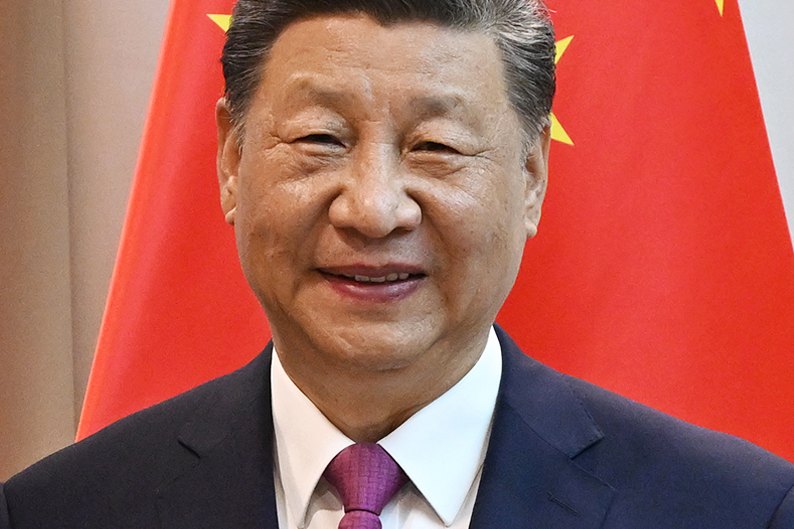
Taiwan, May 14, 2026 — cybernewschronicle.com — On May 14, 2026, a warning from Chinese President Xi Jinping to former US President Donald Trump underscored the volatile nature of the Taiwan dispute. Xi’s statement emphasized that mishandling the issue of Taiwan could lead to conflict, highlighting the longstanding geopolitical tensions surrounding the island’s sovereignty.
The dispute stems from the alleged retrocession of Taiwan from the Empire of Japan to the Republic of China (ROC) in 1945, and the ROC government’s retreat from mainland China to Taiwan as the result of the Chinese Civil War in 1949. The US has historically maintained a pro-Taiwan stance, with officials like the US Secretary of State reiterating the country’s commitment to the Taiwan Relations Act.
This act, signed into law in 1979, does not recognize Taiwan as a sovereign state but mandates the US to provide Taiwan with the means to defend itself. In response to Xi’s warning, US Secretary of Defense Lloyd Austin emphasized the importance of maintaining peace and stability in the region, while also reaffirming the US commitment to its allies and partners, including Taiwan. Austin’s statement was echoed by NATO Secretary-General Jens Stoltenberg, who stressed the need for diplomacy and dialogue to resolve the dispute.
As the situation continues to unfold, the US and its allies, including those in the AUKUS and Quad groupings, are closely monitoring developments. Australian Prime Minister Anthony Albanese and Indian Prime Minister Narendra Modi have both expressed concerns over the potential for conflict, with Albanese emphasizing the need for a peaceful resolution and Modi highlighting the importance of respecting the sovereignty of all nations.
The Quad, a grouping that includes the US, Australia, India, and Japan, has been increasingly active in promoting regional stability and security, with a particular focus on the Indo-Pacific region. Xi’s warning to Trump is not an isolated incident, but rather part of a larger pattern of assertive Chinese diplomacy. In recent years, China has increased its military presence in the region, with a particular focus on Taiwan.
The Chinese Communist Party (CCP)-led People’s Republic of China (PRC) claims Taiwan as an inalienable province of China, based on the theory of state succession. This claim is rejected by the ROC, which has exercised state authority in Taiwan independently since 1949. The US and its allies have consistently supported Taiwan’s right to self-determination, with the US providing significant military and economic aid to the island.
International Response to Escalating Tensions
As tensions between the US and China continue to rise, other nations are being drawn into the dispute. Japanese Prime Minister Fumio Kishida has expressed concerns over the potential for conflict, emphasizing the need for a peaceful resolution. Kishida’s statement was supported by South Korean President Yoon Suk-yeol, who highlighted the importance of regional stability and security.
The European Union has also weighed in on the dispute, with EU foreign policy chief Josep Borrell emphasizing the need for diplomacy and dialogue to resolve the issue. The US and its allies are taking a firm stance against Chinese aggression, with a particular focus on promoting regional stability and security.
The AUKUS pact, a trilateral security agreement between the US, Australia, and the UK, is seen as a key component of this effort. The pact, announced in September 2021, aims to promote regional stability and security, with a particular focus on the Indo-Pacific region. The Quad, which includes the US, Australia, India, and Japan, is also playing a key role in promoting regional stability and security, with a particular focus on counter-terrorism and non-proliferation.
As the situation continues to unfold, the US and its allies are preparing for all eventualities. The US has increased its military presence in the region, with a particular focus on Taiwan.
The US Navy has also increased its presence in the South China Sea, with a particular focus on promoting freedom of navigation. The US and its allies are also working to promote economic cooperation and development in the region, with a particular focus on the Indo-Pacific Economic Framework. The dispute over Taiwan’s sovereignty is complex and multifaceted, with a range of historical, cultural, and economic factors at play.
The US and its allies are committed to promoting regional stability and security, while also respecting the sovereignty of all nations. As the situation continues to unfold, it is clear that the US and its allies will play a key role in shaping the future of the region, with a particular focus on promoting peace, stability, and security.




