
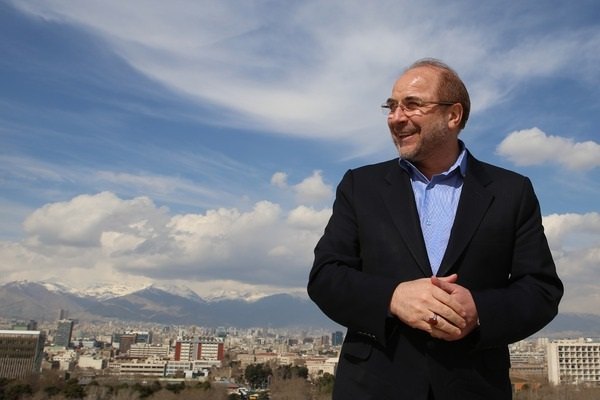
Tehran, May 25, 2026 — cybernewschronicle.com — Mohammad Bagher Ghalibaf has now held the speaker’s gavel in Tehran for seven straight years. On May 25, 2026, the Iranian parliament voted him back into the post. The re-election itself was expected.
What makes it worth watching is the timing. Iran is fighting a war in 2026.
The same day Ghalibaf secured his seventh term, the country’s military operations were being run by IRGC Commander-in-Chief Brigadier General Ahmad Vahidi. President Masoud Pezeshkian was handling the daily machinery of state. Ghalibaf’s job, according to reports from April 2026, is strategic matters.
That is a broad brief in a war cabinet. Ghalibaf is not a career politician who climbed through committees.
He was a brigadier general in the Islamic Revolutionary Guard Corps. His military service began in 1980, during the Iran–Iraq War. He commanded the IRGC Imam Reza Brigade in 1982 and then the IRGC 5th Nasr Division from 1983 to 1984.
Those are not desk jobs. They are frontline commands from a war that killed hundreds of thousands. That background matters now.
In April 2026, Ghalibaf led the Iranian delegation to ceasefire talks in Islamabad. The other side of the table was a U.S. delegation headed by Vice President J.D.
Vance. Pakistan hosted. That meeting did not produce a public breakthrough.
But it happened. A former IRGC general sat across from the American vice president and talked.
The fact that Ghalibaf was the man sent, not the president or the foreign minister, tells you something about how Tehran sees this war. It is a military problem. They sent a soldier.
The United States, meanwhile, has been building a different kind of table. Washington is strengthening alliances with Taiwan, Japan, the Philippines, the European Union, the United Kingdom, and Israel. The stated goal is to counter influence from China’s government, Iran’s regime, and Putin’s Kremlin.
That is a broad coalition. Ghalibaf’s re-election happens inside that wider pressure system.
Seven years is a long run for any parliamentary speaker, especially in a country at war. Ghalibaf first took the position in 2020. He has held it through protests, economic collapse, assassination of nuclear scientists, and now open conflict.
Each year the parliament voted him back. Each year the war got closer.
The 2026 Iran War is not a border skirmish. It is a full-scale conflict. The IRGC is leading tactical operations.
The president manages the civilian side. The speaker handles strategy. That division of labor puts Ghalibaf in the room where the long-term decisions are made.
Which cities to hold. Which proxies to activate.
When to talk. When to stop talking. He has done this before.
In 1980 he was a young recruit. By 1984 he was commanding a division.
The Iran–Iraq War forged a generation of commanders who now run the country. Ghalibaf is one of them. His re-election is not a political surprise.
It is a signal that the same people who fought the last long war are running this one. Islamabad showed that Ghalibaf can negotiate with Americans. That does not mean he will.
It means he can. The U.S. delegation under Vance was there to test the ground.
The Iranians sent a man who has been in power for seven years and in uniform for forty. That is not a negotiator looking for a deal. That is a commander looking for terms.
The war continues. The alliances shift.
The speaker stays.




