
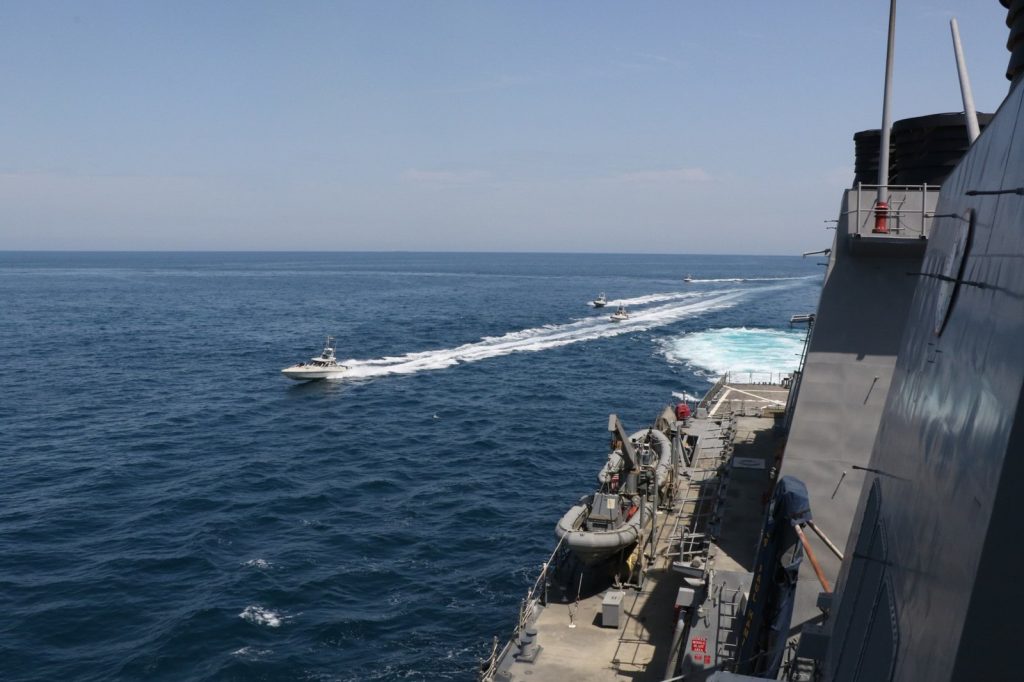
TEHRAN, July 7 — A newly compiled assessment of Iranian naval tactics in the Strait of Hormuz details a sustained campaign of asymmetric warfare by the Islamic Revolutionary Guard Corps (IRGC) Navy against commercial shipping. The record shows the IRGC relies on swarms of small speedboats, naval mines, and helicopter-borne assaults to disrupt one of the world’s most critical energy chokepoints. According to the assessment, the IRGC Navy operates from bases along Iran’s southern coast, including Bandar Abbas and Qeshm Island.
These facilities provide staging points for fast-attack craft armed with machine guns and anti-ship missiles. The IRGC also deploys both moored and bottom naval mines to threaten shipping lanes.
The document cites multiple recent incidents that illustrate Iran’s willingness to seize vessels directly. In 2023, IRGC forces boarded and seized the Advantage Sweet, a tanker flagged to the Marshall Islands. The previous year, Iran seized two Greek tankers in similar operations.
In each case, boarding teams arrived on fast boats. Iran has also employed limpet mines to damage ships.
The 2019 attacks on the tankers Kokuka Courageous and Front Altair near Fujairah stand as a clear example. Those strikes damaged the vessels. The U.S. Navy’s Fifth Fleet and allied naval forces conduct regular patrols in the region.
Sources familiar with the operational environment acknowledge the difficulty of countering small, fast boats. The IRGC’s tactics are designed to impose costs on commercial shipping while avoiding direct confrontation with larger American warships. Iran also uses drones for both surveillance and attack missions, adding another layer to the threat picture.
The combination of speedboats, mines, helicopters, and unmanned systems creates a layered defensive zone. The Strait of Hormuz sees a significant portion of the world’s oil pass through its narrow waters.
The IRGC’s playbook is calibrated to exploit that vulnerability without triggering a full-scale naval engagement. For now, the pattern holds: harassment, seizure, and deniable attacks, all short of open war.




