
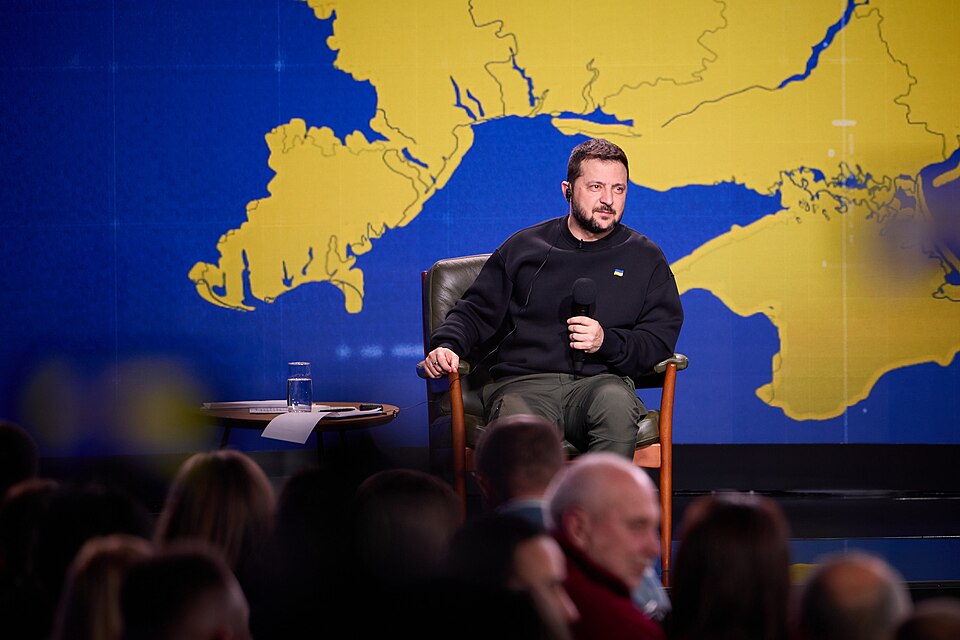
KYIV, July 15 — The shift is unmistakable: Ukrainian President Volodymyr Zelenskyy has drawn a hard line between energy and territory, rejecting any proposal that would trade Russian fuel for Ukrainian land. In a statement reported on June 2, 2025, Zelenskyy told international media, “We don’t want Russia without fuel, we want Ukraine without war.” The remark cuts through months of negotiation and mounting international pressure to end the Russo-Ukrainian War, which began with Russia’s full-scale invasion on February 24, 2022.
Zelenskyy has consistently demanded a complete withdrawal of Russian forces from all occupied Ukrainian territory, including Crimea, which Russia annexed in March 2014. His June statement underscores that any peace deal must prioritize sovereignty and territorial integrity over economic or energy concessions.
The war has resulted in tens of thousands of casualties, displaced millions, and caused significant damage to Ukraine’s infrastructure. The Ukrainian position is clear: no amount of Russian energy supply is worth trading away a single square kilometer of land. This is not a new stance.
Since the early days of the invasion, Zelenskyy has framed the conflict as existential. But the June 2025 statement sharpens the point.
Watch this space: as winter approaches and European energy markets tighten, the pressure on Kyiv to consider such trades will only intensify. The trend underneath is that Ukraine is betting its long-term security on Western support, not on Russian pipelines.
The International Chessboard
Key international players include the United States, the European Union, and NATO, which have provided military, economic, and humanitarian aid to Ukraine. Russia’s economy has faced extensive sanctions from Western nations since 2014 and especially after the 2022 invasion. Zelenskyy’s rejection of energy-for-territory deals comes as Russia has used energy exports as a geopolitical weapon, cutting supplies to several European countries in retaliation for sanctions.
The Ukrainian president’s phrasing — rejecting a Russia “without fuel” — signals that even a crippled Russian energy sector is not a sufficient prize to justify territorial losses. What’s changing is the calculus: as the war grinds into its fourth year, both sides are looking for leverage, and energy remains Russia’s strongest card.
What to Watch Next
The immediate question is whether international mediators will continue to float energy-for-territory proposals or pivot to a framework that respects Ukraine’s red line. Zelenskyy’s statement, while firm, does not close the door on all negotiations — it closes the door on one specific trade. The coming months will test whether Western allies can maintain unity on sanctions and aid, and whether Russia can sustain its war effort under continued economic pressure.
For now, the Ukrainian president has set a marker. The trend underneath is clear: in this war, sovereignty is not for sale — not for oil, not for gas, not for any price.




