
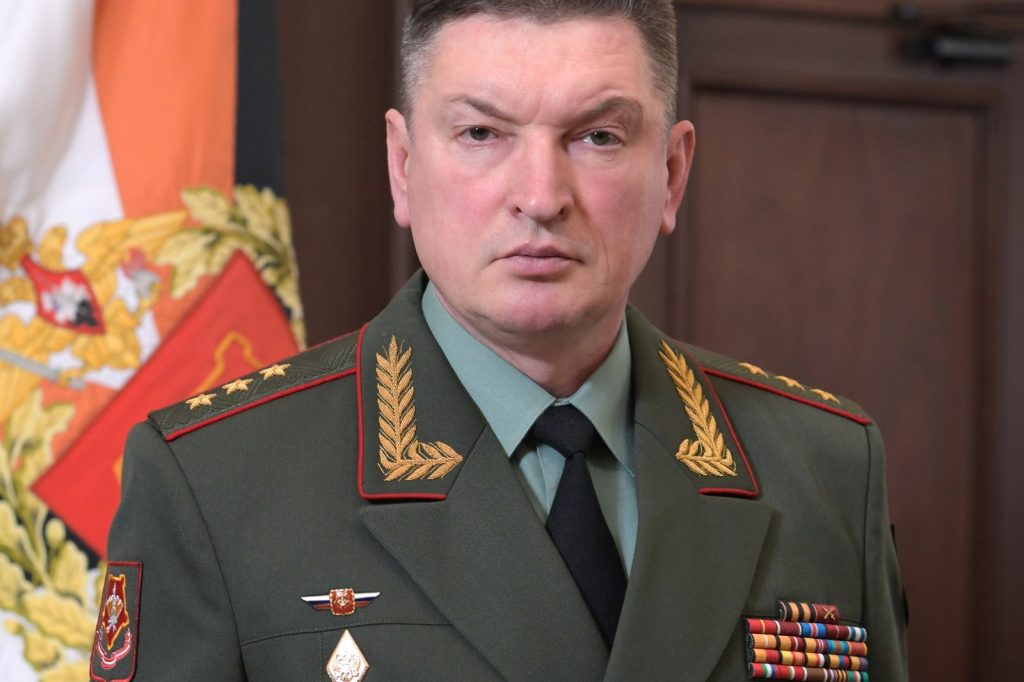
MOSCOW, August 5 — Russian President Vladimir Putin initiated a significant overhaul of his military leadership in Ukraine, appointing Army General Aleksandr Lapin as Chief of the General Staff on May 12, 2024. This move replaced Valery Gerasimov, who had served in the critical post since 2012, marking a clear response to what has been months of largely stagnant Russian advances on the battlefield.
The mechanics here suggest a direct consequence of battlefield realities. Gerasimov, aged 68, remains within the military hierarchy but has lost his direct command role, a demotion widely interpreted as a direct result of Russia’s inability to secure significant territorial gains. This comes despite a reported 360,000-strong mobilized force, highlighting the disconnect between resource allocation and strategic outcomes. The change follows a series of setbacks, notably the failed 2023 summer offensive in Zaporizhzhia and the earlier withdrawal from Kharkiv in September 2022.
Lapin, 56, steps into the role with a background that includes commanding the Central Military District and involvement in the 2022 invasion planning, including the initial push toward Kyiv. His appointment coincides with a renewed Russian focus on capturing the Donbas region. Fighting has intensified around the towns of Chasiv Yar and Avdiivka, both situated in Donetsk Oblast, indicating a shift in immediate operational priorities.
The Counteroffensive’s Mechanics
Ukraine’s 2023 counteroffensive, supported by Western supplies including M1 Abrams tanks and HIMARS rocket systems, initially recaptured over 500 square kilometers. But the catch is that this momentum stalled by November 2023, largely due to heavily mined Russian defenses. The effectiveness of Western aid, while significant, faced a formidable static defense. The U.S. has committed over $44.2 billion in military aid to Ukraine since February 2022, with a substantial $60 billion supplemental package approved by the U.S. House of Representatives in April 2024. NATO members, including Germany and the UK, have also pledged continued support, with Germany delivering Leopard 2 tanks and the UK providing Storm Shadow long-range missiles.
Russia’s Industrial Response
On closer reading, Russia’s response to these challenges extends beyond leadership changes. Russia has demonstrably increased its domestic arms production. President Putin stated in December 2023 that defense output had tripled, including a 24-fold increase in drone production. This pivot to increased industrial capacity aims to offset battlefield losses and sustain long-term operations.
The appointment of Lapin, coupled with Russia’s intensified focus on the Donbas and a bolstered domestic arms industry, suggests an attempt to recalibrate the strategic direction. The coming months will reveal whether these internal adjustments translate into tangible shifts on the front lines, particularly as Western support continues to flow to Ukraine.
Sources
{“@context”: “https://schema.org”, “@type”: “NewsArticle”, “headline”: “Putin Appoints Lapin As Chief Of General Staff Replacing Gerasimov”, “description”: “MOSCOW, August 5 — Russian President Vladimir Putin initiated a significant overhaul of his military leadership in Ukraine, appointing Army General Aleksandr Lapin as Chief…”, “datePublished”: “2026-08-05T09:30:00+00:00”, “author”: {“@type”: “Person”, “name”: “Beatrice Ferrari”}, “publisher”: {“@type”: “Organization”, “name”: “InfoPulse Today”, “url”: “https://newsfeed.infopulsetoday.com/”}, “citation”: [{“@type”: “CreativeWork”, “url”: “https://en.wikipedia.org/wiki/Vladimir_Putin”}]}




