
WASHINGTON, July 30 — Washington says sanctions are squeezing the pipeline of weapons components into Russia. But the United Nations Security Council’s paralysis over North Korea tells a different story. Since August 2022, the United States has imposed sanctions on 23 Iranian and 16 North Korean entities linked to arms transfers.
The list includes the Central Bank of Iran and North Korea’s Second Academy of Natural Sciences (SANS) — both central nodes in the procurement web. The European Union followed with its eighth sanctions package in October 2022, targeting Iranian drone producers directly.
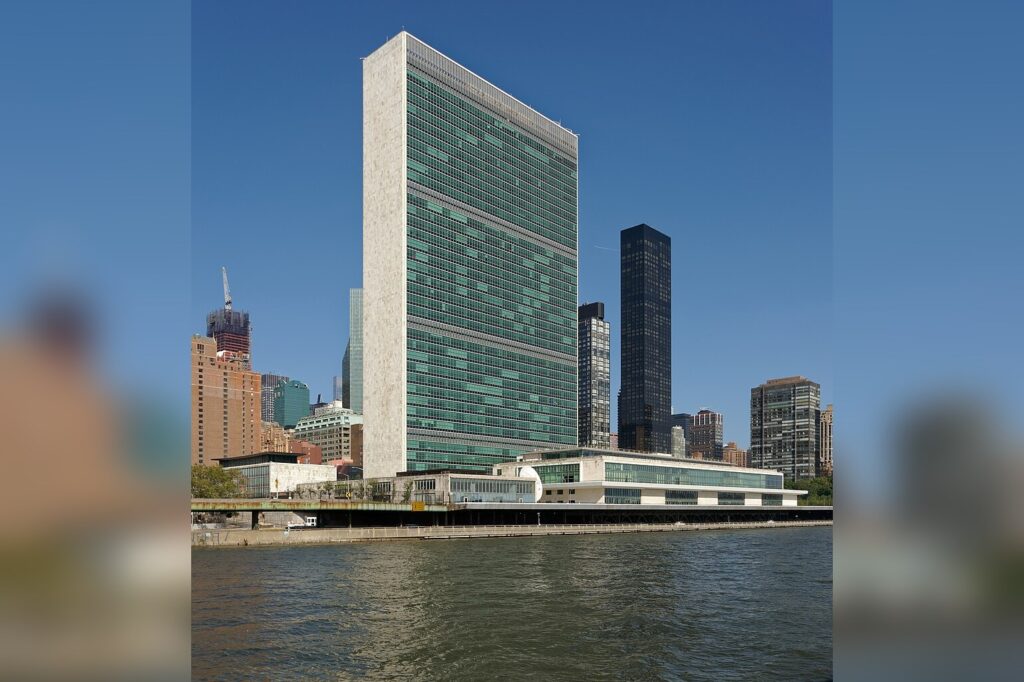
On paper, the architecture looks formidable. The catch is at the United Nations. Russia’s veto power has paralyzed the Security Council on the North Korea file; in March 2024, the body failed to renew the mandate of the Panel of Experts that monitors sanctions on Pyongyang.
Without that panel, verification of arms transfers — and naming and shaming — grows harder. The mechanisms weaken just as demand from Moscow rises.
Unilateral moves fill the gap
South Korea, which shares the Korean Demilitarized Zone line with the North, has condemned the transfers and imposed its own unilateral sanctions on 11 North Korean vessels and four entities. Japan has added asset freezes on North Korean entities. NATO has increased intelligence sharing with Ukraine, though how that intelligence translates into interdiction is a question the alliance does not detail publicly.
Sanctions have long been a primary tool for the international community to curb the proliferation of weapons and related technologies, particularly in regions of geopolitical tension. The use of economic measures to pressure regimes into compliance with global norms is a strategy that has been employed for decades, with varying degrees of success.
In this context, the targeting of financial institutions and key procurement entities aims to disrupt the flow of resources that enable arms development and transfers. The United Nations Security Council has historically played a central role in enforcing multilateral sanctions, but its effectiveness can be compromised by the veto power held by its five permanent members. When consensus breaks down, individual nations or regional blocs often pursue their own sanctions regimes to address gaps left by inaction at the UN.
This fragmented approach can create challenges in coordination and enforcement, as different jurisdictions may have varying levels of commitment and capacity to implement restrictions. The situation on the Korean Peninsula remains a persistent flashpoint, with North Korea’s nuclear and missile programs drawing consistent condemnation from the international community.
The involvement of external actors in supplying or facilitating arms transfers adds complexity to efforts to maintain stability in the region. Neighboring countries, particularly those directly affected by the threat of North Korean aggression, have a strong incentive to take independent action to counter perceived security risks. NATO’s role in addressing security threats extends beyond its traditional European focus, as the alliance has increasingly engaged in information-sharing and cooperative measures to address global challenges.
However, the effectiveness of such efforts often depends on the willingness of member states to act on the intelligence provided and the ability to coordinate responses across different legal and operational frameworks.




