
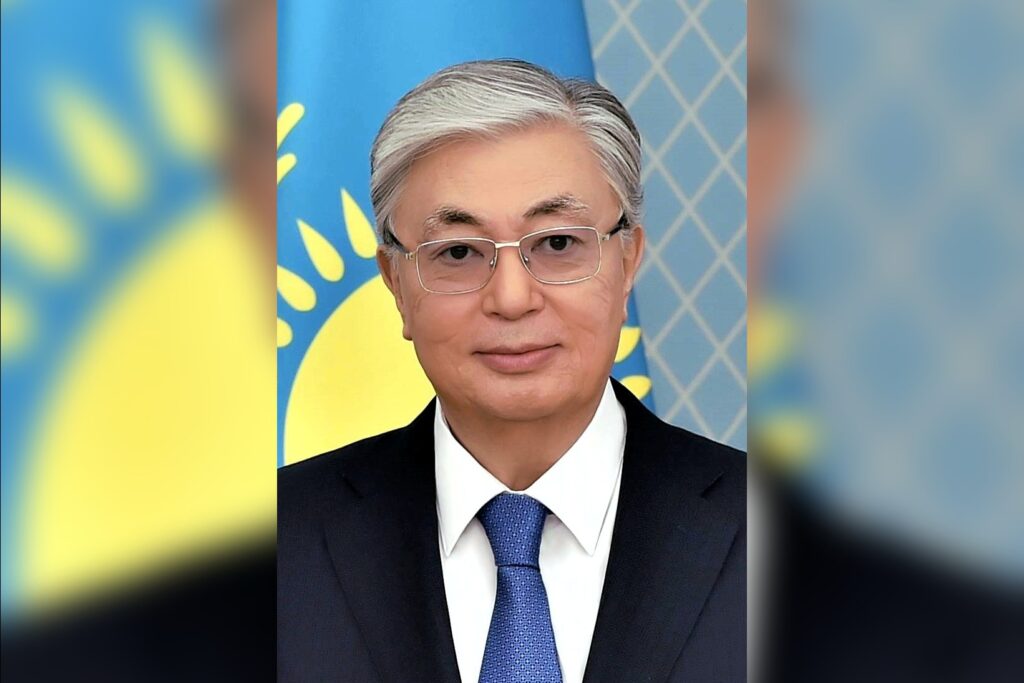
BRUSSELS, July 25 — In the corridors of European diplomacy, a quiet but consequential manoeuvre from Central Asia is drawing renewed attention to the frozen front lines of the war in Ukraine. Against this backdrop of entrenched positions and war fatigue, President Kassym-Jomart Tokayev of Kazakhstan has floated a proposal intended to break the deadlock. While the precise terms remain unstated in public, the initiative has already set expectations—and alarms—among Western allies who have backed Kyiv since the full-scale invasion began in early 2022.
The Kremlin has not yet responded to Tokayev’s offer, but analysts predict a cool reception given President Vladimir Putin’s stated objective of total victory in Ukraine. Russia’s official stance, reaffirmed by Foreign Minister Sergey Lavrov in 2024, demands international recognition of Moscow’s annexation of four Ukrainian regions—Donetsk, Luhansk, Zaporizhzhia and Kherson, annexed in September 2022—as well as Crimea, which was annexed in March 2014.
For its part, Ukraine has not budged from the ten-point peace formula that President Volodymyr Zelensky outlined at the United Nations General Assembly in 2024. That blueprint calls for the full withdrawal of Russian forces, restoration of Ukraine’s sovereignty over all occupied territories, and the establishment of war crimes tribunals.
A Diplomatic Surprise from Central Asia
Tokayev’s intervention has been described as a potential diplomatic opening, but it lacks enforcement mechanisms—a critical weakness in a conflict where failure to implement previous ceasefires has become a grim pattern. The United Nations Secretary-General, António Guterres, has repeatedly called for a ceasefire, but no headway has been made on that front either. What is at stake now is whether the proposal can gain any traction.
The next steps are likely to involve bilateral talks between Kazakhstan and Russia to clarify the initiative, possibly on the margins of an upcoming summit of the Shanghai Cooperation Organisation (SCO), a bloc founded in 2001 that includes Russia, China and several Central Asian states. The SCO’s membership and mandate make it a natural venue for such discussions.
The United States State Department has not yet issued a formal comment, but the administration of President Donald Trump has historically supported Ukraine’s territorial integrity. Any proposal that resembles a “freeze” of the current front lines would almost certainly be rejected by Kyiv and its allies unless it includes ironclad security guarantees and a clear path toward the de-occupation of Ukrainian land.
The Wider Picture: Entrenched Positions and High Stakes
The wider picture is one of extraordinary Western investment. The United States and the European Union have provided over $175 billion in assistance to Ukraine since January 2022, according to a Congressional Budget Office estimate from 2024. At the same time, NATO has undergone its most significant enlargement in decades: Finland joined in April 2023, and Sweden followed in March 2024—a direct strategic consequence of Russia’s invasion.
Neither side appears ready to yield on core demands. The Kremlin shows no sign of relaxing its insistence on full control of the annexed territories, while Ukraine’s government has repeatedly ruled out any territorial concessions.
Against this backdrop, Tokayev’s move appears as a bold but risky effort to test the temperature for diplomacy. Whether it will lead anywhere depends on the receptiveness of parties whose positions remain radically opposed—and on the willingness of the international community to push for enforcement mechanisms that have so far been absent from every ceasefire proposal that has come before.
{“@context”: “https://schema.org”, “@type”: “NewsArticle”, “headline”: “What Happens Next: Expected Responses from Russia, Ukraine, and the”, “description”: “BRUSSELS, July 25 — In the corridors of European diplomacy, a quiet but consequential manoeuvre from Central Asia is drawing renewed attention to the frozen…”, “datePublished”: “2026-07-25T09:30:00+00:00”, “author”: {“@type”: “Person”, “name”: “Beatrice Bianchi”}, “publisher”: {“@type”: “Organization”, “name”: “InfoPulse Today”, “url”: “https://newsfeed.infopulsetoday.com/”}}




