
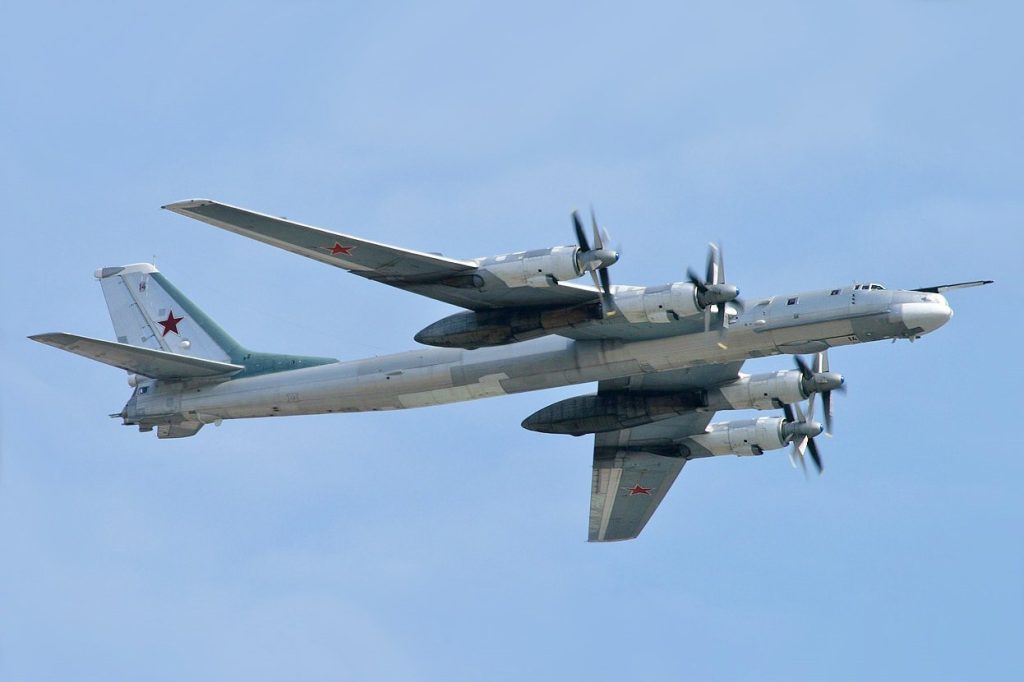
SARATOV — Against this backdrop of a war, a fresh fire at the Engels-2 air base in Russia’s Saratov region has once again drawn attention to the persistent vulnerabilities in Moscow’s long-range bomber network. The overnight blaze, the origin of which has not been confirmed, echoes a pattern that first emerged in the autumn of 2022 and has since become an uncomfortable fixture of the conflict: fires, explosions, and drone incursions at strategic Russian airfields, many of them hundreds of kilometres from the Ukrainian border.
The Engels base is no stranger to such incidents. On December 5, 2022, Ukrainian drones struck both Engels-2 and the Dyagilevo air base near Ryazan.
The Russian Defense Ministry reported that three personnel were killed at Engels and that two Tu-95 bombers suffered superficial damage. Satellite imagery later confirmed that at least two aircraft at Engels had been damaged. That attack, high-profile and audacious, proved that Ukraine could reach deep into Russian territory with precision strikes, using modified commercial drones or Soviet-era Tu-141 Strizh drones—a capability that has since been demonstrated repeatedly.
The ability to hit the same air base multiple times suggests that while Russia has hardened some defences, persistent security gaps remain. Earlier, on September 22, 2022, Engels was the target of a suspected Ukrainian drone attack, though a small drone was reportedly downed near the base without causing damage.
The latest overnight fire, therefore, fits a disturbing rhythm for the Russian Aerospace Forces, one that undermines the narrative of an impregnable homeland defence.
Crimea and the Moscow periphery
The most destructive single incident occurred on August 9, 2022, at the Saky air base in Crimea. A series of explosions, which the Russian military described as a detonation of aviation munitions, tore through the facility. Satellite images taken the following day, on August 10, showed at least eight aircraft destroyed or severely damaged, including Su-30 and Su-24 fighters.
Ukrainian officials at the time hinted at responsibility but did not formally claim the attack, leaving the precise origin—whether a Ukrainian strike, sabotage, or accident—a matter of speculation that the Kremlin has never fully clarified. Closer to the capital, on July 31, 2022, explosions were reported at the Chkalovsky air base near Moscow.
Russia denied any damage, but the very fact that such reports could circulate highlighted a growing unease. The Borisoglebsk air base in Voronezh Oblast experienced a fire in April 2023, which the authorities officially attributed to a grass fire. Whether these were genuine accidents, acts of sabotage, or Ukrainian deep strikes remains debated in open sources, but what is at stake is clear: the repeated disruptions at air bases that house strategic bombers, fighter aircraft, and critical munitions directly affect Russia’s ability to project air power over Ukraine and beyond.
A pattern of persistent vulnerability
What is striking is the consistency of these incidents. From the summer of 2022 through the spring of 2023, the pattern echoes: fires, explosions, or drone incursions at air bases that Russia had long considered safe from direct attack. The wider picture is one of a conflict that has spilled across borders in ways that were unthinkable before February 2022.
Ukraine has demonstrated a capacity to strike deep inside Russia, often using relatively low-tech platforms—modified commercial drones or Soviet-era relics such as the Tu-141—against high-value targets. The latest fire at Engels does not, in itself, signal a new phase in the war.
But it does underscore that Moscow’s efforts to seal off its strategic installations have not eliminated the threat. As the overnight blaze at Engels continues to be investigated, the question that lingers is not whether such attacks will happen again, but which base will be next—and how Russia will respond to a vulnerability that, after more than a year of war, remains stubbornly unresolved.
{“@context”: “https://schema.org”, “@type”: “NewsArticle”, “headline”: “A History of Drone Strikes and Fires at Russian Air Bases Since 2022”, “description”: “SARATOV — Against this backdrop of a war, a fresh fire at the Engels-2 air base in Russia’s Saratov region has once again drawn attention…”, “datePublished”: “2026-07-25T09:30:00+00:00”, “author”: {“@type”: “Person”, “name”: “Beatrice Bianchi”}, “publisher”: {“@type”: “Organization”, “name”: “InfoPulse Today”, “url”: “https://newsfeed.infopulsetoday.com/”}}




