
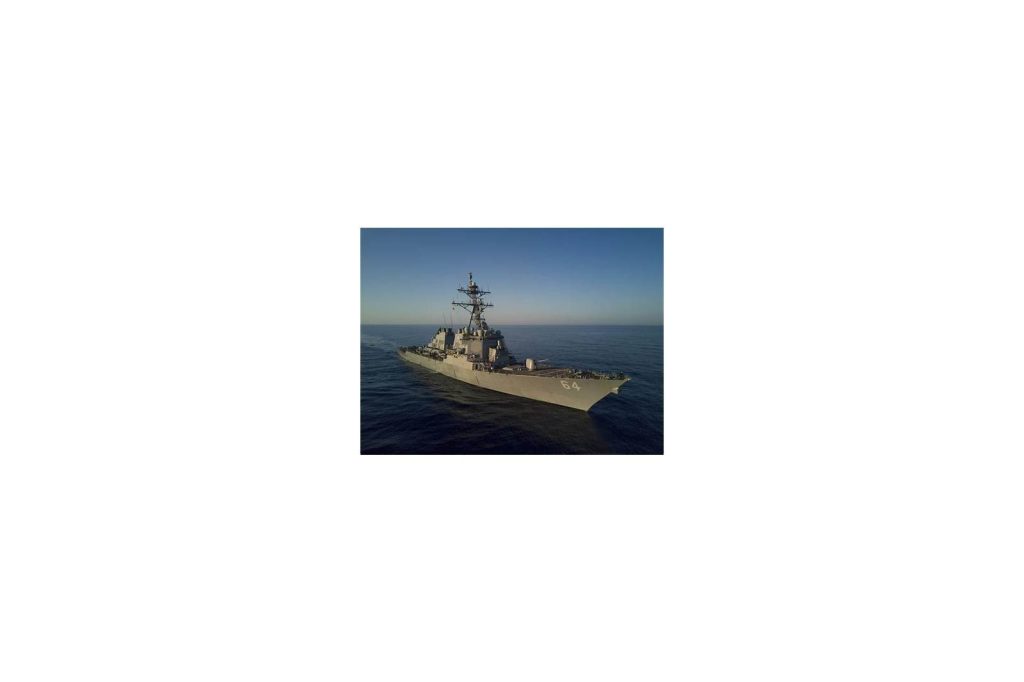
WASHINGTON, July 22 — Operation Prosperity Guardian, launched by the United States in December 2023, remains a cornerstone of efforts to safeguard Red Sea shipping lanes from Houthi threats. The coalition, now in its eighth month, includes more than twenty nations such as the UK, France, Bahrain, Canada, and Spain. Commanded by the U.S. Navy’s Combined Maritime Forces from Bahrain, the operation has focused on intercepting Houthi drones and missiles before they reach commercial vessels.
Early in the campaign, U.S. Navy destroyers—including USS Carney, USS Laboon, and USS Gravely—successfully intercepted dozens of incoming threats using Standard Missile-2 and Evolved Sea Sparrow Missiles. These engagements have prevented disruptions to global trade routes that carry critical goods through one of the world’s most vital maritime corridors.
In January 2024, the U.S. and UK conducted limited airstrikes on Houthi military infrastructure in Yemen. Targets included missile storage sites, radar systems, and drone launch pads in Sanaa, Hodeida, and Saada. The strikes were carried out using Tomahawk cruise missiles, B-2 bombers, and F/A-18 fighter jets launched from the USS Dwight D.
Eisenhower. A second round of strikes followed later that month, targeting additional missile and launch facilities.
U.S. Central Command (CENTCOM) reported that these strikes degraded Houthi military capabilities. While the exact scope of degradation was not quantified in public assessments, CENTCOM commander General Michael Kurilla stated the operation had degraded Houthi capability by a measurable degree. Despite this progress, Houthi forces retain the ability to launch attacks using mobile and concealed launchers, continuing to threaten commercial shipping in the Gulf of Aden.
No casualties have been reported among U.S. or coalition forces during these operations. However, the mission faces significant challenges. Completely dismantling Houthi military capacity risks provoking a broader regional conflict, particularly with Iran, which has been accused of supporting the Houthis through arms and training.
Diplomatic efforts have sought to isolate the Houthis, with the UN Security Council adopting Resolution 2722 in January 2024. The resolution condemned Houthi attacks on shipping and demanded an immediate end to such actions.
The Houthis have continued asymmetric strikes, including attacks on vessels in the Gulf of Aden. These operations demonstrate the group’s ability to adapt and persist despite sustained pressure. The coalition’s strategy has balanced direct military action with diplomatic pressure, aiming to reduce threats without triggering a wider war.
Analysts note that while the military component of Operation Prosperity Guardian has achieved tactical successes, the long-term durability of these gains depends on sustained coordination among allies and continued enforcement of maritime security. The operation’s durability also hinges on preventing escalation with regional actors who may seek to exploit any perceived weakness.
Looking ahead, the focus remains on maintaining freedom of navigation while minimizing civilian and commercial disruptions. The U.S. administration continues to emphasize a dual-track approach: deterrence through presence and dialogue through multilateral institutions. For now, the Red Sea remains a flashpoint—but one where international resolve has so far prevented a broader crisis.
Consult your doctor if you have concerns about travel or regional developments affecting health or safety.




