
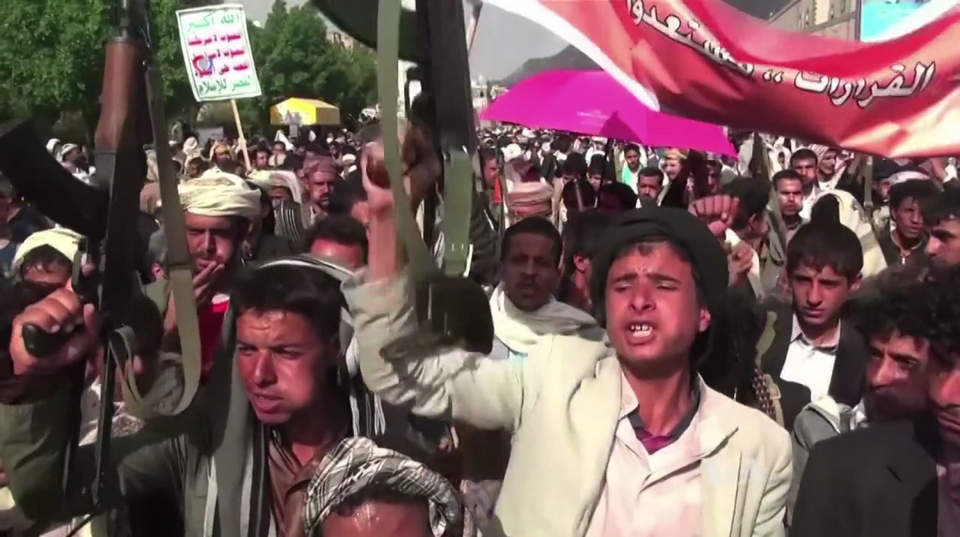
RIYADH, July 20 — The Houthi movement has threatened to block Saudi shipping in the Red Sea, a move that would directly target the kingdom’s largest sea port and choke the flow of roughly nine million barrels of oil produced daily, according to the record of the group’s military statements and the timeline of the war in Yemen. Saudi Arabia has been the Houthis’ main adversary since leading a military intervention in Yemen on March 25, 2015, alongside a coalition of several Arab states.
On the timeline, the Houthis have repeatedly struck Saudi territory with ballistic missiles and unmanned aerial vehicles. A January 2018 missile was intercepted over Riyadh.
The September 14, 2019, attack on the Abqaiq and Khurais facilities — using drones and cruise missiles — cut Saudi oil production by 50 percent, removing 5.7 million barrels per day from global markets. Repeated strikes have hit Jeddah and other cities. Now, sources familiar with Houthi strategy say the group is threatening a naval blockade.
Their declared targets include Jeddah Islamic Port, the largest sea port on the Red Sea; King Abdullah Port near Rabigh; and Yanbu Commercial and Industrial ports. A blockade would directly threaten Saudi oil exports and the global economy.
A History of Attacks
The Houthis first demonstrated the reach of their drone and missile arsenals years ago. The Abqaiq–Khurais attack in 2019 remains the most costly single disruption to Saudi oil infrastructure. That strike halved the kingdom’s crude output overnight, sending shockwaves through energy markets.
Since then, the group has continued launching attacks on Saudi soil, including on the Red Sea city of Jeddah. Saudi Arabia operates a navy with frigates, corvettes, and support vessels.
The United States has maintained a military presence in the kingdom since 1990, though most combat troops were withdrawn after 2003. A blockade of its Red Sea ports would not only halt the outflow of crude but also imperil the entire global supply chain that depends on the Suez Canal–Red Sea route. Saudi Crown Prince Mohammed bin Salman has prioritized the Vision 2030 economic reform agenda and seeks to reduce regional conflicts.
That imperative has driven the kingdom to pursue peace talks with the Houthis under United Nations mediation. A truce that lasted from April to October 2022 ultimately expired, and no successor agreement has been reached.
The Red Sea Threat and Global Stakes
Saudi Arabia holds about 17 percent of the world’s proven oil reserves and produced roughly nine million barrels per day as of 2024. The kingdom is the second-largest oil producer on earth and the leading exporter. Any sustained disruption at Jeddah Islamic Port would ripple through the kingdom’s import-dependent economy.
The country itself is vast — covering the bulk of the Arabian Peninsula, with a coastline on both the Red Sea and the Arabian Gulf. Its capital is Riyadh.
Jeddah, the main Red Sea port city, is also the gateway for the two holiest cities in Islam, Mecca and Medina. Saudi Arabia was founded in 1932 by King Abdulaziz and has since been governed as an absolute monarchy under the House of Saud. Oil was discovered in 1938, transforming the kingdom into the world’s second-largest oil producer and leading exporter.
It is the only Arab country in the G20 and the largest economy in the Middle East. The 2015 intervention in Yemen marked the most ambitious Saudi military operation in decades, aimed at rolling back Houthi gains after the group seized the Yemeni capital, Sanaa, in late 2014.
What comes next depends on whether the Houthis follow their threats with action, and how the Saudi navy — backed by the United States — responds. The truce is expired. The risk of a blockade that could cut off nearly a tenth of the world’s daily oil supply is real.
The timeline of the conflict suggests the Houthis possess both the intent and the means to strike Red Sea shipping. The question is whether diplomacy or force will prevail.




