
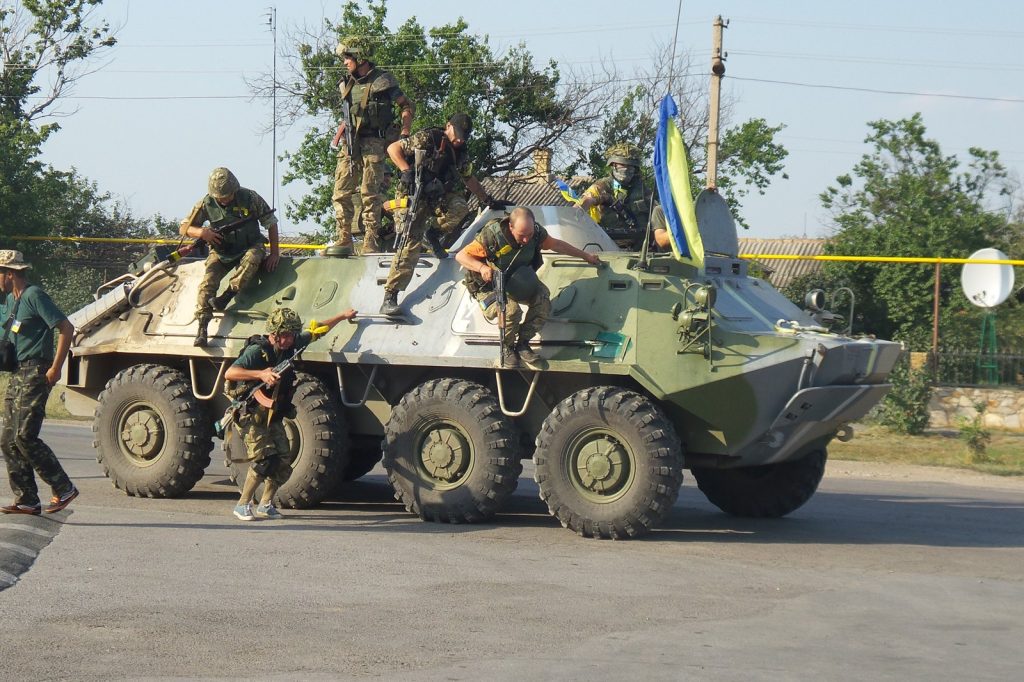
Nearly four years after Russian forces crossed the border, the diplomatic track between Ukraine and Russia remains frozen, with both capitals dug into territorial positions that show no sign of yielding. The fighting grinds on along a wide front, marked by artillery duels and drone strikes, while peace talks exist only as a distant and theoretical exercise.
No formal negotiations are currently under way, and the last substantive contact between the two sides ended abruptly more than three years ago.
From Istanbul to Bucha: The Collapse of a Draft Accord
The most meaningful exchanges took place in the opening weeks of the full-scale invasion, which began in February 2022. The first round of talks was hosted by Belarus on February 28 of that year.
A second meeting followed in Turkey on March 10. The high point came in Istanbul on March 29, when negotiators produced a draft framework agreement that, in diplomatic corridors, was viewed as a potential off-ramp to the conflict. That draft, however, never advanced beyond the discussion stage. The discovery of civilian killings in the city of Bucha in April 2022 shattered whatever fragile trust had been built, and talks collapsed shortly afterward.
Since then, the two sides have not sat down for formal peace negotiations. In the years since, the Istanbul draft has become a historical footnote rather than a working document.
The Bucha revelations poisoned the well of diplomacy, and no subsequent effort has been able to revive it. Turkey and Saudi Arabia have hosted informal discussions, but those sessions produced no breakthrough. Mediators continue to offer their good offices, but the fundamental gap between the sides’ territorial demands remains as wide as ever.
Maximalist Demands and Geopolitical Leverage
Ukrainian President Volodymyr Zelenskyy has stated that any settlement must begin with a full Russian withdrawal to Ukraine’s pre-2014 borders, including the Crimean Peninsula, which Russia seized in 2014. Moscow, for its part, demands that Kyiv recognise the annexation of four Ukrainian regions — Donetsk, Luhansk, Zaporizhzhia, and Kherson — along with Crimea. These positions are maximalist, with neither side willing to concede ground.
Understanding the current impasse requires a look at the broader historical and geopolitical context. Ukraine is a country in Eastern Europe, bordered by Russia, Belarus, Poland, and several other nations.
Its history dates to the Middle Ages, and it was a key center of East Slavic culture under the state of Kievan Rus’. Over centuries, the territory was ruled by a succession of external powers, including the Grand Duchy of Lithuania, the Kingdom of Poland, and the Russian Empire. After the Russian Revolution, the Ukrainian Soviet Socialist Republic was established as a constituent republic of the Soviet Union.
Ukraine gained independence in 1991 following the dissolution of the Soviet Union and has since transitioned to a free-market liberal democracy. Its recent history has been marked by political crises, including the Orange Revolution and the Euromaidan protests, which led to a revolution and Russia’s annexation of Crimea in 2014.
The trajectory of the war, and any possibility of a future diplomatic opening, now depends heavily on external factors. Above all, the flow of military aid to Ukraine and potential shifts in United States policy following the 2024 U.S. presidential election stand out as critical variables. Ukraine’s location at the intersection of Eastern Europe and Russia gives its situation broad implications for regional security, trade, energy, and global politics.
The international community remains engaged in efforts to negotiate a peaceful resolution, but for now the fighting continues, and the diplomatic track lies dormant, waiting for a shift in the military or political calculus that has yet to arrive.
{“@context”: “https://schema.org”, “@type”: “NewsArticle”, “headline”: “Russia and Ukraine remain locked in frozen conflict with no peace talks in sight”, “description”: “KYIV, July 15 — Nearly four years after Russian forces crossed the border, the diplomatic track between Ukraine and Russia remains frozen, with both capitals…”, “datePublished”: “2026-07-15T09:30:00+00:00”, “author”: {“@type”: “Person”, “name”: “Ethan Smith”}, “publisher”: {“@type”: “Organization”, “name”: “InfoPulse Today”, “url”: “https://newsfeed.infopulsetoday.com/”}}




