
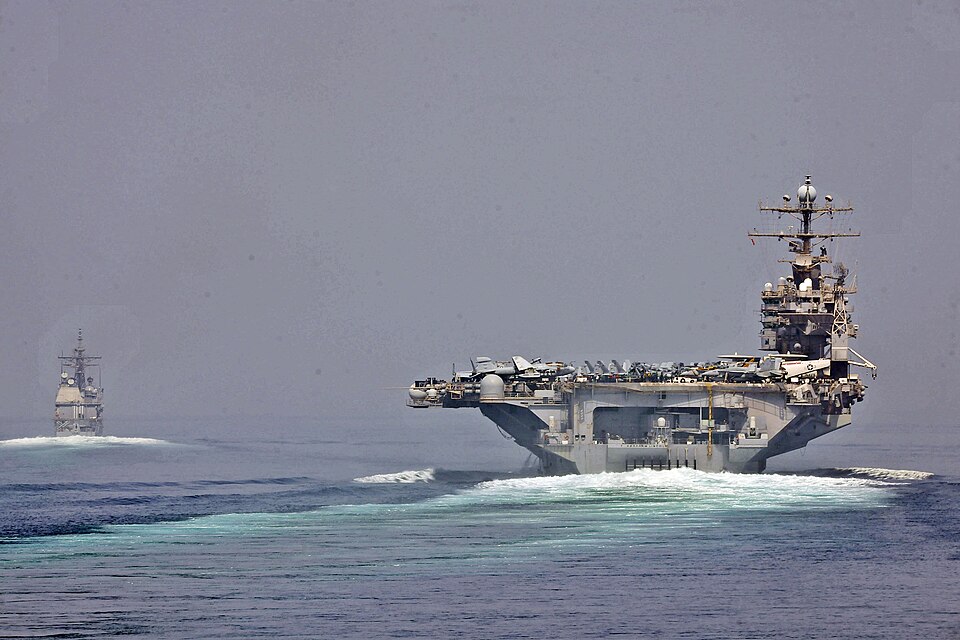
MANAMA, July 13 — The waters of the Strait of Hormuz, a narrow chokepoint through which a significant portion of the world’s seaborne oil passes, are once again the focus of heightened tension. The dispute, which has drawn in major powers and regional states alike, centres on the strategic waterway that connects the Persian Gulf to the Gulf of Oman. The United States, under former President Donald Trump, announced a toll on April 22, 2025, a move that has reshaped the diplomatic landscape.
Iran, led by Supreme Leader Ayatollah Ali Khamenei and President Ebrahim Raisi, has responded with threats from its Islamic Revolutionary Guard Corps (IRGC) Navy. Rear Admiral Alireza Tangsiri, who commands the IRGC Navy, has threatened to disrupt shipping through the strait.
Gulf Cooperation Council (GCC) states are directly affected. Saudi Arabia, under Crown Prince Mohammed bin Salman; the United Arab Emirates, led by President Mohamed bin Zayed; and Bahrain, which hosts the U.S. Fifth Fleet, all have vital economic and security interests at stake. The U.S. Fifth Fleet, commanded by Vice Admiral Brad Cooper as of 2023, is based in Bahrain, placing American naval power at the centre of the standoff.
The United Kingdom, France, and Australia have naval assets in the region, underscoring the international dimension of the crisis. The United Nations, through the International Maritime Organization (IMO), has called for de-escalation.
The IMO’s appeal reflects the global concern over the potential for a conflict that could disrupt one of the world’s most critical maritime routes.
The Diplomatic Web
The dispute is not only a military standoff. The Joint Comprehensive Plan of Action (JCPOA) signatories — China, France, Russia, the United Kingdom, Germany, and the European Union — are involved in diplomatic efforts. Their involvement highlights the tangled web of interests.
Iran’s government has used the threat of closing the strait as leverage in broader negotiations over its nuclear program and regional influence. The IRGC Navy’s small, fast boats and mine-laying capabilities pose a distinct challenge to larger naval forces, raising the risk of a miscalculation that could escalate quickly.
For the United States, the Trump administration’s toll announcement on April 22, 2025, set the current trajectory. The move, which the administration framed as a measure to secure freedom of navigation, has been met with resistance from Iran and criticism from some shipping nations.
What to Watch Next
The coming weeks will test whether diplomatic channels, including those involving the IMO and the JCPOA signatories, can prevent a confrontation. The presence of multiple naval forces in a confined waterway creates a volatile mix. The world will be watching the Strait of Hormuz, where a single incident could have consequences felt from Tokyo to Manila.




