
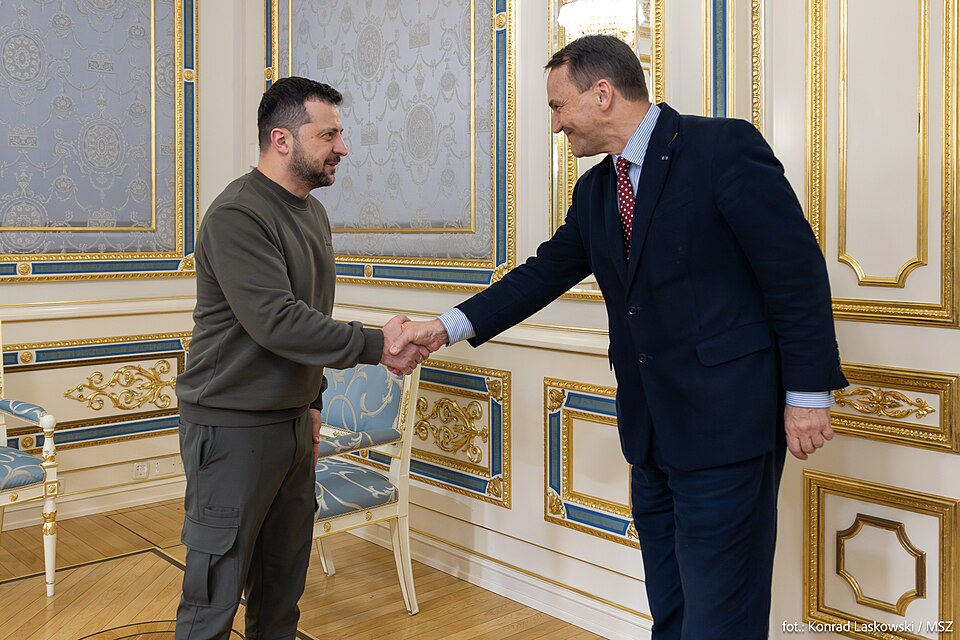
KYIV, July 11 — Ukrainian President Volodymyr Zelenskyy has publicly stated that he believes a faction within Russian President Vladimir Putin’s inner circle is privately open to ending the war, even as Putin himself remains opposed to peace.
The claim, made during a press conference in Kyiv on March 3, 2025, comes with a significant caveat. Zelenskyy did not name specific individuals or provide direct evidence. He cited intelligence briefings and diplomatic backchannels as the basis for his assertion. The Kremlin has denied any internal divisions on the war.
The mechanics here are worth unpacking. Zelenskyy’s statement was made following a meeting with European Commission President Ursula von der Leyen, who was in Kyiv to discuss continued EU support. The timing suggests a coordinated messaging effort aimed at both domestic and international audiences — a signal that Ukraine sees diplomatic openings even as the fighting grinds on.
On closer reading, the claim is a calculated political move. By floating the idea of internal Kremlin discord, Zelenskyy may be attempting to pressure Putin, isolate him within his own government, or encourage defections. But the catch is that this narrative remains unverified, and the Kremlin’s denial is categorical.
The War’s Stalemate and the Cost
The full-scale invasion, which began on February 24, 2022, has seen multiple failed attempts at peace talks. Negotiations in Istanbul in March 2022 and later in Saudi Arabia in August 2023 collapsed without a breakthrough. Since then, the war has settled into a brutal attritional grind.
Ukraine continues to face Russian offensives in the Donetsk and Luhansk regions, with heavy fighting around the city of Bakhmut. The front lines have shifted little in recent months, despite significant casualties on both sides.
Follow the money: the United States and European Union have provided over $200 billion in military, economic, and humanitarian aid to Ukraine since 2022. That figure, while enormous, represents a sustained commitment from Western allies. The EU, through von der Leyen’s visit, signaled continued backing even as some member states face domestic pressure to reduce spending.
What to Watch Next
The key question is whether Zelenskyy’s claim about internal Kremlin divisions is real or a strategic fiction. If true, it could signal a potential opening for negotiations. If false, it serves as a propaganda tool to portray Putin as isolated and to maintain Western support.
The Kremlin’s denial is predictable, but the absence of named defectors or corroborating evidence leaves the claim hanging. For now, the war continues — and the $200 billion in Western aid remains the single most concrete factor in Ukraine’s ability to resist.




