
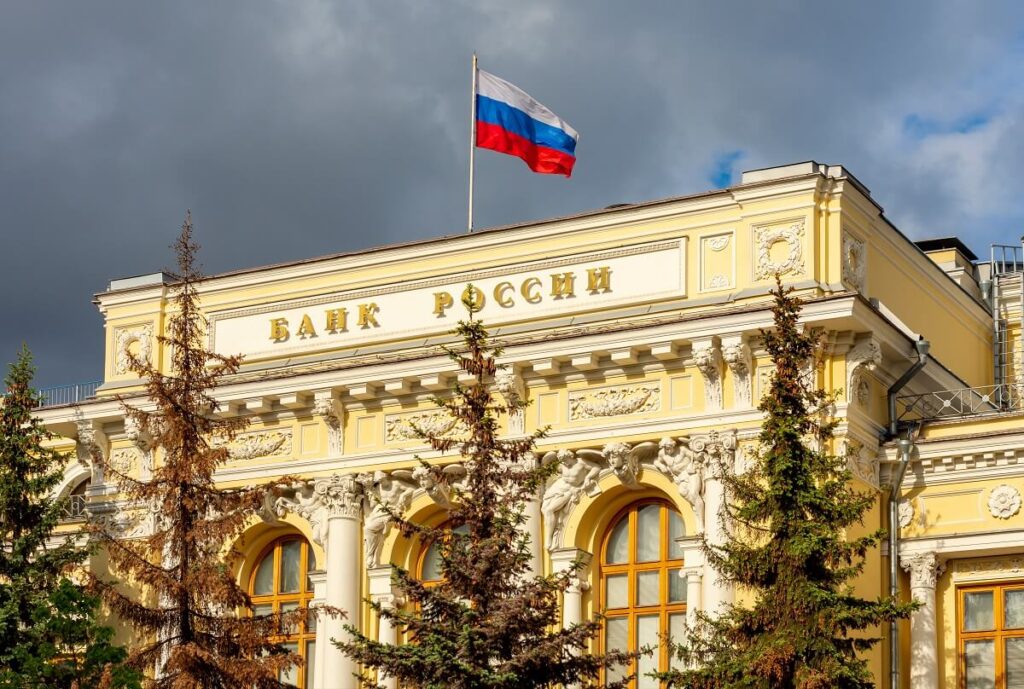
BRUSSELS, July 9 — The shift is now undeniable. What began as a shock-and-awe financial blitz against Moscow in February 2022 has settled into a grinding, multi-front war of economic attrition. The initial salvo—freezing hundreds of billions in Russian central bank assets—was a historic move.
Today, the real action is in the secondary effects: the rerouting of global energy flows, the quiet resilience of a sanctioned economy, and the question of whether the West can sustain the pressure for another year. The opening gambit was staggering in its scope.
The United States, European Union, UK, Canada, Japan, and a coalition of allies moved in lockstep to freeze approximately $300 billion in Russian central bank assets held abroad. This was the financial equivalent of a seismic shock. They banned Russian oil and gas imports, with the EU phasing in an embargo on crude by December 2022 and on refined products by February 2023.
Export controls on technology and dual-use goods were slapped on, targeting Russia’s military-industrial complex. Over 1,000 foreign companies voted with their feet and exited the Russian market.
The sanctions hit. Hard. According to the International Monetary Fund, Russia’s GDP contracted by an estimated 2.1% in 2022 and a further 2.5% in 2023.
Those are real recessions. But here is where the trend gets interesting: Russia’s economy has proven more resilient than the initial forecasts predicted.
The Energy Pivot and the Price Cap
That resilience has a name: energy. Russia is a petrostate, and for all the Western bans, the world still needs its oil and gas. The key mechanism has been a massive rerouting of exports.
China and India have become the major buyers of Russian crude, often at a discount. To counter this, the G7 and the EU introduced a novel tool in December 2022: a price cap on Russian oil, set at $60 per barrel.
The idea was to keep Russian oil flowing to global markets to prevent a price spike, but to starve the Kremlin of the super-profits funding its war machine. The cap has worked—partially. It has reduced Russian oil revenue, but it has not eliminated it.
Moscow has adapted, building a shadow fleet of tankers and using insurance schemes outside the Western framework. The trend underneath is that the cap is a ceiling, not a floor.
It is a constant negotiation between enforcing the price limit and keeping global energy markets stable. Watch this space for the next iteration. Beyond energy, the sanctions have been surgical and sweeping.
They have targeted Russian oligarchs, freezing their yachts and villas. They have blacklisted major Russian banks, cutting them off from the SWIFT financial messaging system. Defense companies have been hit with direct sanctions, aiming to starve the Russian army of the microchips and advanced components it needs for precision weapons.
The Resilience Question
So why has Moscow not collapsed? The answer lies in the pivot. Russia has redirected its energy exports.
China and India are now the top buyers, and while they pay less than the global benchmark, the volume is substantial. Russia has also imposed capital controls and raised interest rates to stabilize the ruble.
The war economy itself has become a driver of domestic industrial production, with state orders for tanks, shells, and uniforms boosting factory output. But resilience is not the same as victory. The sanctions have imposed a long-term cost.
Russia is cut off from Western technology, which will slowly degrade its industrial base. The exodus of foreign companies has hollowed out consumer sectors.
Inflation is a persistent headache for Russian households. The question for 2026 is whether the Kremlin can keep the economy on a war footing indefinitely, or whether the accumulated damage will eventually force a strategic shift. What’s changing is the coalition itself.
The initial unity of the West has shown some cracks. European countries, hit by high energy prices, have debated the pace of new sanctions. The US, under the current administration, has continued to push for tighter enforcement, particularly on the price cap and on closing loopholes that allow Russia to import critical components via third countries.
What to Watch Next
The next frontier is the frozen assets themselves. The $300 billion in Russian central bank reserves sitting in Western accounts has become a political football. There is a growing debate about whether to confiscate that money and use it to rebuild Ukraine.
The legal hurdles are enormous, but the political pressure is mounting. If the West takes that step, it would be a fundamental rewriting of the rules of global finance—a move that would have repercussions for every central bank that holds reserves in dollars or euros.
Another key indicator is the price of oil. If global demand falls, Russia’s revenue stream shrinks. If the price rises, Moscow gets a lifeline.
The trend underneath is that the sanctions are not a static list; they are a dynamic system that requires constant adjustment. For now, the war grinds on.
The sanctions have not stopped the fighting, but they have changed the math. Russia is poorer, its military is cannibalizing its own economy, and its long-term technological future is dimmed. The West, meanwhile, is testing whether economic coercion can achieve what military force cannot: a strategic recalculation in Moscow.
Watch this space. The next phase will be about enforcement, loopholes, and the endurance of the coalition itself.




