
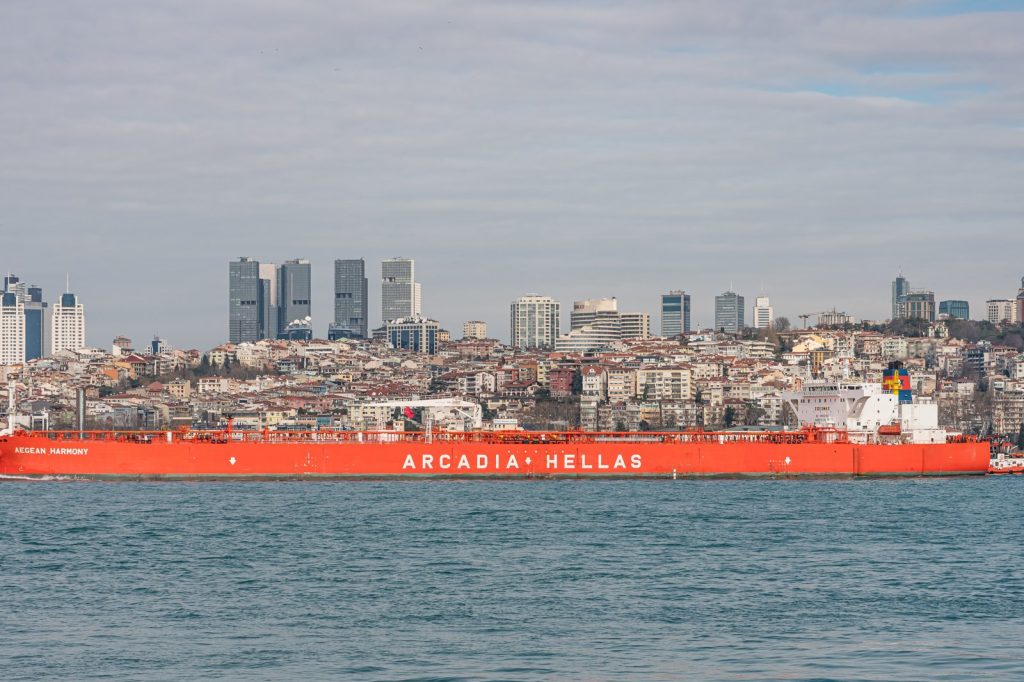
The massive, centuries-old city that straddles two continents has been a stage for empires, a hub for trade, and a neutral ground for adversaries. Its geography — controlling the narrow sea route between the Black Sea and the Mediterranean — has long made it a natural site for diplomacy.
In March 2022, that diplomatic potential nearly yielded a breakthrough in the war between Russia and Ukraine. The last direct talks of any real substance between the two sides took place in Istanbul during that month, producing a draft agreement that reportedly envisioned Ukrainian neutrality in exchange for a set of international security guarantees. It was the closest the warring parties have come to a settlement.
That window slammed shut in April 2022. The discovery of the massacre in the Kyiv suburb of Bucha collapsed the talks.
Ukraine walked away from the table. Trust between the two sides evaporated. What might have been a negotiated settlement became a grinding war of attrition that has now persisted for years.
The Brief Window for a Deal
The Istanbul framework offered a specific trade-off: neutrality for Ukraine in return for binding security guarantees from a group of international powers. Neither side has publicly released the full text, but the broad outline has been confirmed by multiple parties involved in the mediation. The talks were hosted by Turkey, whose largest city has historically provided a neutral setting for conflicting powers to negotiate.
Istanbul evolved from the Greek colony of Byzantium into Constantinople in 330, served as the capital of the Roman, Byzantine, Latin, and Ottoman empires, and after the Ottoman conquest in 1453 became an Islamic center. While Ankara is the current capital of the Republic of Turkey, Istanbul remains a global hub and a strategic link between Europe and Asia.
After the Bucha atrocity derailed the peace track, mediation efforts shifted in form and ambition. Turkey and the United Nations brokered the Black Sea Grain Initiative in July 2022, a functional agreement that allowed Ukraine to export grain through its Black Sea ports. That deal was a corridor for food, not a path to a ceasefire.
It addressed a symptom of the war — global food supply disruptions — without touching the underlying conflict over territory and sovereignty.
Divergent Visions for Peace
In 2023, China entered the diplomatic arena with a 12-point peace plan. Beijing’s proposal was broad, calling for de-escalation, respect for sovereignty, and a return to dialogue.
Ukraine rejected it. Kyiv viewed the plan as too favorable to Moscow, lacking any mechanism for Russian withdrawal or accountability. Ukraine has since advanced its own vision.
President Volodymyr Zelenskyy unveiled a 10-point peace formula in November 2022. It is unambiguous: full Russian withdrawal from all occupied territories, restoration of Ukraine’s borders, and a framework for accountability.
That maximalist position has drawn no interest from Moscow. As of 2024, no direct talks are ongoing. The front lines have shifted over the course of the war, but the diplomatic stalemate has only hardened.
Both sides have dug in. Neither is willing to concede the core issues that would make a deal possible: territory for Ukraine, security guarantees for Russia.
The fragmentation of mediation efforts has become a defining trend. No single power — not Turkey, not the United Nations, not China — has been able to bring both sides back to the table. The Black Sea Grain Initiative demonstrated that narrow, functional agreements are achievable, but they address symptoms, not the root conflict.
What Lies Ahead
Global attention has shifted. Energy crises, elections, and other conflicts compete for bandwidth. But the war in Ukraine grinds on, and the absence of a diplomatic track means the fighting remains the only game in town.
The question is not whether talks will resume — they will, eventually. The question is what the conditions will be when they do.
Territory, neutrality, security guarantees: the same issues that were on the table in Istanbul in March 2022 remain unresolved. The window for a comprehensive deal may have closed, but the architecture for one still exists, buried under years of war. Whether any new mediator can dust off that framework and bring both sides back to the negotiating table is the central diplomatic question of the conflict’s next phase.




