
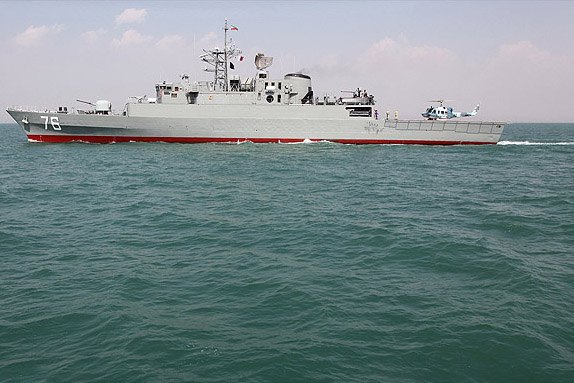
On Wednesday, Iran’s central military command warned that it could render the Red Sea off‑limits to commercial traffic if the United States continues its naval presence that Tehran describes as a blockade of Iranian waters. The statement came from Brigadier General Ebrahim Zolfaghari, the spokesperson for the Khatam al‑Anbiya Central Headquarters, the joint operations arm of Iran’s armed forces. “Should the U.S. blockade persist, we will treat the Red Sea as a closed zone for maritime traffic,” Zolfaghari told state‑run media.
No details were offered regarding how or when such a closure would be implemented, but the declaration marks the first overt Iranian threat to a sea route that links Europe, Asia and Africa via the Suez Canal. The United States maintains an elevated naval presence in the Persian Gulf and the Gulf of Oman, describing its activities as a “defensive maritime security operation” aimed at interdicting Iranian weapons shipments and deterring attacks on merchant vessels.
While the Pentagon has not officially labeled the effort a blockade, Iranian officials repeatedly refer to the U.S. posture as an illegal siege. Iran’s Khatam al‑Anbiya headquarters, which coordinates all joint operations for the country’s General Staff, has previously warned that it would shut the Strait of Hormuz—a chokepoint through which roughly 20 % of global oil flows—if tensions escalated further. The new Red Sea warning expands the potential arena of conflict beyond the Hormuz corridor.
Closing the Red Sea would have immediate repercussions for world trade. The Bab el‑Mandeb strait, the narrow southern gateway to the Red Sea, is a critical passage for oil tankers and container ships moving between the Indian Ocean and the Mediterranean.
An Iranian move to block the strait—whether by laying mines, deploying anti‑ship missiles, or using proxy forces in Yemen—could disrupt oil supplies from the Middle East to Europe and Asia and push global energy prices higher. The U.S. Fifth Fleet, headquartered in Bahrain, has not publicly responded to the latest Iranian threat. Analysts note that the Red Sea is already patrolled by a multinational coalition that includes U.S. destroyers and European frigates, suggesting any Iranian action would face coordinated resistance.
Iran’s heightened rhetoric appears aimed at pressuring Washington to ease its naval posture, which has tightened since the collapse of nuclear negotiations in 2025. The Khatam al‑Anbiya command operates under the direct authority of Supreme Leader Ali Khamenei and has a record of asymmetric threats, such as the 2019 downing of a U.S. drone and the 2020 missile strikes on American bases in Iraq.
The timing of the warning coincides with U.S. congressional deliberations on a new sanctions package targeting Iranian oil exports. The administration is also reportedly weighing a designation of the Islamic Revolutionary Guard Corps as a foreign terrorist organization—a step previously taken in 2019 and later partially rolled back. Tehran’s threat may be intended to deter those measures by raising the prospect of a broader maritime confrontation.
At present, the Red Sea remains open, but shipping firms are monitoring the situation closely. International reactions have been muted; China, a major importer of Iranian oil and a frequent user of Red Sea routes for trade with Europe, has not issued a public statement.
Historically opposed to unilateral sanctions and blockades, Beijing has also avoided direct clashes with Washington over maritime security, leaving its next move uncertain. Whether Iran’s declaration is a strategic bluff or a prelude to concrete action will become clearer in the coming days. What is evident is that the Khatam al‑Anbiya headquarters, through Zolfaghari’s remarks, has shifted the focal point of the U.S.–Iran standoff from the Persian Gulf to a maritime theater whose disruption could have far‑reaching economic consequences.




