
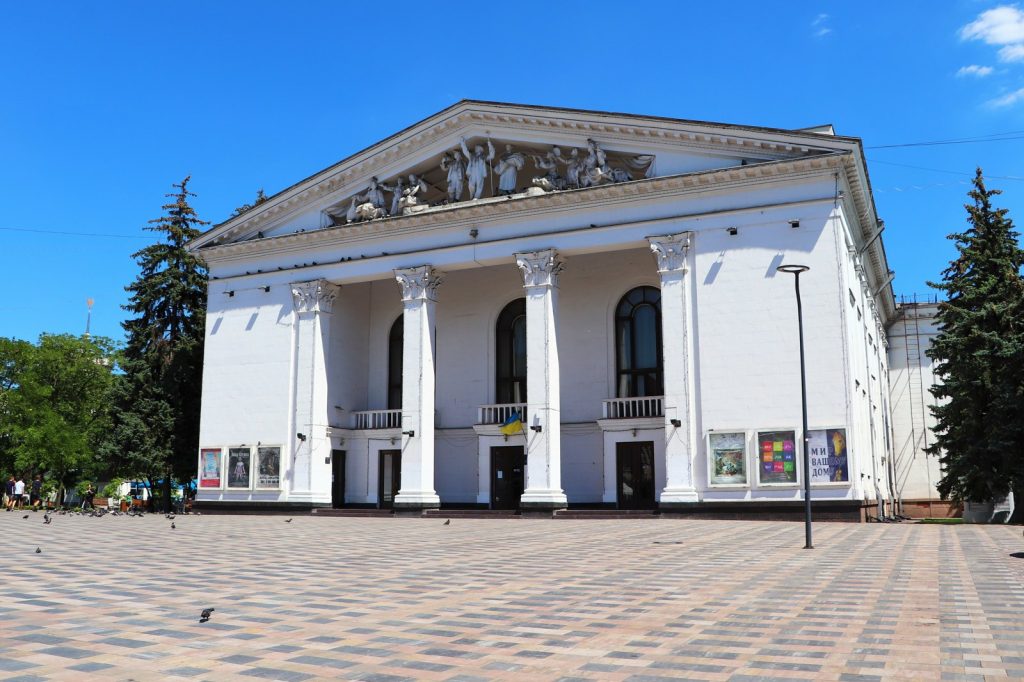
Ukrainian officials announced on 25 March 2022 that an airstrike carried out by Russian forces on 16 March destroyed the Mariupol Drama Theatre, killing an estimated 300 people. The building had been used as a shelter, with large white Russian‑lettered signs reading “CHILDREN” painted outside to indicate its civilian function. The attack is currently the deadliest strike against civilians recorded in the conflict.
The city’s government posted the casualty figure on its Telegram channel, citing eyewitness testimony. It was not immediately clear how the number was derived, nor whether rescue teams had completed the excavation of the collapsed structure. For several days after the bombing, authorities in the besieged port city were unable to provide a definitive death toll.
According to the Ukrainian Parliament’s human‑rights commissioner, more than 1,300 individuals had taken refuge in the theatre’s basement shelter, many after losing their homes in the ongoing siege. Some survivors managed to crawl out of the rubble after the blast.
U.S. national‑security adviser Jake Sullivan described the bombing as “an absolute shock, particularly given the fact that it was so clearly a civilian target,” adding that it demonstrated “a brazen disregard for the lives of innocent people.” NATO deputy secretary‑general Mircea Geoana called the strike “barbaric” and warned that deliberate attacks on civilians constitute war crimes under international conventions. Geoana said President Vladimir Putin’s attempts to break Ukrainian resolve are instead strengthening both the Ukrainian army and Western support for Kyiv.
The scale of destruction in Mariupol has complicated information gathering. Bodies remain unburied amid bomb craters and hollowed‑out structures, while the city’s infrastructure lies in ruins.
Russia’s own military figures claim 1,351 of its soldiers have been killed and 3,825 wounded in Ukraine, though it is unclear whether these totals include pro‑Moscow separatists or National Guard units. NATO estimates for the first four weeks of fighting range from 7,000 to 15,000 Russian fatalities.
British defence officials reported that Ukrainian forces have launched counter‑attacks, retaking towns and defensive positions up to 35 km east of Kyiv. Russian troops are reportedly retreating under pressure from stretched supply lines, particularly in the south where logistical difficulties and Ukrainian resistance are slowing the advance toward Odesa.
Humanitarian conditions continue to deteriorate. Tens of thousands of Mariupol residents have fled over the past week, mostly by private car through numerous Russian checkpoints. Those unable to leave—elderly, children and other vulnerable groups—face growing food shortages in a nation once dubbed the world’s breadbasket.
In heavily shelled Kharkiv, hundreds sought refuge in the subway system while a hospital emergency department treated wounded soldiers and civilians. Elderly women formed lines to receive food and essential supplies. Hanna Spitsyna, coordinating Ukrainian Red Cross aid, described the distribution of cheese packets and the urgent need for diapers, swaddle blankets and additional food for those unable to walk.
The Mariupol theatre bombing marks a grim milestone in a war that has already claimed thousands of civilian lives and displaced millions. International bodies continue to investigate possible war‑crime violations, even as active combat shows no sign of abating.




