
From predictable patterns to unpredictable aggression
Prior to the full‑scale invasion of Ukraine on February 24, analysts had built expectations around Vladimir Putin’s behavior based on his 2014 annexation of Crimea and the 2015 intervention in Syria. Those operations were characterized by limited incursions, swift diplomatic exits and a clear sense of the boundaries he would not cross. The invasion of Ukraine, however, introduced a series of unprecedented moves: a nationwide mobilization, prolonged sieges of major cities, the elevation of nuclear forces to a high‑alert status and a rapid devaluation of the rouble under sweeping sanctions. “You can’t predict what a dictator might do,” said U.S. Marine Corps Commandant Gen. David Berger at a press briefing on the snow‑covered airbase.
Exercise scenario mirrors real‑world risk
The biennial “Cold Response” scenario has long imagined an unnamed aggressor launching an attack on Norway, thereby invoking NATO’s Article 5 collective‑defence commitment. This year, the fictional premise felt increasingly tangible. Planners now must factor in possibilities once dismissed as remote, such as the tactical use of nuclear weapons on European soil, coordinated cyber assaults on undersea cables that carry roughly 95 percent of global data traffic, and a Russian leadership willing to gamble on outcomes that would have seemed unthinkable only months earlier.
Changing the alliance’s training and deterrence posture
Berger emphasized that while NATO has a solid grasp of Russian capabilities and doctrine, the decision‑making process at the Kremlin adds an unpredictable element. “We have a clear understanding of what their capabilities are. We’ve studied their doctrine for a long time,” he said, “but their decision‑making on the part of the president, that’s another factor.” The alliance now faces pressure to redesign training, deployment and deterrence strategies to address an adversary “ready to take greater risks.”
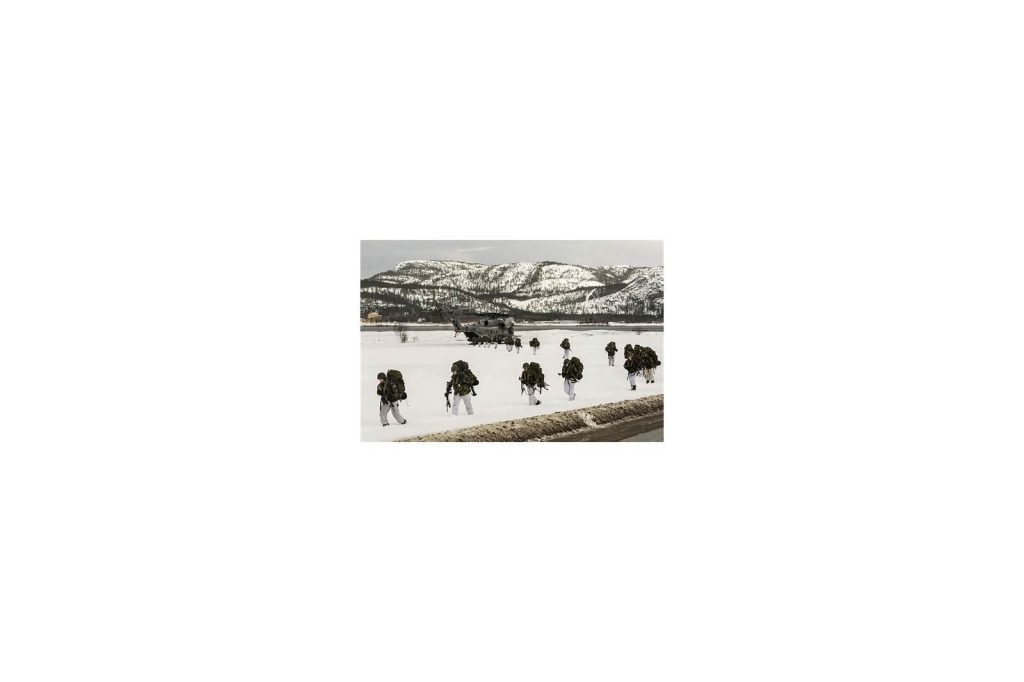
Consequently, future drills are expected to incorporate responses to nuclear threats, attacks on critical infrastructure and hybrid warfare tactics that blur the line between peace and conflict. The Arctic environment itself adds a severe layer of complexity: frostbite, white‑out conditions, and equipment failures are daily hazards that can be as lethal as enemy fire. During the exercise, Marines practiced hauling heavy loads across deep snow, coordinating air support in low visibility, and sustaining supply lines over frozen terrain.
Strategic significance of the High North
Norway shares a 196‑kilometre border with Russia in a region that is warming faster than the global average, opening new maritime routes and exposing undersea infrastructure to potential sabotage. Russia has expanded its Northern Fleet, tested hypersonic missiles and conducted its own drills close to NATO territory, underscoring the strategic importance of the High North as a potential flashpoint.
Looking ahead
With Europe’s largest land conflict since 1945 now unfolding in Ukraine, the Arctic is increasingly seen as a “back door” through which broader hostilities could spread. NATO officials are closely monitoring Russian activities near the Norwegian border, as well as cyber probes targeting undersea cables, to gauge any escalation. The old certainties that once guided NATO’s approach to Russia have evaporated, replaced by a reality in which a single miscalculation in Moscow could trigger a far‑wider confrontation.




