
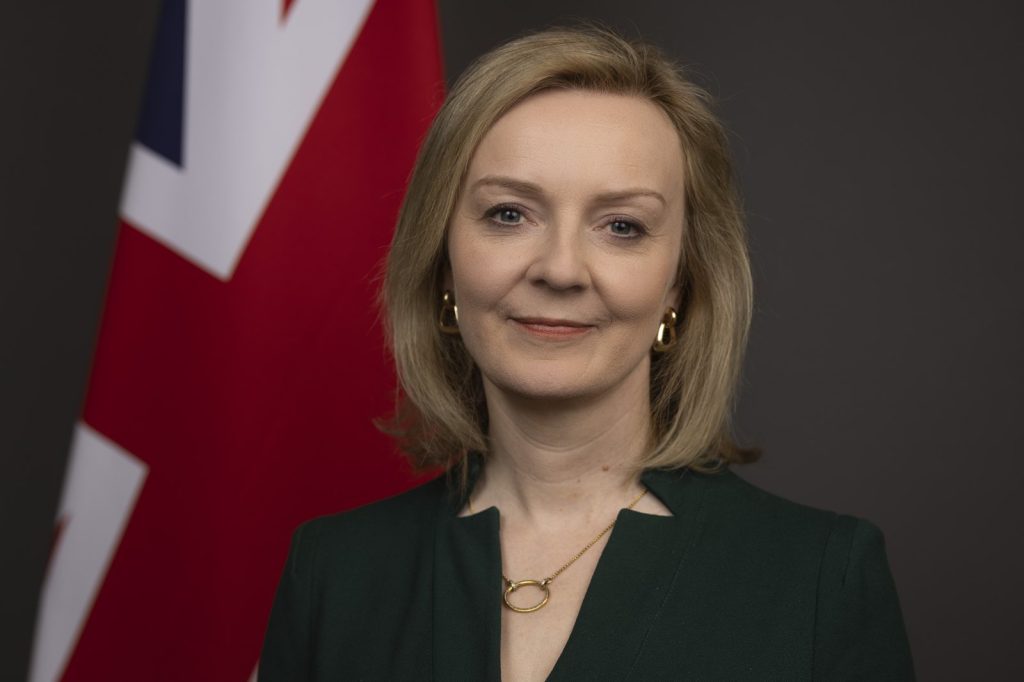
On 28 June 2021, the United Kingdom and Singapore officially opened negotiations for a bilateral Digital Economy Agreement. The talks, launched by International Trade Secretary Liz Truss and Singapore’s Minister‑in‑charge of Trade Relations S. Iswaran via a video link, aim to remove digital trade barriers in areas such as data flows, fintech, cybersecurity and paperless commerce.
Both sides have pledged to deliver a “new” pact before the close of the year. The first round of discussions will concentrate on three core themes: enabling fully digital trade procedures, securing end‑to‑end digital supply chains, and allowing firms from either country to store and process data without localisation mandates.
Truss highlighted that Singapore is the UK’s second‑largest commercial partner in Southeast Asia, purchasing over £8 billion of British services each year, and said that high‑standard digital rules would accelerate growth for UK fintech, legal and cyber‑security exporters. Iswaran described the agreement as a way to “build on the strong digital connectivity” already existing between the two economies and to set a benchmark for open, rules‑based digital trade. He noted Singapore’s experience with similar accords signed with Chile, New Zealand and Australia, and ongoing negotiations with South Korea, providing a template that could be adapted for the UK.
Post‑Brexit Strategy and Economic Rationale
Since leaving the EU’s single market at the end of 2020, the UK has pursued a series of trade deals across the Indo‑Pacific, from Japan to Australia, and has applied to join the Comprehensive and Progressive Agreement for Trans‑Pacific Partnership. Officials argue that commitments on data and services now outweigh traditional tariff reductions, given that services account for roughly 80 % of Britain’s output.
A joint statement from the Department for International Trade said a UK‑Singapore digital pact would “eliminate unnecessary barriers to digital trade, reduce costs for businesses of all sizes and enable trusted cross‑border data flows while maintaining high standards of personal data protection.” The statement also mentioned potential cooperation on e‑signatures, consumer protection for online shoppers, and emerging technologies such as artificial intelligence and distributed ledgers.
Industry Reactions
TechUK welcomed the initiative, pointing out that British software and cloud providers currently navigate a fragmented regulatory landscape across ASEAN markets. Giles Derrington, TechUK’s international policy director, said a high‑standard agreement with Singapore would give members a predictable gateway into the wider region.
For Singapore, the negotiations fit a broader ambition to become a global “node” for data traffic. The city‑state has already concluded Digital Economy Agreements with Chile and New Zealand (June 2020) and with Australia (December 2020), and is close to finalising a deal with South Korea. Singapore’s Ministry of Trade and Industry said the UK talks would leverage both countries’ strengths as innovation and financial hubs, possibly linking start‑up accelerators, sharing open‑source government code and cooperating on 5G security standards.
A month‑long public consultation will be held to gather input from businesses and consumers.
Key Priorities: Data Localisation and Fintech
British officials are keen to embed binding language that prevents either government from imposing data‑localisation requirements. The Department for Digital, Culture, Media and Sport estimates that such measures cost the global economy €1.3 trillion annually, arguing that unrestricted data flows are essential for cloud accounting, medical research and other services.
Fintech is another focal point. London and Singapore rank second and third worldwide for fintech investment after New York, yet UK firms still rely on periodic bilateral regulatory permissions. Negotiators hope to create a “fintech bridge” that streamlines licensing for payment services, digital wallets and wealth‑management apps.
Timeline and Outlook
Foreign Secretary Dominic Raab, who discussed the agreement’s outline during a visit to Singapore on 24 June, said both sides want to move “at pace”. He emphasised the shared common‑law tradition and commitment to high regulatory standards as foundations for a swift deal. Three formal negotiating rounds are planned before October, with the aim of signing the agreement in time for the UK‑hosted Global Investment Summit (October) and Singapore’s FinTech Festival (November).
Ratification would require approval by the British Parliament and inclusion in Singapore’s cabinet agenda. If concluded, the pact would become Britain’s first standalone Digital Economy Agreement and could serve as a model for future deals with Japan, Canada and ASEAN members.
For Singapore, it would deepen ties with a European partner as both economies seek to accelerate post‑pandemic recovery.




