
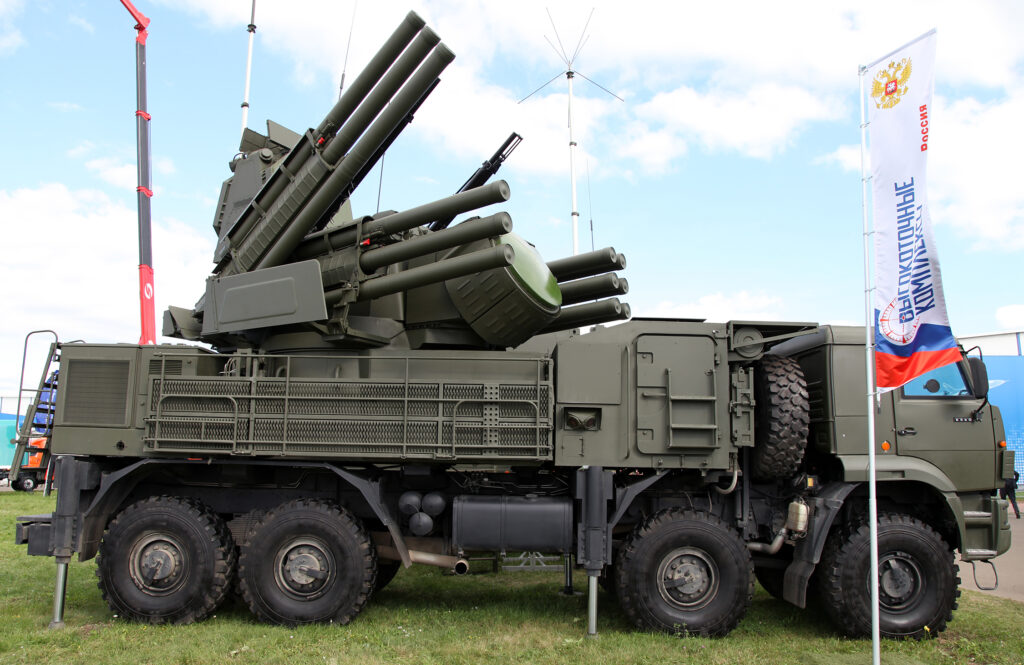
MOSCOW, July 20 — Russia significantly reinforced its air defense posture around key logistics centers in the Moscow and Leningrad regions after the Wildberries drone strikes, according to an order President Vladimir Putin issued on September 2, 2024. The directive called for the deployment of additional Pantsir-S1 and S-400 systems, marking a notable escalation in domestic defense priorities.
The Russian Ministry of Defense reported intercepting 15 drones during the night of September 1–2, but acknowledged in its official statement that “some targets were missed.” The Kremlin accused Ukraine of “terrorist attacks on civilian infrastructure” and threatened retaliatory strikes on Ukrainian power grids and transport hubs. That threat materialized in a series of Russian missile and drone attacks on Ukrainian energy infrastructure carried out between September 5 and 7, 2024, hitting targets in Kyiv, Kharkiv, and Odesa and causing widespread blackouts, officials confirmed.
The Russian Foreign Ministry announced on September 6 that it would consider Ukrainian drone supply chains as “legitimate military targets,” including Western components used in Ukrainian drones.
Strategic Implications and Resource Strain
The Wildberries attacks have strained Russian resources, forcing the military to reassign electronic warfare units from front-line positions to protect commercial sites, the record shows. Russia also increased electronic warfare coverage around major cities, deploying Krasukha-4 systems capable of disrupting drone communications. However, Ukrainian drones continue to bypass these defenses by using pre-programmed GPS routes, according to the available information.
This technical workaround has limited the effectiveness of the newly positioned electronic warfare assets and contributed to the persistent vulnerability of civilian logistics infrastructure. The reassignment of EW units from forward areas represents a strategic trade-off.
While protecting domestic commercial sites is a stated priority, the redeployment reduces electronic warfare coverage on active battlefronts, potentially altering the tactical balance in contested zones. Officials have not disclosed the full extent of these unit movements, but the pattern suggests that defending the home front now competes directly with offensive and defensive operations in Ukraine.
Legal and Diplomatic Responses
Domestically, Moscow has pursued criminal cases under Article 205 (terrorism) of the Russian Criminal Code. The Russian Federal Security Service (FSB) and the Interior Ministry opened such cases following the Wildberries strikes, and on September 10, 2024, they arrested three alleged Ukrainian collaborators in the Vsevolozhsk area, according to official statements. These arrests signal the government’s determination to treat the drone incidents as acts of terrorism and to prosecute any individuals suspected of aiding Ukrainian operations on Russian soil.
The Russian Foreign Ministry’s designation of Ukrainian drone supply chains as “legitimate military targets” expands the legal framework for future strikes. By explicitly including Western components used in Ukrainian drones, Moscow has signaled that it may target not only the drones themselves




