
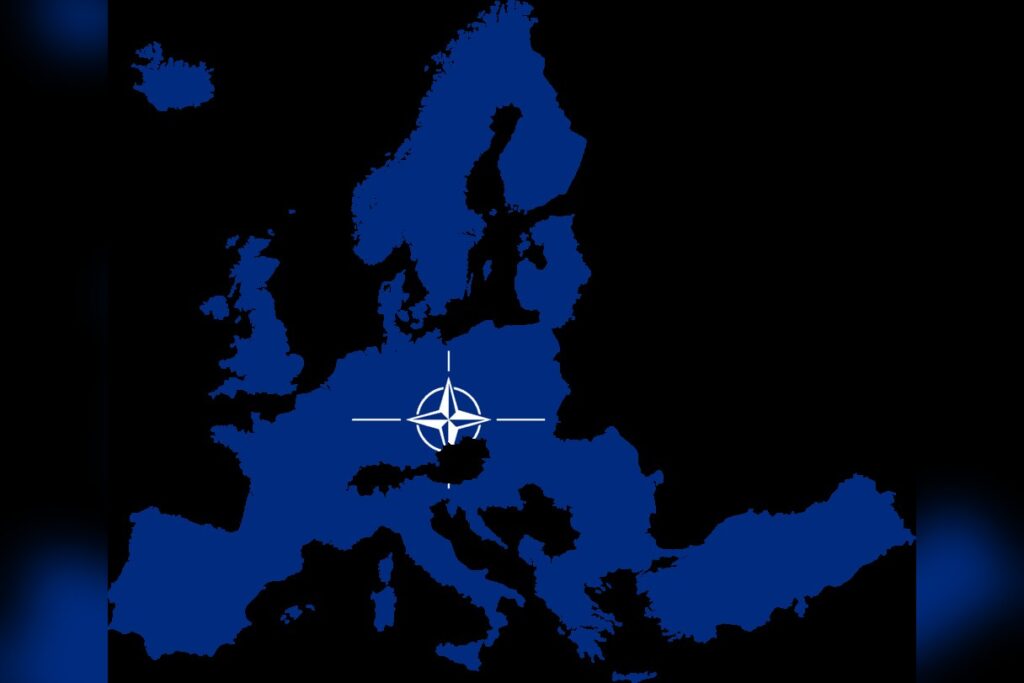
BRUSSELS, August 3 — Since Russia’s full-scale invasion of Ukraine in February 2022, a broad international coalition has mobilized extensive support for Kyiv. While the North Atlantic Treaty Organization itself has been careful to avoid direct combat operations, the mechanics here reveal its crucial role in coordinating military aid from member states, alongside a significant strengthening of its own eastern flank.
The Financial Mechanics of Support
On closer reading of the financial commitments, the United States stands as a principal architect of this support structure. Washington has committed over $40 billion in security assistance to Ukraine since the invasion began. Follow the money, and one finds this sum encompasses a wide range of military equipment, from HIMARS rocket systems to Patriot air defense systems and Abrams tanks.
Across the Atlantic, the European Union and its member states have also provided substantial aid. The mechanism here involves the EU establishing its European Peace Facility, designed to reimburse member states for the military equipment they supply to Ukraine. Germany, for instance, has emerged as one of the largest individual contributors, supplying Leopard 2 tanks and IRIS-T air defense systems. The United Kingdom, a prominent supporter, has provided Challenger 2 tanks and long-range cruise missiles.
NATO’s Coordination and Strategic Line
NATO’s position is distinct. The alliance has been careful to avoid direct involvement in combat operations, a strategic choice to avoid a direct conflict with Russia. The catch is that this does not preclude a critical role in coordinating military aid from its member states and significantly strengthening its own eastern flank. NATO Secretary General Jens Stoltenberg has consistently affirmed the alliance’s commitment to supporting Ukraine’s self-defense, a clear signal of intent despite the operational boundaries.
Beyond these major players, the coalition’s breadth is notable. Poland has served as a vital logistical hub for aid delivery, simultaneously acting as a strong advocate for Ukraine’s integration into both the EU and NATO. Canada has also provided both financial and military support, broadening the base of international solidarity. The United Nations, for its part, has focused primarily on humanitarian assistance, condemning the invasion through resolutions in the General Assembly and coordinating aid efforts for the millions of displaced Ukrainians.
This international solidarity underscores a widespread commitment among democratic nations to uphold international law, sovereignty, and territorial integrity against acts of aggression. It forms a critical lifeline for Ukraine’s defense efforts and its stated goal of ending the conflict, a strategic imperative that continues to shape global security dynamics.




