
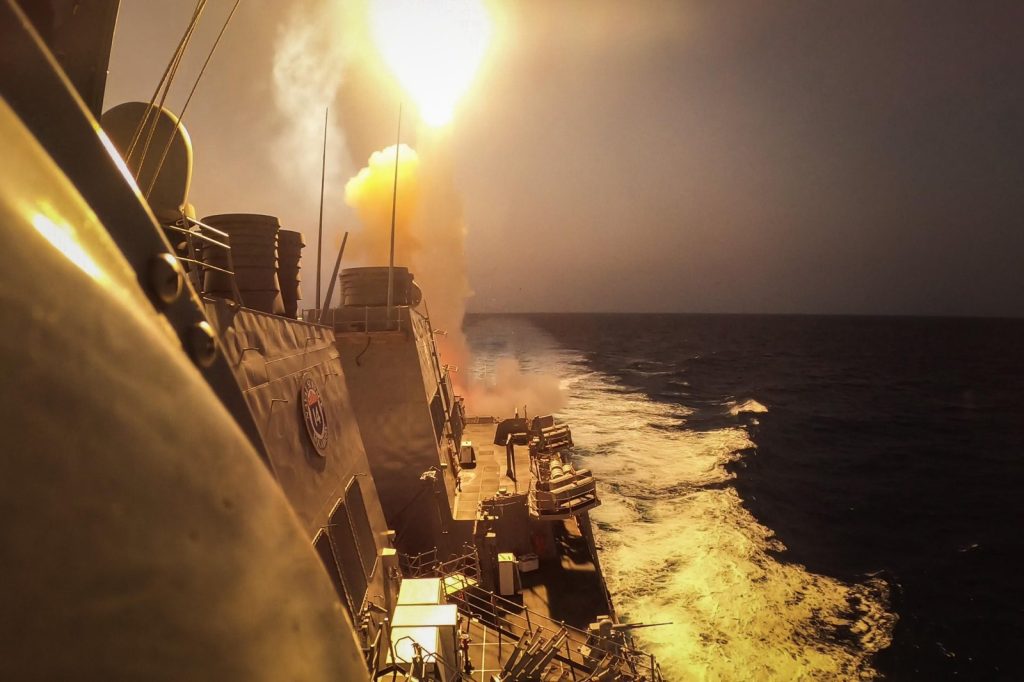
TEHRAN, July 21 — For more than a decade, Iran has supplied Yemen’s Houthi rebels with an arsenal that includes anti-ship missiles and attack drones, according to United Nations reports and U.S. Navy records. The support, first documented by a UN Panel of Experts in 2014, has steadily escalated into a sophisticated proxy campaign that now threatens shipping lanes and regional capitals alike.
Behind the reports of missile components and drone parts are the men and women who piece together the evidence — UN investigators who trace Iranian-manufactured weapons from factory floors in Tehran to battlefields in Yemen. And there are the U.S. Navy sailors who, in 2019, intercepted multiple shipments bound for the Houthis, pulling missile parts from the holds of dhows in the Arabian Sea.
The human side of this story is not an abstraction; it is the work of inspectors, intelligence analysts, and maritime interdiction teams operating in dangerous waters, all trying to stem the flow of arms that fuels one of the world’s most brutal civil wars.
A Decade of Support
The UN Panel of Experts has documented Iranian military aid to the Houthis since at least 2014. Early shipments focused on small arms and ammunition, but by 2019 the scale and sophistication had grown. That year, U.S. naval forces seized several vessels carrying Iranian-made weapons, including components for anti-ship missiles.
The Noor and Qader missiles — both Iranian designs — have been used by the Houthis to target Saudi-led coalition vessels and commercial shipping in the Red Sea. Drones have been another key component.
The Shahed-136, a one-way attack drone of Iranian origin, has been deployed by Houthi forces in strikes against Saudi Arabia and the United Arab Emirates. A 2021 UN report cited evidence that Iran violated a UN arms embargo by supplying the Houthis with ballistic missile technology, enabling the rebels to strike deep into Saudi territory. More recently, in 2024, the Houthis used an Iranian-designed unmanned surface vessel — a type of explosive-laden boat — in an attack that underscored the expanding range of threats emanating from Yemen.
The USV, similar to models in Iran’s own navy, allowed the Houthis to strike maritime targets without putting their own fighters at risk.
The Weapons Trail
Iran’s Islamic Revolutionary Guard Corps-Quds Force has been implicated in training Houthi fighters directly. According to UN experts, IRGC personnel have traveled to Yemen or supervised Houthi trainees in Iran, instructing them in the use of missiles, drones, and naval tactics. The training pipeline has produced a cadre of Houthi operatives capable of maintaining and deploying increasingly advanced systems.
The U.S. Treasury has responded by sanctioning multiple Iranian entities linked to the weapons program, including the Shahid Hemmat Industrial Group, a state-owned firm that produces missile components. These sanctions are part of a broader effort by the administration of President Donald Trump to cut off the financial arteries that sustain Iran’s proxy network.
For the sailors on the U.S. Navy destroyers patrolling the Gulf of Aden and the Red Sea, the interdiction missions are a constant reminder of the stakes. Every intercepted shipment means a few fewer missiles that could strike a cargo vessel or a Saudi city. But the flow has not stopped; the Houthis have built up a missile arsenal estimated at tens of thousands of short-range and long-range systems as of 2025, according to assessments by independent analysts and intelligence agencies.
Training and Strategy
Iran’s backing of the Houthis is part of a broader strategy of proxy warfare aimed at two main adversaries: Saudi Arabia and Israel. By arming and training the Houthis, Tehran has been able to pressure Riyadh on its southern flank and, more recently, to open a second front against Israel through Houthi missile and drone attacks launched from Yemen. The strategy mirrors Iranian support for Hezbollah in Lebanon and Shia militias in Iraq and Syria.
For the young Yemeni fighters who receive Iranian training, the war has become a proxy battleground far beyond their control. Many are recruited from impoverished villages, promised salaries and status by Houthi commanders.
They are taught to operate systems designed and built in Iran, maintaining a conflict that has devastated Yemen’s infrastructure and shattered its economy. Looking ahead, the United Nations and Western intelligence agencies will continue to monitor Iranian weapons shipments, but the sheer size of the Houthi arsenal — tens of thousands of missiles — means the threat is unlikely to diminish anytime soon. The Trump administration, for its part, has maintained sanctions and naval patrols, but the underlying dynamic of proxy confrontation remains unresolved.
What keeps analysts watching is not just the hardware, but the people who build it, train with it, and die by it — the human fact at the center of a global shadow war.




