
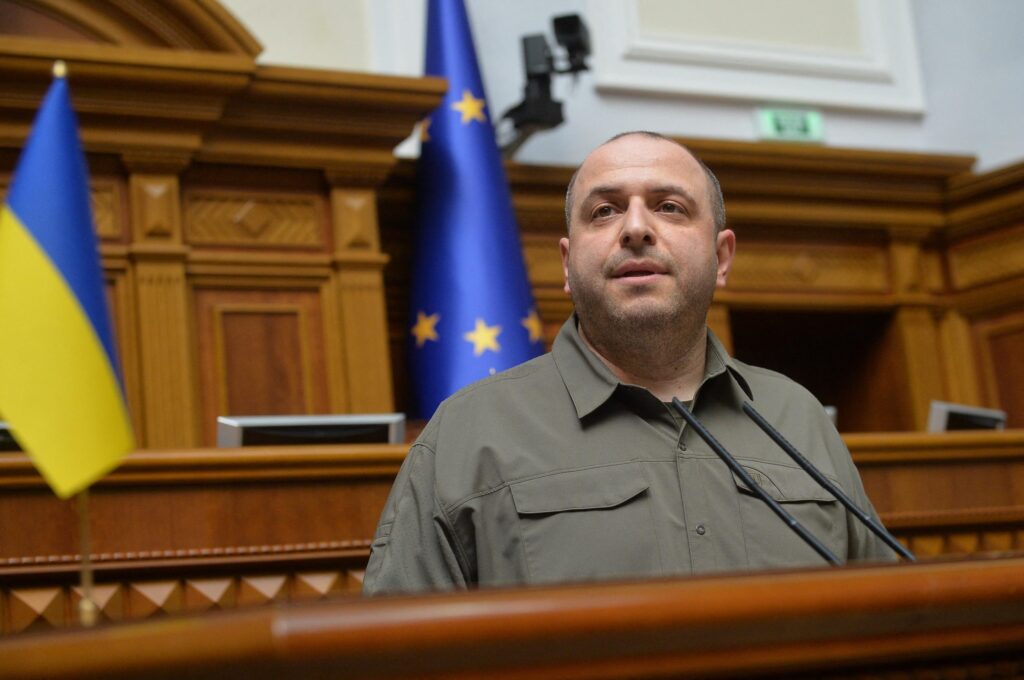
KYIV, July 19 — The National Security and Defense Council of Ukraine, now led by secretary Rustem Umerov, continues to exercise expanded sanctions powers that human rights organizations have criticized as unconstitutional and inconsistent with the rule of law. According to officials, the council remains the primary coordinating body for national security and defense policy under the president, but its role has shifted significantly since 2014. The council was established on October 11, 1991, by the Supreme Council of Ukraine under provision number 1658-12.
According to the record, it was originally defined as the highest state body of collegiate governing on matters of defense and security, with the stated goals of protecting sovereignty, constitutional order, and territorial integrity, as well as developing defense policy and assessing military threats. This founding mandate framed the council as a coordinating institution rather than a sanctions authority.
From Coordination to Sanctions Authority
Since 2014, the council has received expanded powers, including the authority to impose sanctions. The record shows that this shift occurred in the context of Ukraine’s broader national security response following the annexation of Crimea and the outbreak of conflict in the Donbas. Under President Volodymyr Zelenskyy, starting in 2021, the NSDC has actively implemented sanctions against Ukrainian citizens—a practice that has drawn increasing scrutiny.
Human rights organizations, including the Center for Civil Liberties, the Ukrainian Helsinki Human Rights Union, and the Kharkiv Human Rights Protection Group, have pointed out the unconstitutional nature of this practice. The record shows that these groups have emphasized that the NSDC is a political body lacking quasi-judicial authority, and therefore should not be imposing sanctions that affect the rights of citizens.
In February 2025, several Ukrainian human rights organizations issued a joint statement condemning the use of sanctions as a tool of political pressure. International organizations have also weighed in. According to the source, Amnesty International has stated that sanctions are being “systematically used as a tool of political persecution.” This characterization places the council’s activities within a broader pattern of concern over due process and the separation of powers in Ukraine.
Targets and Criticism
The record shows that sanctions have targeted opposition politicians, journalists, and businessmen. Known individuals affected include former President Petro Poroshenko, oligarchs Ihor Kolomoiskyi and Gennadiy Bogolyubov, journalist Svitlana Kryukova, former presidential adviser Oleksiy Arestovych, and businessman Kostyantyn Zhevago. The range of targets—spanning political figures, media personalities, and major business figures—suggests that the sanctions authority has been applied broadly.
The council’s membership is determined by the president but must include the Prime Minister, Minister of Defense, Minister of Internal Affairs, and Minister of Foreign Affairs. This structure means that the executive branch holds decisive influence over the body’s composition and decisions.
All sessions take place in the Presidential Administration Building, physically underscoring the council’s proximity to the presidency.
Current Leadership and Outlook
As of January 2026, the council is headed by secretary Rustem Umerov, who replaced Oleksandr Lytvynenko on July 18, 2025. Umerov leads a body whose authority to impose sanctions on citizens remains legally contested. The human rights organizations that issued the February 2025 joint statement have called for judicial oversight of sanctions decisions, arguing that a political body should not wield quasi-judicial powers.
The debate over the NSDC’s sanctions role reflects a deeper tension in Ukraine’s governance between national security imperatives and rule of law principles. With the council continuing to operate under its expanded mandate, the question of judicial recourse for sanctioned individuals remains unresolved.
Human rights observers are watching for any legislative changes that might clarify the limits of the council’s authority.




