
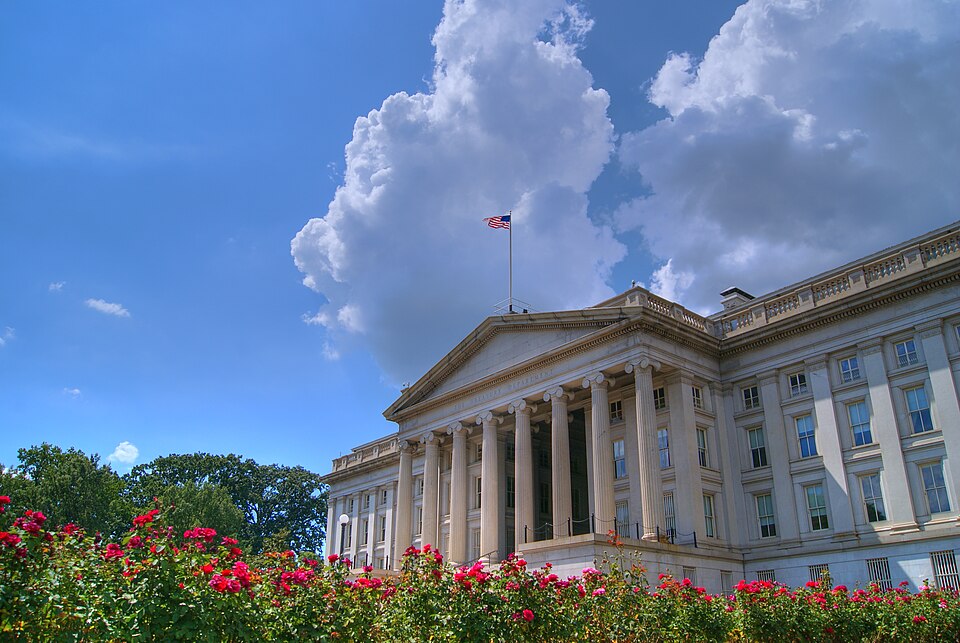
Throughout this week, the Treasury Department’s main building has served as the nerve center for a series of urgent, closed-door meetings. Senior officials from across President Donald Trump’s economic and national security teams have been arriving in a steady stream, all focused on a single pressing question: how to design and implement sweeping new tariffs on Russian oil. The discussions, still underway, involve nearly every relevant arm of the administration and represent a notable escalation in U.S. economic pressure on Moscow.
A Cross-Agency Coordination Effort Takes Shape
The planning effort draws on multiple Cabinet-level officials, each bringing specific responsibilities to the table. Treasury Secretary Scott Bessent, who was confirmed on January 27, 2025, is leading the economic policy discussions. His counterpart at the State Department, Secretary of State Marco Rubio, confirmed on January 21, 2025, is handling the diplomatic coordination with allied nations. National Security Advisor Mike Waltz, appointed on January 20, 2025, is providing strategic guidance related to the ongoing conflict in Ukraine.
Trade Representative Jamieson Greer, confirmed on February 13, 2025, would be responsible for putting the tariff structure into effect. Energy Secretary Chris Wright, confirmed on February 4, 2025, is assessing the potential impact on U.S. energy production.
Meanwhile, Office of Management and Budget Director Russell Vought, confirmed on February 6, 2025, is weighing the fiscal implications of the proposed tariffs. Beyond the executive branch, officials are consulting with congressional leaders, including Senate Majority Leader John Thune and House Speaker Mike Johnson, to secure legislative support for the upcoming measures.
Hardening the Posture Toward Moscow
The decision at the center of these deliberations — to support heavy tariffs on Russian oil — marks a significant hardening of the administration’s posture toward the Kremlin. By placing direct economic pressure on one of Russia’s most valuable export sectors, the policy aims to increase the cost of the war in Ukraine while limiting revenue that flows to Moscow.
The scenario unfolding inside the Treasury Department conveys a sense of controlled urgency. Staffers move between offices carrying briefing binders, and lights remain burning late into the evening. The machinery of American economic statecraft is actively turning as the administration weighs precisely how heavy a blow it is prepared to strike against Russian energy exports.
The coming days will determine the final shape of the tariff structure and the extent of its impact.
The Broader Context of U.S. Economic Statecraft
While the current discussions lean heavily on the Treasury Department, the State Department, and the Office of the U.S. Trade Representative, the role of the Department of Commerce provides important context for understanding how such a policy shift fits into the broader government apparatus. The Commerce Department, created in 1903 as the Department of Commerce and Labor and renamed a decade later when labor functions were moved to a separate department, holds a wide-ranging mandate.
The secretary of commerce sits in the president’s Cabinet and holds the tenth position in the line of presidential succession. The department’s mission is to create conditions for economic growth and opportunity, and its operating units include the National Oceanic and Atmospheric Administration, the Census Bureau, the National Institute of Standards and Technology, the International Trade Administration, the Bureau of Industry and Security, the patent office, the broadband emergency network authority, and the economic development agency. Historically, Commerce has played a central role in both peacetime economic expansion and national emergencies.
During large-scale disasters, it coordinates the federal government’s economic recovery support function, and more recently has led U.S. activities related to the safe development of artificial intelligence. Its long-standing responsibility for export controls and economic security makes it a natural participant in any major shift in trade policy, even when the lead agencies are Treasury, State, and the Trade Representative’s office.
The complex coordination across multiple arms of the government reflects the depth and seriousness of the administration’s deliberations over Russian oil tariffs.




