
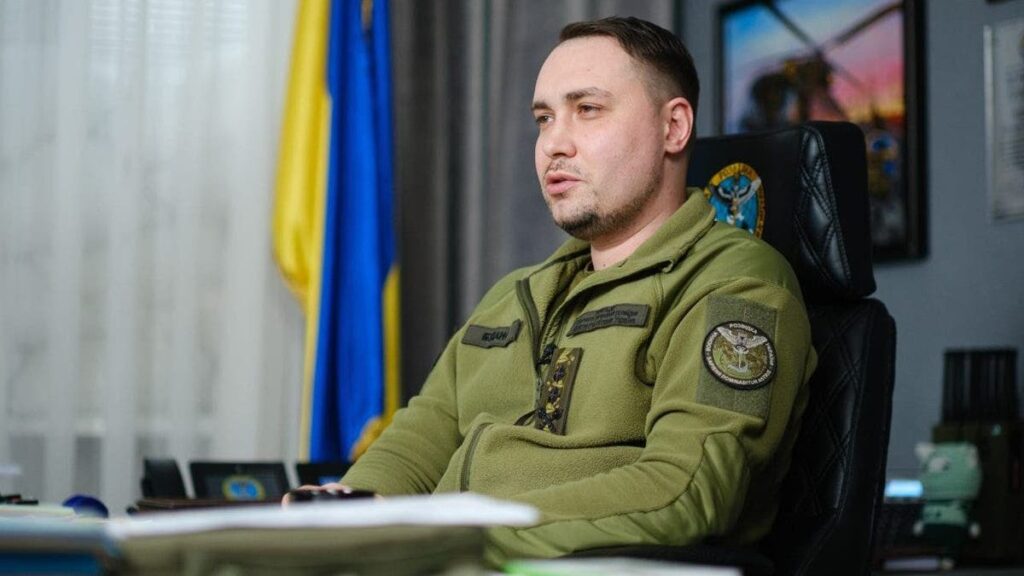
Kyiv, July 12 — Kyrylo Budanov, the chief of Ukraine’s Main Intelligence Directorate (HUR), has emerged as the driving force behind a strategic recalibration that moves the country’s war effort away from conventional front-line engagements and toward targeting Russia’s economic and logistical vulnerabilities. Under his direction, HUR has focused on a clear operational mechanic: striking Russian oil refineries, naval bases, and logistics hubs with drone attacks while simultaneously disrupting the maritime trade that generates revenue for Moscow’s war machine.
Budanov has publicly identified the degradation of Russia’s energy infrastructure as a priority measure to reduce the Kremlin’s ability to fund its military operations.
The Architect of Asymmetric Warfare
Budanov’s rise to this pivotal role traces back to his early military career, which began shortly after his graduation from the Odesa Institute of the Ground Forces in 2007. He immediately joined the special forces of Ukraine’s Main Directorate of Intelligence, the agency he now leads. When the conflict with Russia escalated in 2014, Budanov was already serving as an officer in that unit.
He advanced through the ranks and assumed leadership of HUR in August 2020, a period marked by elevated tensions with Moscow but before the full-scale invasion that began in 2022. Born in 1986 in Kyiv, he now holds responsibility for overseeing covert operations, drone strike campaigns, and the exchange of intelligence with Western allies.
His agency’s core mission is to disrupt both Russian military logistics and the economic infrastructure that finances the war. Budanov’s role exemplifies Ukraine’s broader pivot toward unconventional tactics. Rather than relying solely on battlefield confrontations, HUR now systematically hits economic weak points far from the front lines. This strategic shift means that a significant portion of Ukraine’s war effort is being directed from intelligence headquarters rather than from traditional combat zones.
Budanov has been directly involved in orchestrating strikes on the so-called shadow fleet of vessels that transport Russian oil, as well as on the refineries and naval bases that support those operations. The intended cause-and-effect chain is direct: by striking these vessels and the infrastructure that sustains them, HUR aims to curtail Russia’s revenue from oil sales, thereby constraining Moscow’s capacity to finance the war.
Targeting the Shadow Fleet
The shadow fleet operations represent a focused campaign against the maritime trade that underpins Russia’s energy exports. Under Budanov’s direction, HUR has conducted strikes on oil refineries, naval bases, and individual shadow fleet vessels. The goal is to reduce Moscow’s earnings from energy exports, which in turn limits the resources available for sustaining combat operations. This approach reflects an understanding that damaging Russia’s economic base can be as strategically effective as engaging its military directly.
The intelligence agency’s work in this area has involved coordinating with Western allies, with Budanov himself participating in intelligence-sharing efforts that support these unconventional operations.
Russian Response: Sanctions and Disinformation
Russia has responded to Budanov’s effectiveness with a dual strategy of punitive measures and information warfare. Moscow imposed sanctions on Budanov, a move that carries both practical and symbolic weight.
The sanctions signal the Kremlin’s recognition of his impact on the war effort while also attempting to isolate him diplomatically. In parallel, disinformation campaigns targeting Budanov have become a persistent feature of Russian information operations. These campaigns aim to erode public confidence in HUR’s operations and to cast doubt on the legitimacy of the intelligence it produces.
The pattern is consistent with broader Russian efforts to undermine Ukrainian leadership figures, using fabricated narratives to weaken trust in those who direct the country’s military strategy. Budanov’s leadership matters now because Ukraine has shifted much of its war effort toward hitting Russia’s vulnerabilities far from the front lines.
The strikes on oil refineries, naval bases, and shadow fleet vessels are not isolated incidents but components of a coherent strategy designed to degrade Moscow’s ability to generate revenue and sustain its military campaign. As Ukraine continues to rely on asymmetric tactics, Budanov’s role as the chief of HUR positions him at the center of a conflict that is increasingly fought in economic and logistical domains as much as on the battlefield.




