
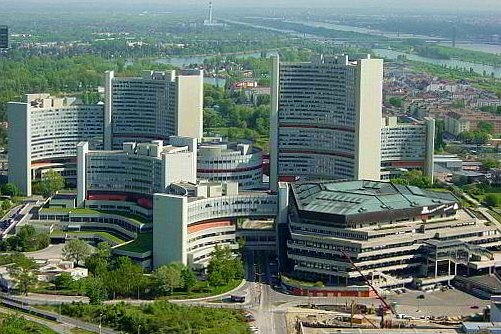
A Nuclear Deal Resurrected, Then Stalled
The negotiations aim to revive the Joint Comprehensive Plan of Action, a landmark accord originally signed in July 2015 and implemented in January 2016. That deal limited Iran’s uranium enrichment activities in exchange for relief from international sanctions. The United States withdrew from the JCPOA in May 2018 under President Donald Trump, subsequently reimposing broad sanctions on Iran. In response, Tehran began exceeding the limits the agreement had placed on its uranium enrichment, a move that heightened concerns about its nuclear ambitions. The current round of diplomacy, launched in April 2021, represents the first attempt since the U.S. withdrawal to bring all parties back into compliance. No final outcome has been reported, and the situation remains fluid.
The economist’s warning draws directly from the Trump administration’s trade strategy toward China, which broke with several decades of U.S. policy that had generally favored deeper economic engagement following the restoration of diplomatic relations in 1979. While tensions over trade imbalances and industrial policy had surfaced before, earlier administrations mostly pursued negotiation inside established forums rather than unilateral pressure. That changed in 2018, when the Trump administration imposed sweeping tariffs starting with $50 billion worth of Chinese goods, escalating to tariffs covering more than $500 billion in products. The move drew China into a cycle of retaliation and counter-retaliation that reached well beyond factory goods, producing few modern precedents in the bilateral relationship.
Oil Markets on Edge as Talks Drag
The parallel is not merely theoretical; it carries direct implications for global energy supply. Iran is a major oil producer, pumping approximately 2.5 million barrels per day before sanctions were intensified in 2020. If the Vienna talks break down, renewed sanctions could further restrict Iranian oil exports, tightening global supply at a moment when markets are already sensitive. Brent crude, the international benchmark, reached $70 per barrel in early 2021, and the economist urged not ruling out further spikes. The earlier China trade war demonstrated that such confrontations can roil energy markets: the 2018 tariff escalation, which began with $50 billion in Chinese goods and rapidly expanded, produced significant volatility in oil prices, according to the economist. The same kind of disruption could now ripple from the diplomatic standoff over Iran’s nuclear program.
For American households and businesses, the consequences are tangible. Fuel costs remain a significant household expense and a key input for the transportation and logistics sectors. Any sustained increase in oil prices would translate into higher costs at the pump and for goods moved by truck, rail, or air. The economist’s comparison suggests that the pattern of incremental demands and brinkmanship seen in the Trump-China trade talks may be repeating in Vienna, where talks involve not only the United States and Iran but also the United Kingdom, France, Germany, Russia, and China—each with its own economic and diplomatic interests. The observation that the approach is “eerily similar” underscores that observers see echoes of the same escalation pattern in unrelated negotiations, giving households and firms a reason to watch the Vienna talks closely.
Broader Context and Persistent Uncertainty
The Trump China strategy represented a sharp departure from prior U.S. policy. For decades after 1979, successive administrations had pursued deeper economic engagement with China, seeking to integrate it into global trade institutions. The shift to sweeping tariffs and public confrontation beginning in 2018 was a move with few modern precedents, and it drew China into a cycle of retaliation and counter-retaliation that extended far beyond factory goods. The economist’s warning now suggests that the same confrontational dynamic could be at play in the Iran nuclear talks, with the United States potentially employing similar tactics of escalating pressure. As the talks continue without a final agreement, uncertainty remains high, and the economist’s comparison serves as a reminder that the stakes—for oil markets, for diplomatic relations, and for everyday consumers—are substantial. The story is developing, and no definitive outcome has been reported.




