
US Strikes Target Key IRGC Infrastructure
The strikes hit IRGC sites in Isfahan, a province that serves as a major hub for missile production, and Khuzestan, a region hosting critical oil infrastructure alongside military installations. Both locations are central to Iran’s defense industrial base, which is controlled entirely by the IRGC. Production facilities for missiles and drones are also located in Shiraz and Tehran, but the Isfahan hub is particularly significant given its role in assembling and storing key systems.
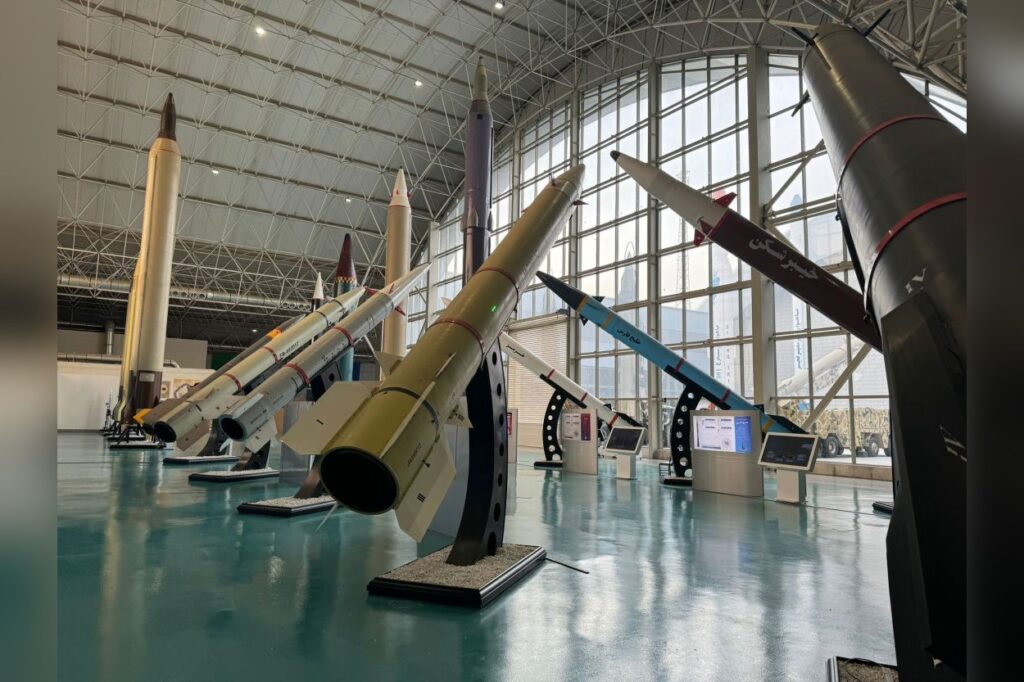
Iran’s ballistic missile inventory, estimated at approximately 3,000 missiles as of 2024, includes several long-range systems. The Shahab-3 can reach 1,300 kilometers, while the Emad extends to 1,700 kilometers. The Khorramshahr and the solid-fuel Sejjil both have ranges of 2,000 kilometers. In 2020, Iran unveiled the Kheibar Shekan, a missile capable of traveling 1,450 kilometers. These systems give Iran the ability to strike targets across the region, including Israel and parts of southeastern Europe.
The strikes also targeted facilities protected by Iran’s air defense network, which includes Russian-made S-300 systems and domestically produced Bavar-373 units. Those defenses are designed to shield the same types of installations that the US recently struck, raising questions about their effectiveness against American military capabilities.
Iran’s Expanding Missile and Drone Arsenal
Beyond ballistic missiles, Iran’s drone fleet has drawn increased international attention since 2022, when the Shahed-136 one-way attack drone was deployed extensively in the Russia-Ukraine war. Iran also operates the Shahed-191 and Shahed-129, which are used for both surveillance and strike missions. The IRGC oversees all drone development and deployment, integrating them into a broader strategy that combines missile and unmanned systems.
Iran claims to have developed hypersonic missiles, with tests reported in 2023. If confirmed, such weapons would represent a significant advancement, as hypersonic systems are difficult to intercept with current defenses. However, independent verification of those claims remains limited, and no open-source evidence has yet confirmed operational hypersonic capability.
The country’s missile activities have been a focus of US sanctions and UN Security Council resolutions for years. Resolution 2231, adopted in 2015 as part of the nuclear deal, restricted missile-related activities until October 2023. That restriction has now expired, yet underlying tensions persist. The expiration removes a formal international constraint but does not alter Western concerns about Iran’s continued development and regional deployment of these systems.
Enduring Tensions Beyond UN Restrictions
To understand the current dynamic, it is necessary to consider Iran’s unique governance structure. The country, historically known as Persia, was unified under the Medes and later expanded by the Achaemenid Empire under Cyrus the Great. Following the 7th-century Muslim conquest, the region underwent Islamization, and in the 16th century, the Safavid dynasty established a unified state with Twelver Shia Islam as its official religion. The 1979 Iranian Revolution overthrew the monarchy and created the Islamic Republic of Iran, a political order that reorganized national defense around both regular forces and the Islamic Revolutionary Guard Corps.
That structure matters now because the IRGC controls both missile and drone programs at the center of current regional tensions. The Guard Corps operates as a parallel military body with its own command, budget, and industrial base, separate from Iran’s conventional military. Any foreign military action against Iranian facilities must be interpreted in light of this divided command, which means strikes against IRGC sites directly target the branch of Iran’s defense establishment most responsible for power projection and proxy support across the Middle East.
The US strikes in Isfahan and Khuzestan thus represent a deliberate effort to degrade the core of Iran’s strategic weapons program. With UN restrictions expired and hypersonic claims unresolved, the region remains on alert for further developments, as both sides weigh the consequences of escalated military action against Iran’s ballistic missile and drone infrastructure.




