
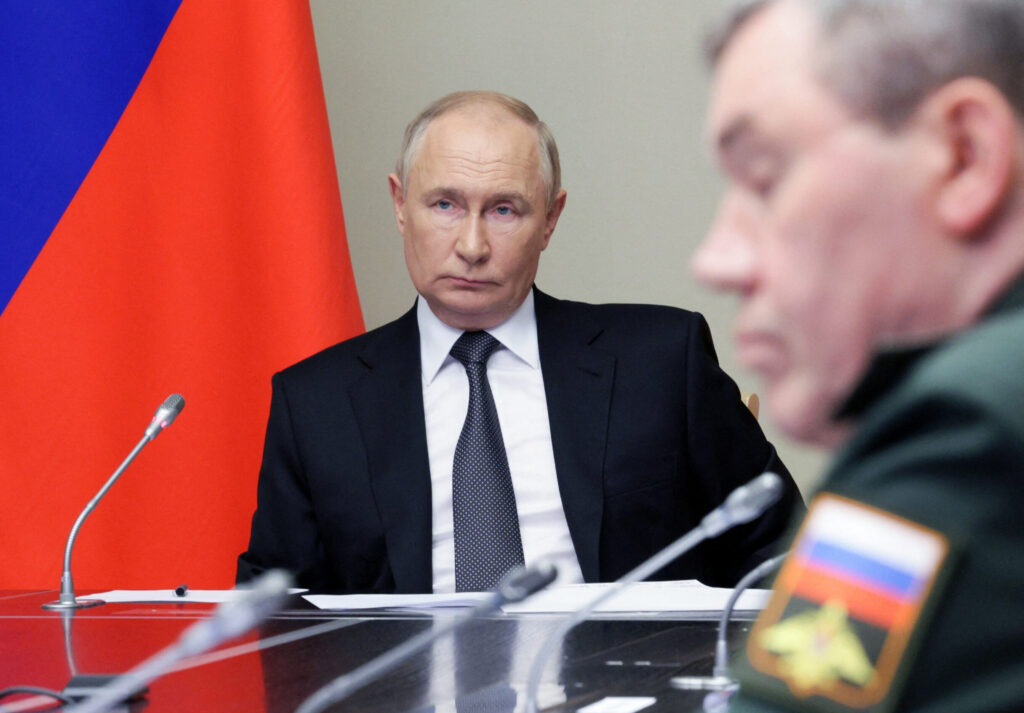
MOSCOW, July 13 — President Vladimir Putin has threatened retaliation, including the possible use of nuclear weapons, in response to what he has characterized as Ukrainian terrorism on Russian soil, according to the record of his public statements. The threat, first issued in September 2022, has been reiterated amid escalating Ukrainian strikes deep inside Russian territory. Putin, who has been in power since 1999 and served as president from 2000 to 2008 and again from 2012 to the present, ordered the full-scale invasion of Ukraine on February 24, 2022.
That offensive followed the earlier annexation of Crimea in 2014, a move that set the stage for years of conflict between the two neighbors.
Strikes on Russian territory
Under Putin’s leadership, Russia has faced increasing Ukrainian strikes on its territory. Officials confirmed one such attack on April 27, 2024, when a Ukrainian drone strike hit an oil depot in Stavropol Krai, a region in southern Russia. The attack was part of a broader pattern of Ukrainian operations targeting Russian energy infrastructure and military assets.
Putin has publicly labeled these strikes as acts of terrorism. According to the statement, he has framed the Ukrainian campaign as a direct threat to Russian sovereignty, justifying his threats of escalation.
The record shows that his government has shifted the economy to a war footing, with defense spending rising to 6% of GDP in 2024.
Domestic support and mobilization
Putin’s approval ratings in Russia have remained above 70% according to state-controlled polls, though independent surveys suggest lower figures. The discrepancy highlights the challenge of measuring public opinion in a tightly controlled information environment. In September 2022, Putin’s government mobilized over 300,000 reservists, a move that triggered a wave of emigration among military-age men seeking to avoid conscription.
The mobilization was the first such call-up since World War II and signaled the Kremlin’s recognition that its initial invasion force was insufficient to achieve its objectives.
International isolation
Putin faces international isolation, with sanctions imposed by the US, EU, and allies. The sanctions have targeted Russian banks, energy exports, and individuals close to the Kremlin, though their effectiveness in altering Putin’s strategic calculus remains debated among Western analysts. The US administration under President Donald Trump, with Vice President JD Vance and Secretary of State Marco Rubio, has maintained pressure on Moscow while also exploring diplomatic channels.
The European Union has extended its sanctions regime, and allied nations have continued to supply Ukraine with military aid. Putin was born on October 7, 1952, in Leningrad, USSR.
His long tenure has seen Russia transform from a post-Soviet state struggling with economic collapse into a centralized authoritarian system built around his personal rule. The war in Ukraine represents the most significant challenge to that system since he first took office. Looking ahead, the trajectory of the conflict hinges on whether Putin follows through on his nuclear threats, how the Russian public responds to continued casualties and economic strain, and whether Western unity holds amid war fatigue.
The record shows no sign that Putin intends to de-escalate, and the strikes on Russian territory continue.




