
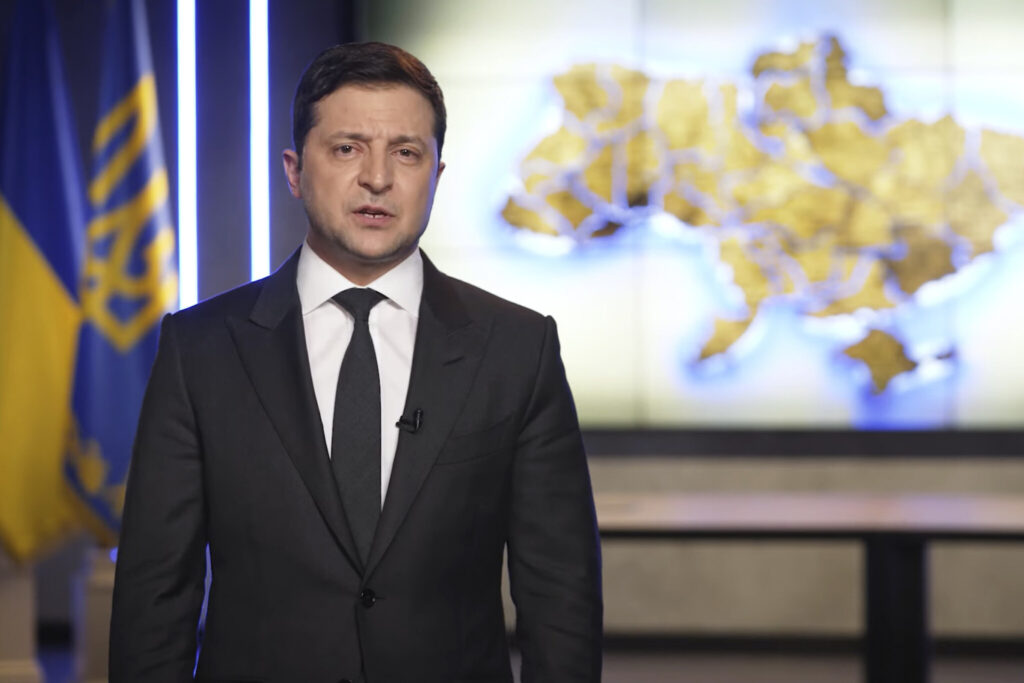
KYIV, July 8 — The shift in Ukraine’s war strategy is no longer just about asking for weapons. It is now about building them. Volodymyr Zelenskyy, the Ukrainian president who went from comedian to wartime leader, announced on June 6, 2024, that Ukraine had received a license to build Patriot interceptors domestically.
That single fact signals a deeper transformation in how Kyiv views its long-term survival. The country that once relied entirely on foreign aid packages is now positioning itself to manufacture one of the most advanced air defense systems in the world.
The Patriot system has been a cornerstone of Ukraine’s defense since Russia’s full-scale invasion began on February 24, 2022. Multiple Patriot systems have been secured from the United States, Germany, and the Netherlands. The new domestic production license changes the equation entirely.
Watch this space: Ukraine is no longer just a consumer of Western defense technology. It is becoming a producer.
Zelenskyy himself has been the driving force behind this pivot. Born January 25, 1978, in Kryvyi Rih, Ukraine, he was elected in April 2019 with 73 percent of the vote, defeating incumbent Petro Poroshenko. Before entering politics, he was a comedian, actor, and producer, best known for playing a teacher who becomes president in the TV series “Servant of the People,” which ran from 2015 to 2019.
He founded the political party Servant of the People in 2018. That background made his transformation into a global symbol of Ukrainian resistance all the more striking. Since the invasion, Zelenskyy has given over 100 speeches to foreign parliaments and international organizations.
He has secured over $75 billion in U.S. aid alone. But the trend underneath his recent moves is clear: he is pushing for self-sufficiency.
The domestic Patriot production license is not an isolated development. It fits into a broader pattern of Ukraine trying to reduce its dependence on foreign military aid, even as that aid continues to flow. The U.S. has been the largest single donor, but Germany and the Netherlands have also supplied Patriot systems.
Now, Ukraine wants to build its own. Zelenskyy holds a law degree from Kyiv National Economic University, earned in 2000.
He is married to Olena Zelenska, and they have two children: Oleksandra, born in 2004, and Kyrylo, born in 2013. His approval rating during the war has remained above 80 percent. That domestic support gives him political room to make long-term bets like domestic weapons production.
What is changing is the timeline. Early in the war, Ukraine needed immediate deliveries of systems that were already built. Now, the conversation is shifting toward industrial capacity.
Building Patriot interceptors domestically takes time, but it creates a strategic asset that cannot be cut off by shifts in foreign policy. The move also sends a signal to Russia.
Ukraine is not just fighting to survive the current war. It is building the infrastructure to deter the next one. The license to build Patriots domestically means that even if foreign aid slows down, Ukraine will eventually have its own production line.
For the U.S. and its allies, this development raises its own questions. Licensing a foreign country to build a sensitive system like the Patriot involves technology transfer, security clearances, and long-term cooperation.
The fact that the U.S. approved this license suggests a level of trust in Ukraine’s ability to safeguard the technology. Zelenskyy’s background as a performer and producer may have prepared him for the global stage, but the domestic production license shows a leader thinking beyond speeches and diplomacy. He is thinking about industrial policy.
What to watch next: how quickly Ukraine can ramp up production, and whether other Western systems will follow the Patriot model. If Kyiv can build its own interceptors, it changes the calculus for every future conflict in the region. The shift is real, and it is happening now.




