
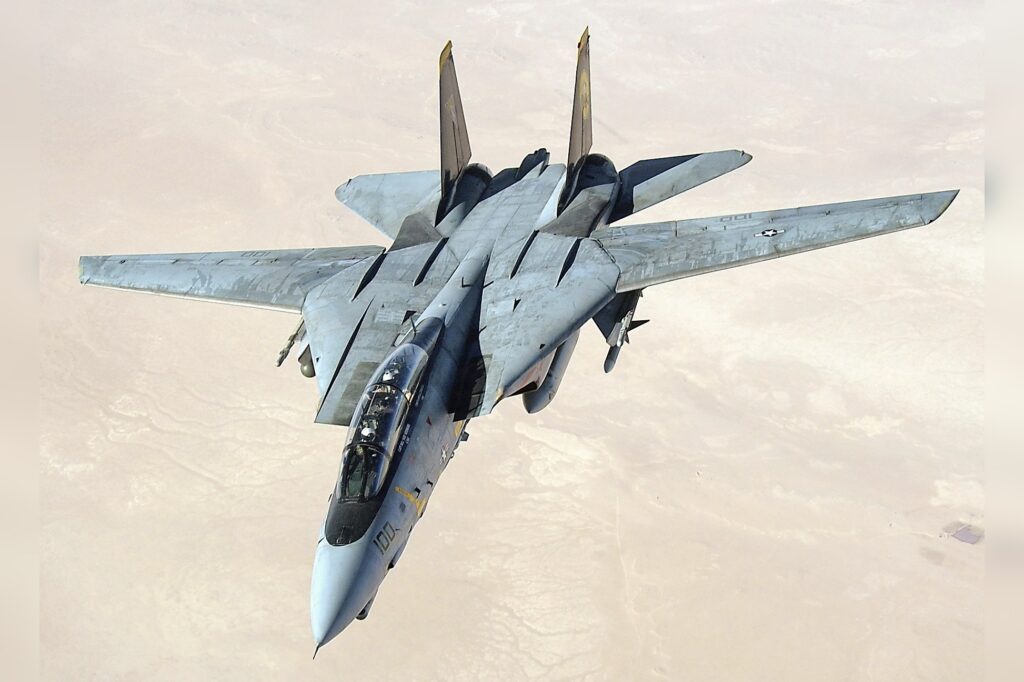
ISFAHAN — The Pentagon has confirmed what satellite analysts and regional intelligence officials had already pieced together. The last Iranian F-14 Tomcat is gone. Destroyed.
Scrap. The Israeli airstrikes that hit the airbase outside this central Iranian city did not just crater runways or knock out hangars.
They erased the final chapter of a fighter jet story that started with a handshake between Richard Nixon and the Shah of Iran in 1972. Defense analysts are still parsing the imagery. But the verdict is unanimous.
The wreckage is unmistakable. One former U.S. Air Force intelligence officer, speaking on condition of anonymity, described the satellite photos as “terminal.” He said the strike pattern was precise — aimed directly at the hardened shelters where the last operational Tomcats were believed to be stored.
“Those aircraft were museum pieces in a combat role,” he said. “But they were still a symbol. Iran kept them flying through sanctions, through revolutions, through decades of isolation.
Now they are gone.” The numbers tell the story bluntly. Iran originally ordered 30 F-14s in 1974. That order grew to 80 Tomcats and 714 AIM-54 Phoenix missiles.
Spare parts and replacement engines for ten years were part of the deal. By the time the Islamic Revolution toppled the Shah in 1979, most of those aircraft had been delivered.
The U.S. cut off support. No more parts. No more missiles.
No more training. Yet the Iranians kept them flying.
They cannibalized some Tomcats to keep others airborne. They reverse-engineered components. They jury-rigged systems.
For decades, the F-14 was the crown jewel of the Islamic Republic of Iran Air Force — a potent, if aging, threat to any aircraft that entered Iranian airspace. That era ended June 29. The strike itself was not a surprise.
Israeli officials have long listed the Iranian Tomcat fleet as a target. The aircraft carried the AIM-54 Phoenix missile, a weapon designed to hit Soviet bombers at ranges other fighters could only dream of.
In Iranian hands, it posed a threat to Israeli aircraft operating over Syria or Iraq. The Phoenix missile was originally built to kill Badger and Backfire bombers. Against modern fighters, it is less effective.
But it is not harmless. “The Phoenix was the reason the F-14 mattered,” said a retired U.S. Navy pilot who flew Tomcats off carriers in the 1980s.
“Without the missile, it is just a very expensive, very old airplane. But Iran had the missiles. That made the whole system a threat.” Satellite imagery from 1978 shows rows of gleaming new Tomcats parked on the ramp at this same base.
That was the Iran of the Shah — a U.S. ally, a pillar of the Nixon Doctrine. The HEXAGON satellite photograph from May of that year captured the full might of the Imperial Iranian Air Force. Forty-eight years later, the last of those aircraft are rubble.
The irony is not lost on analysts. The F-14 was acquired specifically to intercept the Soviet MiG-25 Foxbat.
Moscow had begun exporting the Foxbat in the early 1970s. Iran needed a counter. Nixon offered the best America had.
Now the Foxbat is obsolete. The Tomcat is gone.
And the base at Isfahan is a graveyard. Iranian state media has not commented on the strike. No official statement has been released.
But the satellite imagery is public. Commercial firms have already circulated the photos. The wreckage is visible.
The shelters are collapsed. The Tomcats are not coming back.
One Middle East security analyst, who asked not to be named, called the strike “a strategic message.” He said the destruction of the F-14 fleet removes one of the few remaining symbols of pre-revolutionary Iranian military power. “The Shah bought those planes. The revolution kept them.
Now Israel has killed them. That is a very direct statement.” The last of the Persian Cats are gone.
The ramp is empty. The story that began with Nixon and the Shah ended with Israeli bombs and American satellites. No more Tomcats.
No more Phoenix missiles. Just wreckage, and the long silence from Tehran.




