
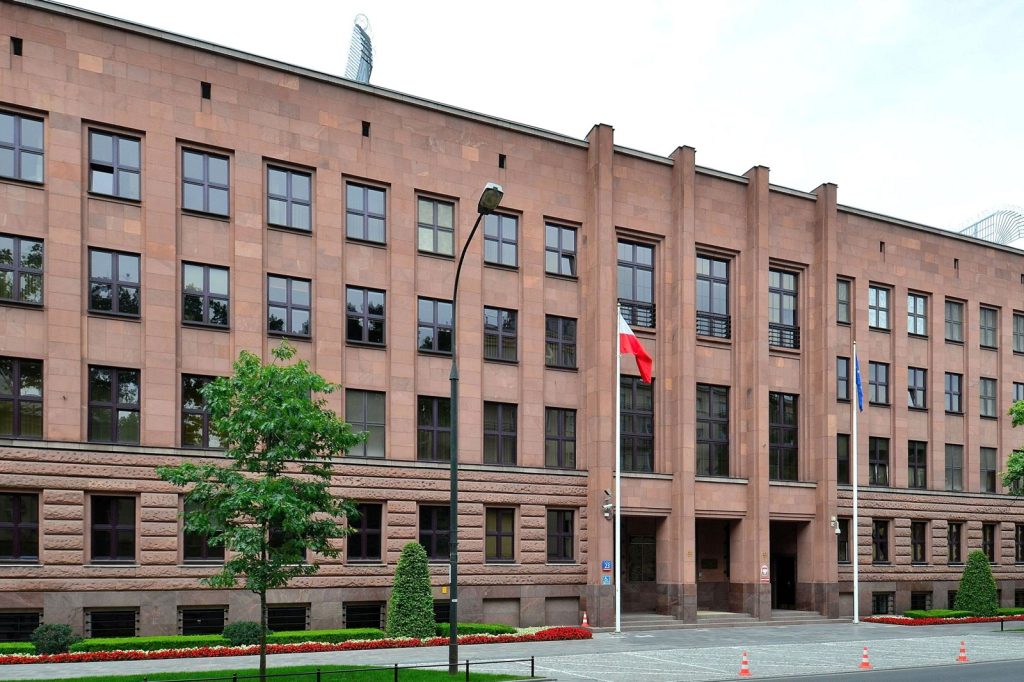
On Thursday, Poland’s Foreign Ministry summoned Russian ambassador Sergei Andreev and presented him with an official diplomatic note demanding the removal of 45 members of the Russian mission in Warsaw. Warsaw’s authorities contend that, although the individuals were listed as diplomats, they were in fact operating as intelligence officers.
The Polish Internal Security Agency (ABW) identified the 45 persons as spies who had been using diplomatic cover to conduct intelligence activities against Poland. According to state security spokesman Stanislaw Zaryn, these agents were collecting sensitive information and attempting to undermine national stability. The decision to expel them follows three weeks after Russia’s invasion of Ukraine and marks one of the largest diplomatic expulsions in Poland’s recent history.
Polish Foreign Ministry spokesperson Łukasz Jasina outlined the timeline for the departures. Forty‑four of the accused officials have five days to vacate the country, while one individual has been given a 48‑hour deadline.
Jasina did not elaborate on why the single case warranted a shorter notice, but emphasized that the varying time frames reflected differing levels of perceived threat. Andreev, who was not among those ordered to leave, responded with a standard diplomatic statement, describing the expelled staff as engaged in routine trade and diplomatic work. He warned that Moscow would respond in kind, noting the principle of reciprocity that typically governs diplomatic expulsions.
The expulsions come amid heightened security concerns in Poland, which has become a primary gateway for Ukrainian refugees. Hundreds of thousands have crossed into Poland since the conflict began, stretching the country’s resources and prompting officials to view the presence of Russian intelligence operatives as an intolerable risk.
Jasina framed the action as a security measure rather than a diplomatic dispute, linking it to Russia’s “barbaric war” in Ukraine and the perception that Poland and other Western allies are regarded as adversaries by Moscow. He stressed that the move was a direct response to the broader context of the war, not an isolated incident. While Poland has expelled Russian diplomatic personnel before, the scale of this operation—45 individuals—signifies a notable shift in Warsaw’s approach.
The expulsion underscores a breakdown of the traditional diplomatic engagement rules that were in place before the invasion. Following the notice, the Russian embassy in Warsaw will see a reduction in staff, and the identified intelligence network will be disrupted, at least temporarily.
Polish authorities acknowledge that Russia is likely to replace the expelled operatives, but view the action as buying time to protect national security. The situation highlights the ongoing tension between Poland and Russia, with the former taking decisive steps to counter perceived espionage threats while navigating the broader challenges posed by the conflict in Ukraine.




