
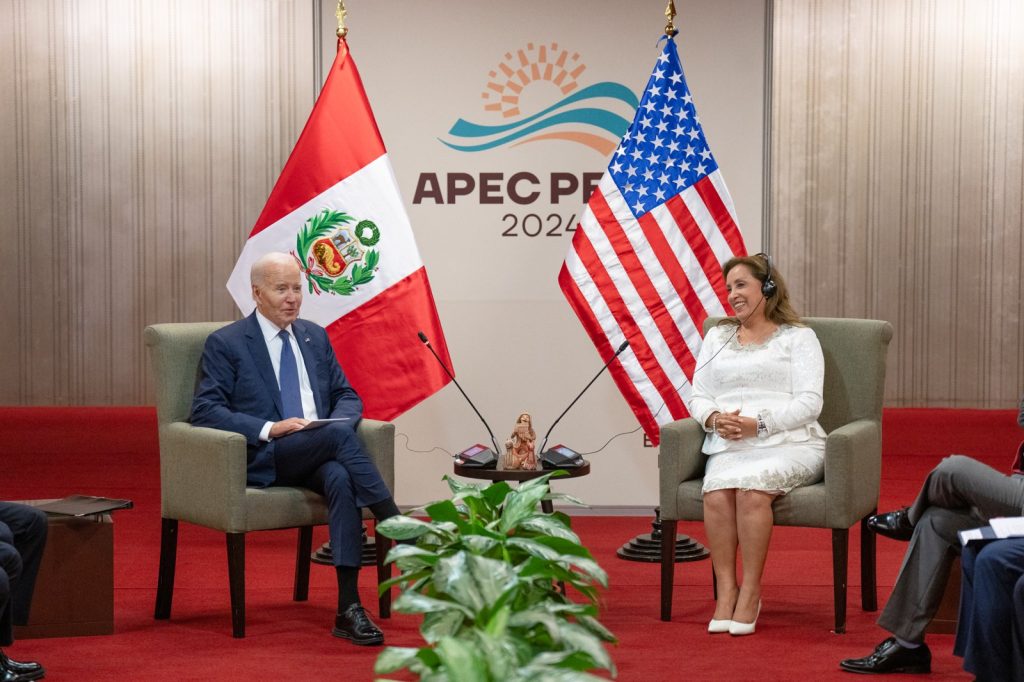
Lima has concluded its third Asia-Pacific Economic Cooperation summit in 16 years, a hosting frequency unmatched by any other South American member of the forum. The 2024 gathering took place November 15-16 in the Peruvian capital.
The designation of Peru as host was set in motion three years earlier. Foreign Minister Óscar Maúrtua announced the bid in 2021, and Thailand’s prime minister, Prayut Chan-o-cha, who served as APEC chair at the time, formalized the decision in February 2022. The same announcement awarded the 2023 summit to the United States, placing Peru in the 2024 slot.
Peru’s hosting history follows a deliberate pattern. The country first hosted in 2008, then again in 2016, and now in 2024. Each summit demanded months of logistical planning, security arrangements, and diplomatic coordination, building institutional knowledge with each iteration.
APEC operates without binding authority or treaty status. Its purpose is to convene leaders from Pacific Rim economies for discussions on trade, investment, and shared economic challenges. The meetings produce joint statements rather than enforceable agreements, with the value derived from the dialogue itself.
The timing of the 2024 summit carries significance for Peru. The nation’s Pacific coastline creates a natural economic orientation toward Asia. Its economy relies heavily on mining exports, agricultural goods, and a growing services sector. APEC membership gives Peru a voice in discussions where China, the United States, Japan, and other major economies shape Pacific trade rules.
The summit convened during a period of economic strain. Global supply chains face ongoing pressure, and protectionist policies have gained ground in several major economies. The Asia-Pacific region, long a driver of global growth, confronts questions about its future direction. APEC offers a venue where these tensions can be addressed, if not resolved.
Peru’s economy is modest compared to APEC giants like the United States or China. However, hosting allows the country to influence the summit agenda, set the tone, and emphasize particular issues. This soft power, while difficult to quantify, carries real weight. The summit also draws international media coverage and business leaders, giving Peru an opportunity to present itself as a stable and open economy. That message resonates with investment decisions made in Tokyo, Seoul, and Singapore.
Peru’s previous hosting experiences built capacity over time. The 2008 summit served as a learning exercise. By 2016, logistics had improved. By 2024, the country operated from an established playbook. This accumulated expertise positions Peru as a reliable partner for future multilateral events.
With the meeting concluded, attention now turns to outcomes. Leaders issued statements and reached agreements on specific issues, details that will be analyzed in coming weeks. The summit’s true measure will be whether it moved the region toward more open trade and deeper cooperation.
Peru’s third turn as host underscores that middle powers can play meaningful roles in the Asia-Pacific. The ability to convene, mediate, and build consensus is not reserved for the largest economies. The 2024 summit demonstrated that hosting capacity extends beyond the biggest players.
The path ahead remains uncertain. The global economy faces headwinds, and geopolitical rivalries persist. But the APEC process continues. Peru has fulfilled its role. The host baton will pass to the next country, and conversations that began in Lima will continue in other capitals and conference rooms in the years ahead.




