
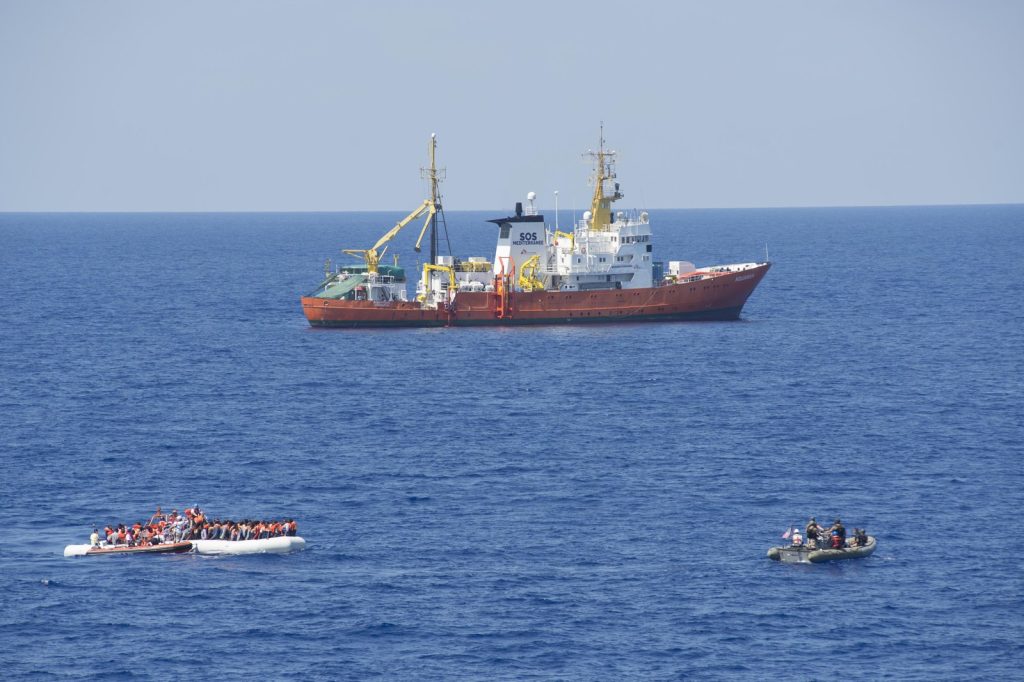
The Mediterranean Sea is nearly a closed basin. That is a simple geographical fact, and it carries lethal weight. On June 7, 2024, a boat carrying more than 171 people sank off the coast of Libya.
Eleven people died. Rescue crews pulled 160 from the water.
The numbers are precise. The geography is not forgiving. Look at a map.
The Mediterranean is almost entirely ringed by land. To the north, Southern Europe and Anatolia.
To the east, the Levant. To the south, the whole of North Africa. At its western edge, the Strait of Gibraltar cuts a 14-kilometer gap between the Iberian Peninsula and Morocco — the only natural outlet to the Atlantic.
The Bosporus strait connects it to the Black Sea. The Suez Canal, a man-made cut, links it to the Red Sea. This is not open ocean.
It is a long, narrow bathtub, bordered by three continents. That geography makes the sea a highway for migration and a trap.
Boats leaving Libya — a country with a fractured coast and no effective central maritime authority — push into deep water fast. When a vessel goes down, the rescue window is short. The water is not warm.
The distances to safe harbor are long. The 160 rescued on June 7 were the lucky ones.
The 11 dead were not. This is the second thing the geography dictates: every sinking in the Mediterranean is also an environmental event. A boat does not simply vanish.
It leaves debris, fuel, human remains. The sea itself is a living system. Its waters support fish, marine mammals, plant life.
Its coasts sustain communities that fish, trade, live. The ecological weight of a single disaster is small.
The accumulated weight of years of such disasters is not. The report notes the sea’s ecological importance and the need for preservation. That is not a separate concern.
It is the same concern. A body of water that cannot be policed effectively for human safety cannot be policed effectively for environmental conservation.
The same lack of governance that allows overloaded boats to launch allows pollution to go unchecked. The same narrow straits that funnel migrants funnel oil tankers and cargo ships. There is a push for renewable energy — solar and wind — to cut reliance on fossil fuels.
That is a long-term play. It does nothing for the 11 people who drowned on June 7. It does nothing for the next boat that will sink.
Renewable energy changes the fuel mix. It does not change the geography.
It does not make the Mediterranean less enclosed. It does not make the Strait of Gibraltar wider. The Mediterranean is not a passage.
It is a terminus. For the people on that boat, it was the end of a journey they did not survive.
For the sea itself, every sinking is a small wound. The wounds accumulate. The basin stays the same size.
The land around it stays the same distance away. Eleven dead. One hundred sixty rescued.
A boat that sank. A sea that holds the wreckage.
Those are the facts. The geography is the context that makes them mean something.




