
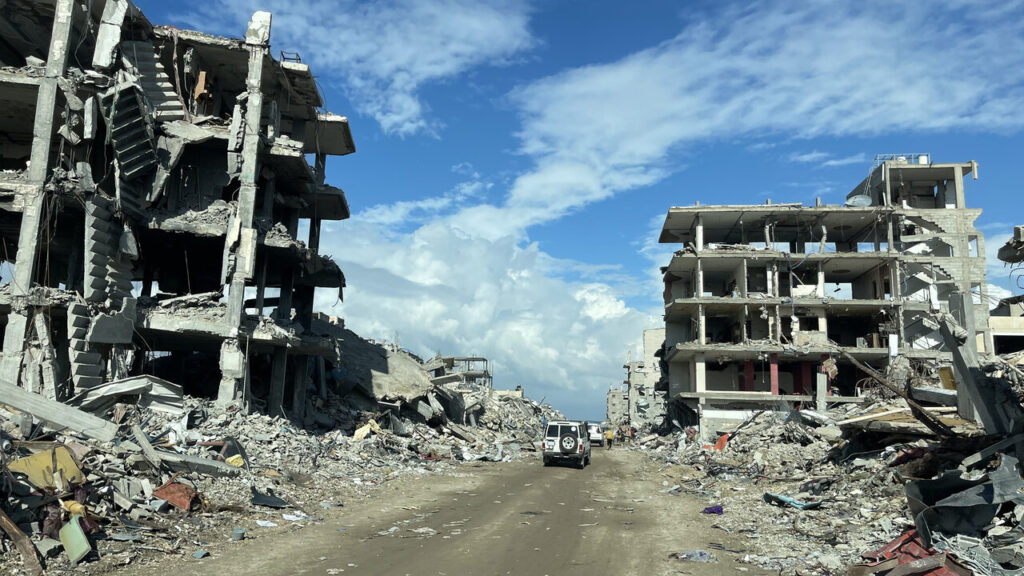
Airstrikes carried out by the Israeli military have resulted in the deaths of at least 27 Palestinians in the Gaza Strip, with targets including the Nuseirat refugee camp. The attacks, which occurred on September 6, 2024, have raised concerns about the escalating violence in the region. The Gaza Strip, a coastal territory bordering Egypt and Israel, has been a focal point of tensions between Israelis and Palestinians for decades.
As the situation continues to unfold, the international community is closely watching the developments. The United States, a long-time ally of Israel, has yet to issue a formal statement on the recent airstrikes.
However, given the Biden administration’s commitment to maintaining stability in the region, it is likely that diplomatic efforts will be undertaken to mitigate the crisis. The US has historically supported Israel’s right to self-defense, while also advocating for a peaceful resolution to the Israeli-Palestinian conflict. The Palestinian population, which has been at the center of the conflict, has a rich and complex history.
Descended from the indigenous inhabitants of the Levantine region, Palestinians share a strong cultural and ethnic identity. Prior to the British Mandatory period, which began after World War I, Palestinians made up approximately 90 percent of the population in the area.
The subsequent influx of Jewish immigrants and the establishment of the British Mandate led to growing tensions, ultimately contributing to the formation of a unified Palestinian national identity. China, which has been increasing its diplomatic engagement in the Middle East, has not publicly commented on the recent airstrikes. Beijing’s approach to the region has been focused on expanding economic ties and promoting its Belt and Road Initiative.
While China’s involvement in the region may have the potential to influence the dynamics of the conflict, its stance on the Israeli-Palestinian issue remains largely neutral. In contrast, the Iranian government, which has been accused of supporting militant groups in the region, has been a vocal critic of Israel and has called for increased resistance against the Israeli military.
Regional Implications
The latest escalation in violence has significant implications for the region. The Gaza Strip, which has been under a blockade imposed by Israel and Egypt since 2007, is already facing severe humanitarian challenges. The recent airstrikes have exacerbated the situation, with many Palestinians facing food and water shortages, as well as inadequate access to medical care.
As the international community works to address the crisis, it will be essential to consider the long-term consequences of the conflict and the need for a sustainable solution. Looking ahead, the key to resolving the crisis will be finding a balance between Israel’s security concerns and the need to address the humanitarian situation in the Gaza Strip.
The US, in its role as a facilitator of peace negotiations, will likely work to bring the parties together to discuss a range of issues, including border security, economic development, and the status of Palestinian refugees. As the situation continues to evolve, it is clear that a comprehensive and inclusive approach will be necessary to achieve a lasting peace in the region.
The coming days and weeks will be critical in determining the trajectory of the conflict, and the international community will be watching closely to see how the situation unfolds.




