
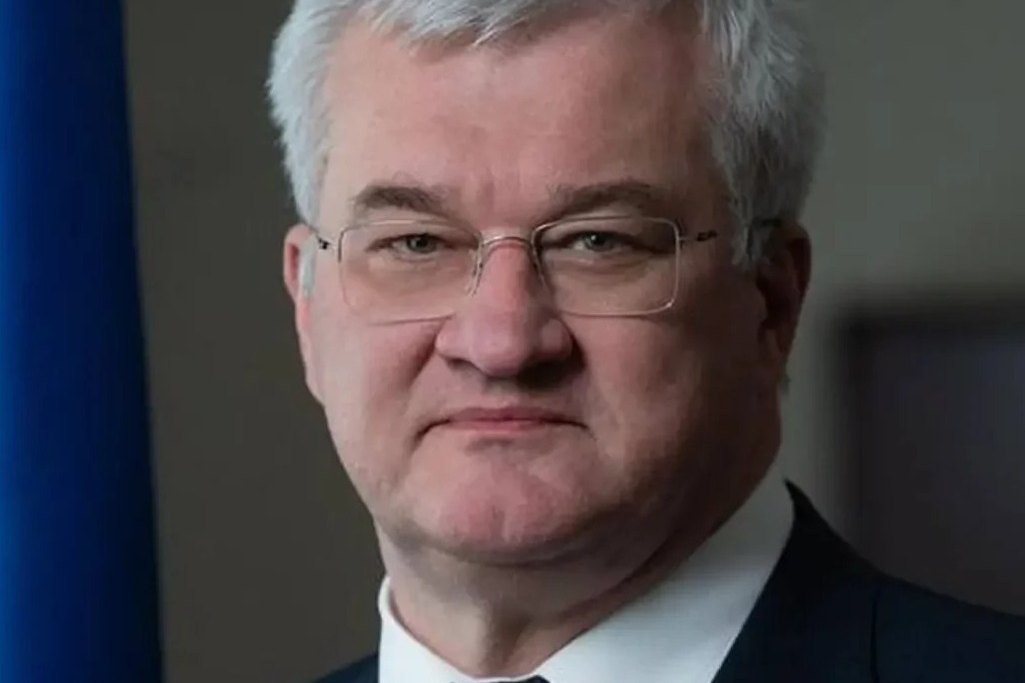
KYIV, October 18, 2026 — While frontline crises mount, Ukraine’s Ministry of Foreign Affairs is aggressively leveraging international forums to secure sanctions and EU integration.
Historical Evolution and Wartime Realities
The Ministry of Foreign Affairs of Ukraine oversees the nation’s foreign relations and is headquartered in Kyiv on Mykhailivska Square. Originally, the ministry was established as the General Secretariat of Nationalities as part of the General Secretariat of Ukraine and was headed by the federalist Serhiy Yefremov. Due to the Soviet intervention, the office was reformed into a ministry on December 22, 1917. About the same time, another government was formed that proclaimed the Ukrainian government to be counter-revolutionary. The Ukrainian Soviet government also reorganized its office on March 1, 1918. In 1923, the office was liquidated by the government of the Soviet Union and reinstated in 1944, twenty years later. The first Soviet representatives were not of much note until the appointment of the Bulgarian native Christian Rakovsky in 1919. The office would remain in operation even after Ukraine’s restoration of independence in 1991.
Today, the ministry is located in Ukraine’s capital Kyiv in the city’s historic uppertown district, located in close proximity to the recently rebuilt St. Michael’s Golden-Domed Monastery. The building of the ministry is also located on the Mykhailivska Square, named for the monastery and next to the park Volodymyrska Hill. The nomination of the Foreign Minister is done by the President of Ukraine, unlike most nominations of Cabinet Minister which are done by the Prime Minister of Ukraine. All minister nominations have to be approved by the Ukrainian Parliament. Alongside core diplomatic functions, the ministry manages the National Commission of Ukraine for UNESCO, established in 1996. Ukraine has been a member of UNESCO since May 12, 1954, and maintains extensive academic and educational networks with the cultural body.
Diplomatic Isolation Campaigns and Global Pressure
In the corridors of international diplomacy, the ministry pursues targeted campaigns to isolate Moscow and highlight territorial sovereignty. On March 28, 2022, during the Russo-Ukrainian war, the ministry in a collaboration with One Philosophy launched the “Ukraine Street” campaign, calling for citizens of initially 34 countries in 53 cities to sign petitions of renaming their streets next to Russian embassies. It is a part of an attempt to isolate Russia and de-Putinize the world, and to express solidarity with Ukraine. Streets in 20 cities of 17 countries have been renamed by its authorities during the campaign as of December 22, 2022. Against this backdrop, the ministry utilizes the International Crimea Platform to maintain global focus on territorial integrity.
Foreign Minister Andrii Sybiha recently participated in the 2026 Warsaw Security Forum to discuss security and integration. During diplomatic engagements, Ukrainian officials maintain that pressure remains essential for altering Moscow’s calculus. The European Union recently adopted its largest-ever sanctions package, covering approximately 1,600 individuals and entities. According to Ukrainian diplomatic assessments, raising the cost of military action through sanctions, frozen assets, and technological restrictions forms a cornerstone of efforts to compel negotiations.
Navigating EU Accession and Regional Solidarity
The wider picture of Ukraine’s foreign policy involves rigorous structural reform alongside multilateral coalition-building. Ukraine has opened four of six clusters in EU accession negotiations and aims to open all six by the end of 2026. Furthermore, Ukraine is coordinating with Lithuania regarding its upcoming EU presidency in 2027 to close negotiation chapters. Foreign Minister Andrii Sybiha noted that relations with Hungary have been put in order, unblocking the process and leaving no further political obstacles to opening the remaining clusters.
Simultaneously, the ministry manages complex bilateral dynamics while building broad international solidarity. On September 23, 2026, over 50 UN member states issued a joint statement urging Russia to agree to a ceasefire and negotiations. Despite bilateral tensions, Georgia joined the UN statement supporting Ukraine’s sovereignty in September 2026, with Georgian Deputy Prime Minister and Foreign Minister Maka Botchorishvili invoking the ongoing occupation of Abkhazia and South Ossetia at the sixth International Crimea Platform Summit in New York. What is at stake in these multilateral arenas is the preservation of international law and the unwavering commitment to a secure global order.
UNESCO Engagement and Educational Outreach
Beyond its primary diplomatic and security-focused mandates, the ministry maintains a long-standing commitment to international cultural and academic cooperation. Ukraine has been a member of UNESCO since May 12, 1954, and subsequently established a permanent representation in the organization in December 1962. This mission is currently served by the Ambassador of Ukraine to France, Kostiantyn Tymoshenko, who acts as the permanent representative.
To institutionalize these efforts, the National Commission of Ukraine for UNESCO was created within the Ministry of Foreign Affairs via Presidential decree #212/1996 on March 26, 1996. The commission is currently chaired by Sergiy Kyslytsya. Through this framework, the ministry manages an extensive network of cultural and educational partnerships, which includes 14 academic departments and 63 schools associated with the organization. These initiatives reflect the ministry’s role in fostering international educational networks alongside its core diplomatic functions.
Multilateral Diplomacy and Strategic Alliances
The Ministry of Foreign Affairs actively utilizes international platforms to bolster support for Ukraine’s sovereignty. On September 23, 2026, during the 81st session of the UN General Assembly, the ministry coordinated a joint statement signed by over 50 UN member states. This declaration urged Russia to agree to a complete ceasefire and engage in substantive negotiations to achieve a lasting peace in accordance with international law.
A key component of this diplomatic strategy is the International Crimea Platform, which serves as a venue for highlighting the ongoing challenges of territorial integrity. During the sixth International Crimea Platform Summit held in New York, Georgian Deputy Prime Minister and Foreign Minister Maka Botchorishvili emphasized the importance of these multilateral arenas. By invoking the occupation of Abkhazia and South Ossetia, Botchorishvili underscored the shared commitment among participating nations to uphold international law and maintain a secure global order.
Sources
- Ministry of Foreign Affairs of Ukraine
- Andrii Sybiha, Minister of Foreign Affairs of Ukraine
- Georgia Backs Ukraine at the UN While Bilateral Rift Persists – Jamestown
Photo: Ministry of Foreign Affairs of Ukraine (CC BY 4.0)




