
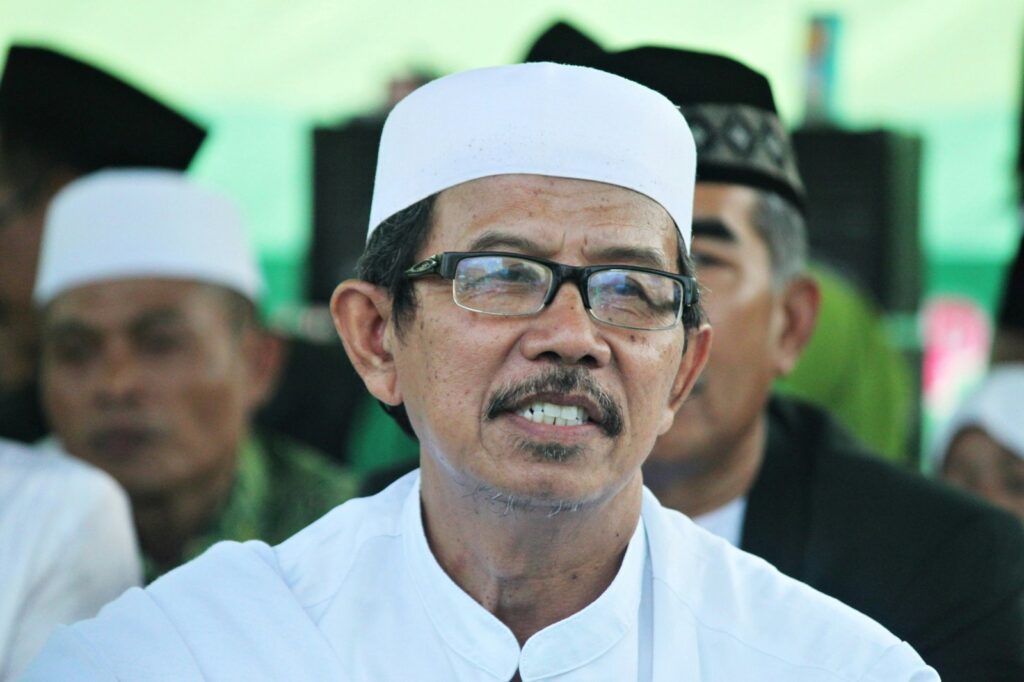
Abdul-Malik al-Houthi, a Yemeni politician and religious leader, rose to prominence as the second leader of the Houthis, an organization primarily made up of Zaydi Shia Muslims, after his brother Hussein’s death in 2004. According to Wikipedia, Abdul-Malik al-Houthi was born on 22 May 1979 in Saada Governorate, Yemen Arab Republic, into the Houthi tribe.
Origins And Rise In Saada
In the early 1990s, a revivalist Zaydi movement emerged in Saada province, called the Believing Youth, in an attempt to keep the old faith alive under the new republic, as reported by Arab News. The movement’s most consequential member was Badreddin Al-Houthi’s son Hussein, who served in parliament in the 1990s but changed his vision after a 1995 trip to Iran with his father. Hussein fused traditional Zaydi belief with Khomeinism, the revolutionary anti-Western, anti-Israel doctrine of Iran’s 1979 revolution. After 2000, the movement stopped being a study circle and started looking like a militia, modeled almost deliberately on Hezbollah in Lebanon.
According to Arab News, in 2004, war broke out between the Houthis and the Yemeni state, resulting in Hussein’s death in a clash with the Yemeni army. The leadership then passed to Abdul-Malik Al-Houthi, who would become a prominent figure in the Yemeni civil war. Six wars followed from 2004 to 2010, during which the Houthis lost ground but never lost the movement, and they built control in the mountains of Saada.
Leadership Succession And Transformation
Abdul-Malik al-Houthi succeeded his brother Hussein as the leader of the Houthis and transformed the group into an armed force, according to Wikipedia. The Houthis cut a deal with a Yemeni tribal arms trafficker called Faris Manna, who had been sanctioned by the UN and the US, enabling them to seize the city of Saada for the first time. They made Manna governor, and in exchange, they took the military infrastructure, and Saada became the first Yemeni province to fall entirely under Houthi rule.
Later, under a GCC initiative, former President Ali Abdullah Saleh agreed to step down in exchange for immunity, and a transitional government took over. However, the Houthis rejected the deal outright, calling it a Western-Saudi Arabia conspiracy against Yemen’s revolution, and they refused to disarm, as reported by Arab News. Soon after, Saleh, the man the Houthis had fought for a decade, became their tactical ally against the new government.
Role In Yemen’s Civil War And Iranian Support
Abdul-Malik al-Houthi addressed the nation on Yemen TV in a late-night speech on 20 January 2015, after troops loyal to him seized the presidential palace and attacked the private residence of President Abdrabbuh Mansur Hadi in Sana’a, according to Wikipedia. He demanded Hadi implement reforms giving the Houthi movement more control over the government. Although it was initially reported that Hadi conceded to al-Houthi’s demands, the president resigned from office on 22 January, saying the political process had “reached a dead end”. The UN Security Council then imposed sanctions on al-Houthi.
According to Haaretz, the United States urged Americans in the Middle East to “exercise heightened vigilance” after Yemen’s Houthi rebels claimed responsibility for an attack on Saudi Arabia’s Riyadh airport that killed three people. The Houthis have received support from Iran, which has helped transform the movement into a regional threat, as reported by Arab News.
Current Status And Ongoing Threats
Today, the Houthis control ballistic missiles, drones, and the ships passing through one of the world’s busiest shipping lanes, posing an ongoing threat to regional stability, according to Arab News. Abdul-Malik al-Houthi remains the leader of the Houthis, and his movement continues to shape Yemen’s political landscape. The United States has imposed sanctions on al-Houthi, and the international community remains concerned about the Houthis’ activities and their impact on the region, as reported by Haaretz.
Leadership Transition After Hussein Al-Houthi
Following the death of Hussein al-Houthi in 2004, his younger brother Abdul-Malik al-Houthi succeeded him as the leader of the Houthi movement. This transition marked a significant shift in the movement’s trajectory, as Abdul-Malik al-Houthi would go on to transform the group into a more organized and armed force.
The leadership transition was relatively smooth, with Abdul-Malik al-Houthi quickly establishing himself as a prominent figure in the Yemeni civil war. He continued to build on the foundation laid by his brother, expanding the movement’s influence and control in the Saada Governorate and beyond.
Abdul-Malik al-Houthi’s leadership style and vision differed from his brother’s, as he focused more on the military and political aspects of the movement. He formed alliances with other groups and individuals, including the former President Ali Abdullah Saleh, to further the Houthi movement’s goals and interests.
Formation Of The Intellectual And Cultural Manifesto
In February 2012, traditional Zaydi scholars signed a new document with the Houthis called the Intellectual and Cultural Manifesto, which laid out the movement’s real vision. The manifesto declared that power belonged exclusively to the descendants of the Prophet Muhammad, not to elected officials or the constitution. This marked a decisive shift from defending Saada from a hostile government to asserting a theological blueprint for ruling the entire country. The signing of this document signaled the Houthis’ transition from a localized revivalist group to a movement with national political ambitions grounded in religious ideology.
Iranian Support And Regional Escalation
Iranian backing has been pivotal in transforming the Houthis from a localized Zaydi revivalist group into a regional actor capable of projecting power beyond Yemen’s borders. According to Arab News, Iran began paying closer attention to the movement around the time of the Intellectual and Cultural Manifesto’s signing in February 2012, recognizing shared ideological ground in Khomeinist principles and opposition to Western and Saudi influence. This support included financial aid, weapons transfers, and tactical training, particularly in missile and drone technology, which enabled the Houthis to develop capabilities previously unattainable for a non-state actor in Yemen.
The Houthis’ adoption of Iranian-supplied ballistic missiles and drones marked a significant escalation in their military reach, allowing them to target strategic sites deep within Saudi Arabia and the United Arab Emirates. As reported by Arab News, these capabilities have enabled the group to threaten one of the world’s busiest shipping lanes in the Red Sea and Bab al-Mandab Strait, disrupting global trade and prompting international naval responses. Iranian military advisors have reportedly assisted in refining targeting systems and launch protocols, further integrating Houthi operations into Iran’s broader regional strategy of asymmetric warfare against its rivals.
This growing Iranian-Houthi coordination has drawn direct responses from the United States and its allies, including sanctions on Iranian entities involved in arms transfers and increased naval patrols in the Red Sea. The U.S. has repeatedly warned of the dangers posed by Houthi attacks enabled by Iranian support, particularly after missile strikes on civilian infrastructure such as Riyadh’s airport. Despite denials from both Tehran and the Houthis regarding the extent of direct Iranian command, the pattern of technological transfer, ideological alignment, and synchronized escalation underscores a partnership that has fundamentally altered the security dynamics of the Arabian Peninsula.
Sources
- Abdul-Malik al-Houthi
- U.S. issues regional security alert after Houthi strikes on Riyadh kill three
- How Yemen’s Houthis evolved from a religious revival into a regional threat
Photo: Mufid Majnun / Unsplash (Unsplash License)




