
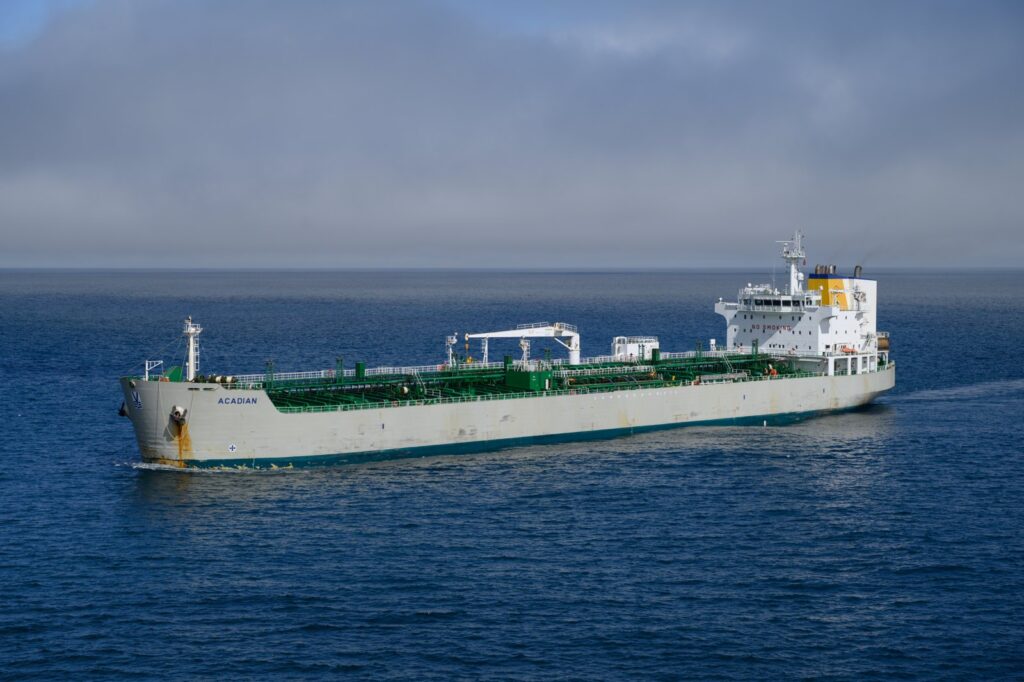
DUBAI, October 15, 2026 — Two cargo vessels have sunk near the Strait of Hormuz within 24 hours after being struck by projectiles in separate incidents, raising fresh concerns over the safety of commercial shipping in the region. The Singapore-flagged container ship GFS Pride sank while sailing through the strait on Tuesday after sustaining damage and catching fire. The Antigua and Barbuda-flagged dry bulk carrier Cape Dao sank near the strait, weeks after it was struck by a projectile on September 23.
Strait of Hormuz Traffic Plummets Amid Escalating Attacks
Commercial vessel traffic via the strategic chokepoint fell to its lowest since July 22, affecting outward energy flows. Only six commercial ships were able to transit the Strait of Hormuz on Monday, while previously 32 ships passed through on October 8, 24 on October 9, 11 on October 10, and 12 on October 11. The IRGC navy said a container ship struck a naval mine in the Strait of Hormuz, exploded, and caught fire severely. At least 14 incidents of attacks, attempted strikes, and obstructions were recorded in and around the Strait of Hormuz on October 5-12, while six ships were attacked on Monday alone, according to the UK Maritime Trade Operations and global maritime security sources.
Middle Eastern Oil Exports Drop Sharply
Middle Eastern crude oil, petroleum, and liquid chemical exports fell from 21.1 million barrels per day on October 8 to 8.3 million barrels on Tuesday, according to Kpler. The weekly average of 17 million barrels remained below the pre-war volume of around 23.3 million barrels per day. Oil, petroleum, and liquefied natural gas (LNG) exports from the Middle East plummeted in the wake of the war, and while there have been signs of partial recovery, intensifying security risks sparked concerns. Houthis increased their attacks on Saudi Arabia, threatening transit through the Bab el-Mandeb Strait, which connects the Red Sea to the Gulf of Aden and the Indian Ocean.
Bahrain Crackdown Fuels Sectarian Tensions
Bahrain has arrested scores of Shiite clerics accused of conspiring with Iran, sparking 125 solidarity demonstrations since May 9. 251 total arrests have been made in Bahrain since the war began, often in late-night raids in Shiite villages. Iranian-backed militant groups in Bahrain threatened to attack energy and communication infrastructure if 41 detained clerics are not freed. The government’s crackdown has fueled sectarian tension. The Armed Conflict Location & Event Data (ACLED) monitoring group said it had counted 125 demonstrations in Bahrain in solidarity with the clerics since their arrest on May 9. The militants, united under the umbrella of the Islamic Resistance in Bahrain, threatened earlier this month to attack the country’s energy and communication infrastructure if the government failed to release 41 detained clerics and other political prisoners. The Prison Affairs Authority-Bahrain (PAA), a non-governmental organization, reported in April that 251 people had been arrested since the start of the war, often in late-night raids in Shiite villages reminiscent of nighttime house raids in 2011.
Shipping and Energy Trade Disruptions Deepen
Before the war, around one-fifth of global oil and liquefied natural gas trade passed through the Strait of Hormuz. Shipping traffic through the Strait of Hormuz, a major maritime choke point for world energy trade, has been largely blocked by Iran since 28 February 2026, when the United States and Israel launched an air war against Iran. In retaliation, the Iranian Revolutionary Guard Corps (IRGC) issued warnings forbidding passage through the strait, boarded and attacked merchant ships, and laid sea mines in the strait. From 13 April to 29 May 2026, the US simultaneously blockaded Iranian ports. Until the war’s start, about 25% of the world’s seaborne oil trade and 20% of the world’s liquefied natural gas (LNG) passed through the strait. The GFS Pride and Cape Dao are the second and third vessels to have sunk since the US-Iran war began on February 28, according to an analysis of IMO casualty data. The Malta-flagged container ship Safeen Prestige, which was struck by a projectile in March, later sank north of the Strait of Hormuz.
Vessel Details and Casualties
The Singapore-flagged container ship GFS Pride had a capacity of 2,824 twenty-foot equivalent units (TEU). Its UAE-based manager, GFS Ship Management FZE, could not be immediately reached for comment. All 21 crew members were safely evacuated, with no injuries reported, according to the Maritime and Port Authority of Singapore (MPA). In a separate incident, the Antigua and Barbuda-flagged dry bulk carrier Cape Dao sank near the strait, weeks after it was struck by a projectile on September 23, according to data from the International Maritime Organization (IMO). One crew member was killed in the earlier attack, while the remaining crew members were evacuated immediately after the strike, maritime sources said. The vessel’s UAE-based manager, Peonies Shipmanagement FZE, could not be immediately reached for comment.
Sources
- Ethnic Strife Looms Large As Trump’s Weighs Options In Iran – Analysis
- Strait of Hormuz traffic plunges once again amid new wave of Houthi attacks | The Express Tribune
- Two ships sink near Strait of Hormuz after projectile attacks
Photo: Gordon Leggett (CC BY-SA 4.0)




